
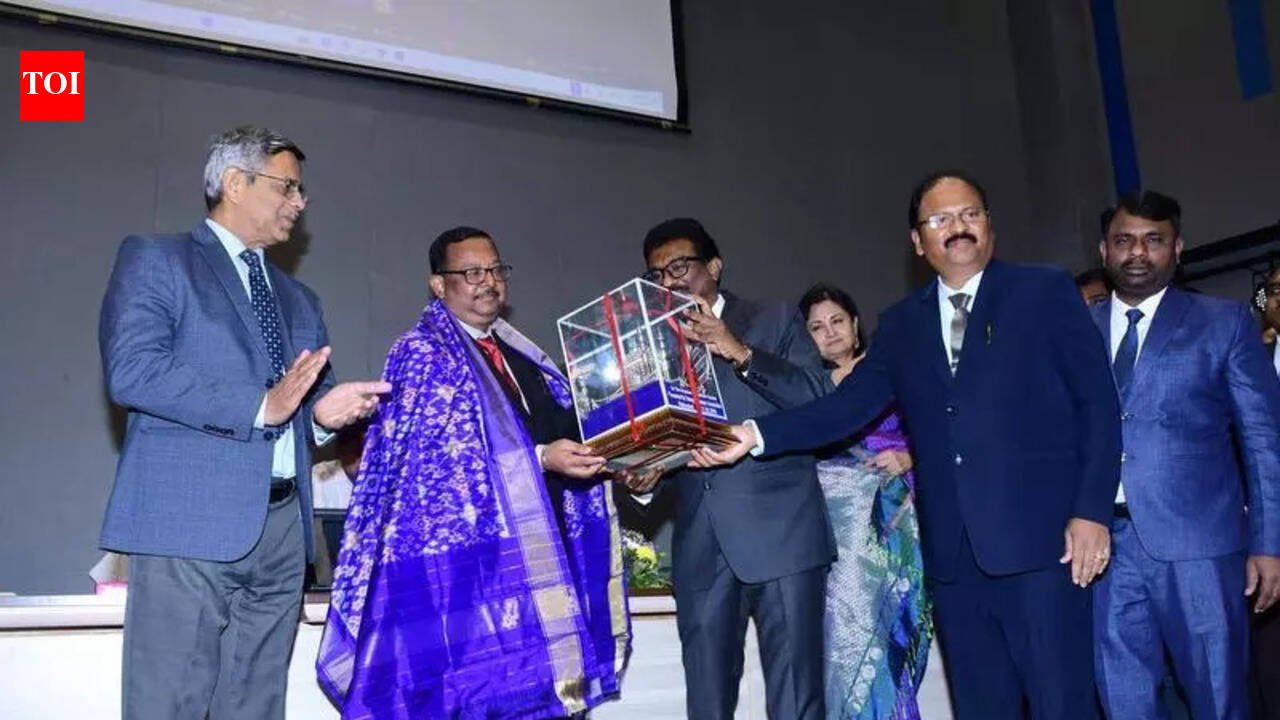
The 1919 Act ordered eunuchs to register with the authorities and provide details such as residence, for they were “reasonably suspected of kidnapping boys”. It allowed transgender people to be arrested without a warrant.Justice Bhuyan further noted that LGBT individuals had been stereotyped and prejudiced. “Constitutional morality does not permit such discrimination and must supersede cultural morality,” he told judicial officers from across the state.He emphasised that the district judiciary was the backbone of the system and the primary interface with citizens. He described Article 227 as a “shield, not a sword”, positioning the high court as a mentor rather than a mere court of appeal.He noted that justice must not only be done but be seen to be done. To illustrate societal fault lines, he cited a 2025 incident in Delhi where his daughter’s friend, a PhD student, was denied housing due to her community, and a recent protest in Odisha against a Dalit woman preparing midday meals.”This is the tip of the iceberg showing the societal fault lines that persist even after 75 years of Independence,” he said.Justice Bhuyan highlighted icons who began in trial courts, including Justices Hansraj Khanna, AM Ahmadi, and M Fathima Beevi. He made special mention of Kanya Nathan, who topped the Kerala civil judge exam despite visual impairment, following a 2025 Supreme Court ruling that impairment is not a disqualification.Finally, he urged the judiciary to address “metaphorical distance” caused by high fees and legal illiteracy, noting the common confusion between the granting of bail and acquittal. Calling Hyderabad his second home, he thanked the fraternity for their openness.Judges of the Telangana High Court, members of the Telangana Judges’ Association, and the Academy Board of Governors also participated in the event.
