
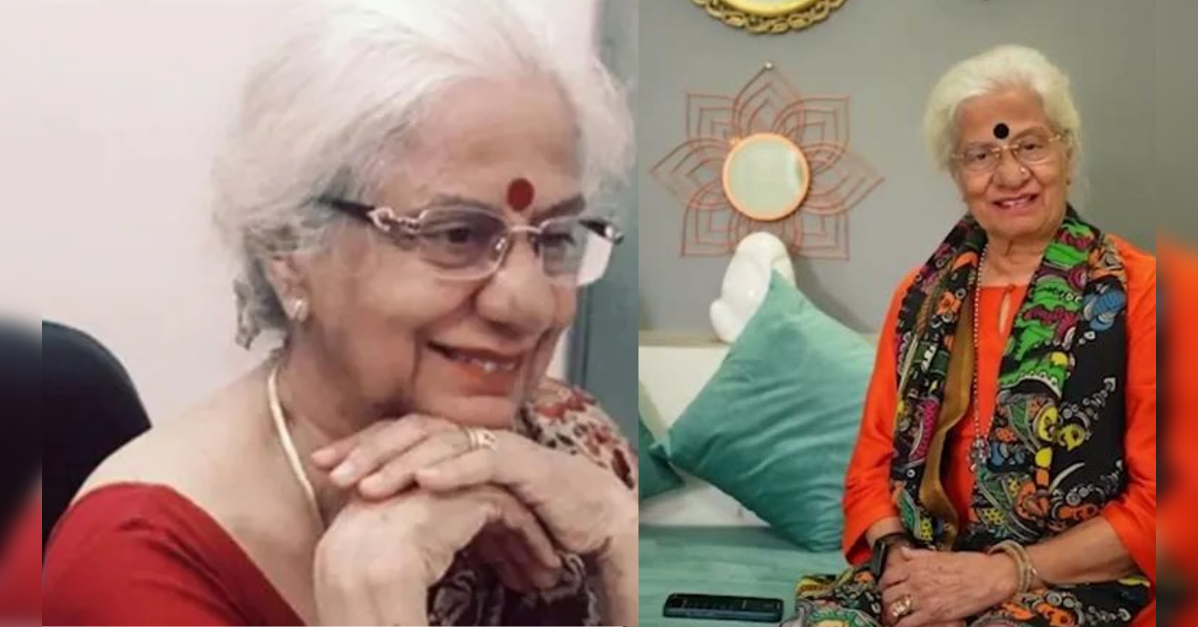
At an age when most people are expected to slow down, Usha Ray chose to start anew. In August 2025, just weeks after turning 80, she appeared for her final semester examinations for an MBA in Hospital and Healthcare Management, becoming India’s oldest woman MBA graduate.
Yet the achievement is far more than a record. It reflects a life defined by resilience, lifelong learning and quiet determination. A two-time cancer survivor and longtime educator, Ray’s journey challenges deeply rooted ideas about ageing, ambition and second chances, proving that curiosity and purpose do not fade with time, they simply find new directions. Scroll down to read more.
A decision born from restlessness, not recognition
Ray was 77 when she enrolled in the online MBA programme at Dr DY Patil Vidyapeeth’s Centre for Online Learning in Pune. After decades as an educator and administrator, she found herself confronting an unfamiliar feeling, intellectual stillness.For someone who had spent most of her life teaching others, inactivity felt unnatural. She has often said she simply wanted to keep her mind engaged, echoing a belief that learning is less about achievement and more about staying alive to the world. That decision marked a dramatic shift: from experienced teacher to first-year student once again.
A lifetime shaped by classrooms
Education had always been central to Ray’s identity. Armed with a Master’s degree in Zoology in the 1960s and later a degree in education, she spent decades teaching biology across India and abroad, including stints in England and Yemen. Generations of students passed through her classrooms, but her own hunger for knowledge never faded.
Even after retiring from formal teaching, she continued working in healthcare administration, eventually serving as CEO of Lovee Shubh Hospital in Lucknow. Surrounded by young professionals with management degrees, curiosity struck again. She wanted to understand the systems shaping modern healthcare, not from observation, but from study. The MBA became her way of stepping into a new intellectual world rather than revisiting the familiar.
Learning again, from scratch
The transition was anything but easy. Economics, statistics and management theory were far removed from the biology she had taught for decades. Technology posed an even greater challenge. Before enrolling, Ray had barely used a laptop.Instead of hesitating, she bought one and began learning alongside her coursework. Online lectures, digital assignments and virtual classrooms became part of her daily routine. Evenings after work were dedicated to study, and mornings often began before sunrise with revision.
She later shared that memory and age sometimes worked against her, requiring repeated effort to grasp new concepts. Yet persistence replaced doubt. Her determination eventually translated into strong academic performance, with scores reportedly averaging above 80 percent.
Surviving cancer, twice
What makes Ray’s academic journey especially moving is the backdrop against which it unfolded.
In 2003, she was diagnosed with stage-four cancer while working abroad. Months of chemotherapy and radiotherapy followed, testing both physical endurance and emotional strength. She survived, returning to life with renewed purpose.
Nearly two decades later, cancer struck again during the COVID-19 pandemic. Once more, she fought through treatment and recovery, experiences that reshaped her outlook on fear and limitation.
Rather than slowing her down, survival deepened her resolve to keep moving forward. Challenges, she has often suggested, are reminders of life’s fragility, and therefore its urgency.
The courage to begin agai
Balancing work at a hospital with academic commitments required discipline that many younger students struggle to maintain. Yet Ray approached studying with the mindset of a lifelong learner rather than a reluctant senior.
Her journey quickly became a source of inspiration for classmates, educators and observers alike. Faculty members described her as proof that intellectual ambition does not belong to any age group.
For Ray, however, the achievement remained deeply personal. As she told The Telegraph India in an interview, “Now when someone calls me an MBA, I love it.” The joy in that statement lies not in status, but in accomplishment earned through effort and perseverance. Her determination is captured in another remark she shared during the interview: “Once I decide I have to do something, I don’t look back. I’ll fight each and every battle and I want to be a winner.” Together, the words reflect the mindset that carried her through age barriers, academic challenges and life’s toughest setbacks.
Redefining what ageing looks like
In India, conversations around ageing are slowly changing. Longer life expectancy and evolving career paths are reshaping expectations about productivity and purpose later in life. Ray’s story arrives at a moment when many are questioning rigid timelines attached to education and success. Her journey quietly challenges a powerful assumption, that learning belongs to youth alone.
Instead, she demonstrates that intellectual growth can be cyclical, returning in new forms at different stages of life. The classroom may change, the subjects may evolve, but curiosity remains constant.
Beyond the degree
Despite completing an MBA at 80, Ray does not view the achievement as a finish line. Teaching, she says, remains in her blood. Whether mentoring colleagues, guiding hospital staff or imagining future educational initiatives, she continues to see herself as both student and teacher.
At 80, Usha Ray is not simply adding qualifications to her name. She is reshaping the narrative of ageing itself, proving that ambition can mature, resilience can deepen, and beginnings can arrive long after society expects endings. In a world obsessed with early success, her story offers a gentler, more powerful reminder: it is never too late to become a beginner again.
