
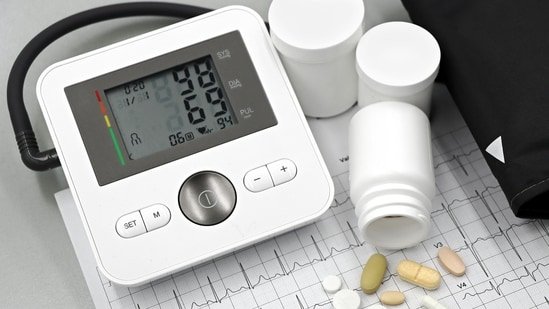
Checking blood pressure (BP) is one of the most commonly performed tests of health across the globe. BP is the amount of force that blood has to exert against the walls of the arteries to get around in the body.
There are two numbers that make up a blood pressure reading. The first number, which is of a higher value, is the systolic blood pressure, and is measured when the heart is sending the blood into the arteries. The second is the diastolic blood pressure, which is measured when the heart is at rest between beats.
Common mistakes while checking BP
Due to the everyday nature of BP testing, many households prefer procuring the instrument to keep BP in check by themselves. However, it is common for untrained people to make certain mistakes during the procedure.
Taking to Instagram on February 18, Dr Pramod Tripathi, who specialises in diabetes management, highlighted 10 common mistakes that people make while checking their own or others’ blood pressure.
- Keeping the feet dangling in the air: While checking the BP of an individual, the feet should be kept flat on the ground.
- Criss-crossing the feet: This can increase the BP reading, similar to the first mistake.
- Keeping the bladder full: One should always empty their bladder before checking BP.
- Keeping your back upright and straight: One should keep their back nicely relaxed.
- Keeping a layer of clothing between the BP machine and the skin: If one is wearing a long-sleeved shirt. It is better to keep it folded.
- For an analogue BP reading machine, the tube attached to the pump should be kept facing inside towards the body.
- The arm which is strapped to the BP machine should be well rested at the level of the heart, not above or below.
- Talking while taking blood pressure: One should sit in silence for a few moments for an accurate reading.
- Consuming tea and coffee: These beverages should be consumed at least half an hour before checking the BP.
- One should not check BP while being stressed or right after exercising. It is important to relax.
“Take two readings, five minutes apart, and then take the average of both readings,” shared Dr Tripathi. “If the upper (count) is going beyond 130 or 140, it could mean that your arteries are getting stiffer with age.”
“And if the lower BP is rising, it means that the smaller arteries away from the heart are also getting tighter because of more insulin, or sympathetic nervous system stimulation that is stressed, or salt,” he added.
Importance of checking blood pressure
According to the Cleveland Clinic website, blood pressure for an average healthy adult is usually below 120/80 mm Hg. Both high and very low blood pressure can have serious impacts on health, such as the following.
High blood pressure: Also known as hypertension, it is a major risk factor for cardiovascular disease. Severely high blood pressure is called a hypertensive emergency and can be life-threatening.
Low blood pressure: Also known as hypotension, it can cause dizziness, fainting and fall-related injuries. Severely low blood pressure limits blood flow to major organs and can lead to the body going into shock, which can be life-threatening.
Note to readers: This article is for informational purposes only and not a substitute for professional medical advice. Always seek the advice of your doctor with any questions about a medical condition.
This report is based on user-generated content from social media. HT.com has not independently verified the claims and does not endorse them.
