
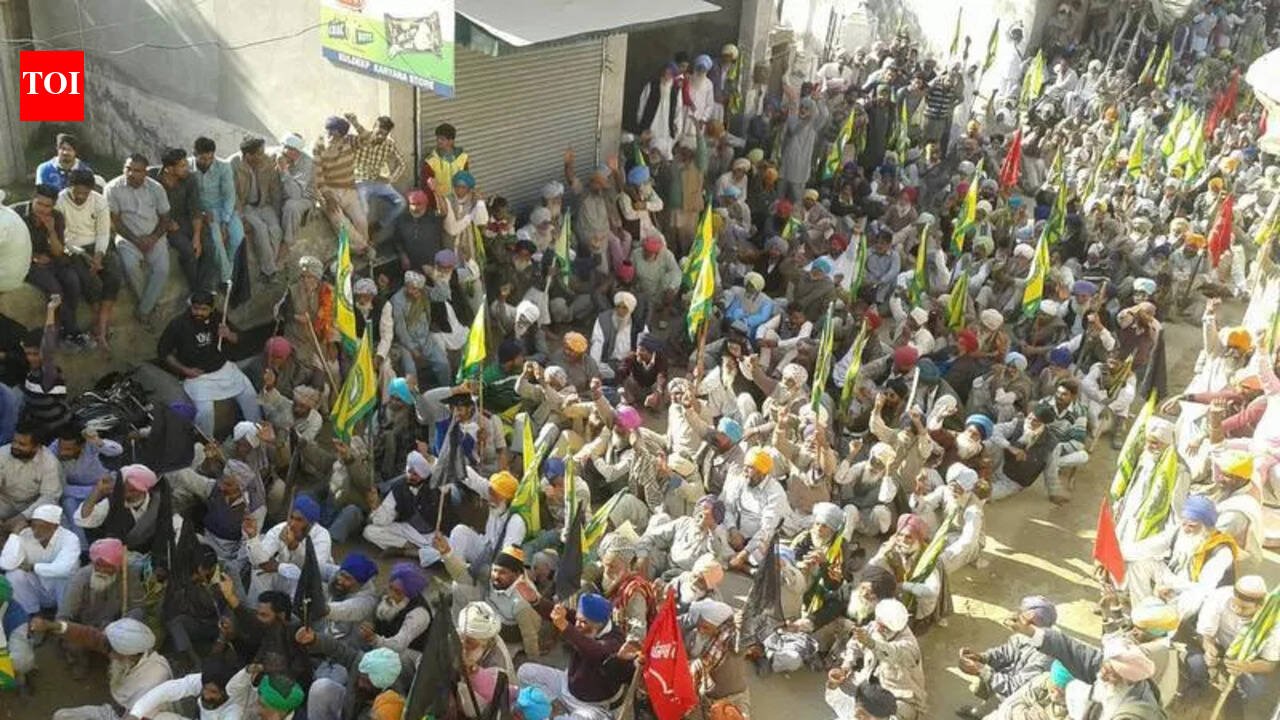
The SKM’s resistance centres on the “Interim India-US Trade Agreement”, which reportedly eliminates or sharply reduces import duties on a wide range of American goods. The group noted that while US tariffs on Indian goods remain at 18%, India is being pushed to slash its own agricultural tariffs — currently ranging from 30% to 150% — down to zero.‘Sack Piyush Goyal‘The SKM alleges that the deal is a “blueprint for colonisation” that prioritises US agribusiness interests over the livelihoods of India’s 14.6 crore farm holdings. Farmers have been urged to send an open letter to the President of India before March 9, demanding that the Prime Minister be directed to withdraw from the pact and calling for the dismissal of the Union commerce minister, Piyush Goyal.Beyond trade, the SKM is framing the protest as a fight for federalism, demanding a radical overhaul of India’s tax structure to empower individual states. It wants the Centre to amend the “regressive” GST Act to restore taxation powers to the states, besides Increasing the states’ share of the divisible tax pool (including cesses and surcharges) to 60%, up from the current 33%. The SKM demanded the withdrawal of a recent central directive (DO letter) that asked the Kerala govt to stop providing bonuses to paddy farmers above the minimum support price (MSP).Core Demands for 2026The SKM reiterated its long-standing “non-negotiable” requirements for ending the current agrarian distress. The demands include a legal guarantee for MSP calculated using the $C2 + 50\%$ formula (comprehensive cost plus 50% profit), a comprehensive programme to liberate farmers from chronic indebtedness, and using increased state revenue to fund agro-based industrialisation and infrastructure. The mobilization comes as the second phase of the Union Budget session prepares to resume in March. The SKM has warned the govt that if proceeds with the trade deal, the country will witness a repeat of the 2020-21-level mass protests.
