
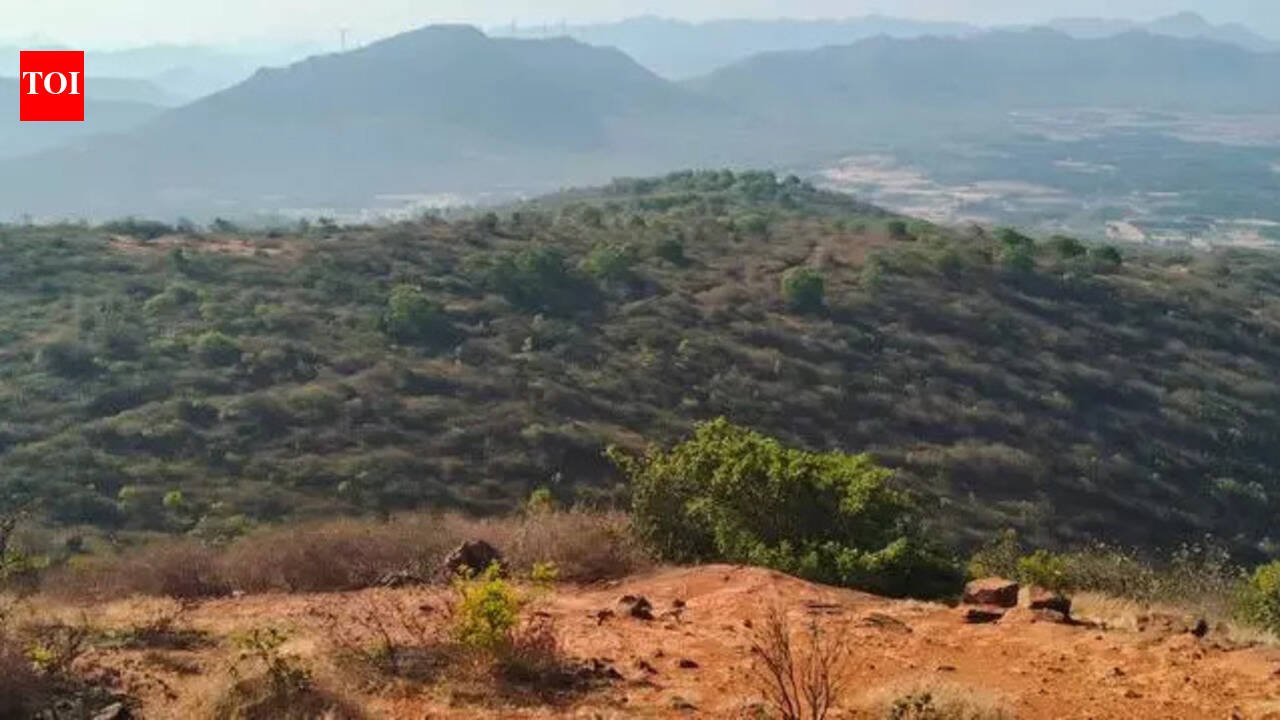
Pic: Jogimatti Wildlife Sanctuary in Chitradurga districtChitradurga: Access to Jogimatti hill station in Chitradurga district will remain restricted for one month, as the forest department imposed a ban on public and tourist entry citing the risk of wildfires during summer, officials said.
Chitradurga DCF Gopya Nayak said entry is not permitted for the general public and tourists due to accident risks. As Jogimatti is a scrub forest and summer is beginning, chances of wildfires are high. Hence, restrictions have been imposed.Access is granted only to senior officials, public representatives, and judges. Access will not be allowed until the end of February. With the onset of rains in March, new growth will appear in the Jogimatti Wildlife Sanctuary, and access will be granted to the public,” the DCF said.The restrictions came as the department took precautions against forest fires, which officials said were sometimes caused by tourists’ negligence. Last summer, wildfires devastated the forest area, and the department halted access even before the summer season began. Visitors who arrived early in the morning returned disappointed without visiting Jogimatti.Earlier, entry was allowed from 6am to 11am, with visitors required to return by noon, but entry was restricted due to the risk of fires during hot afternoons, DCF Gopya Nayak said.Jogimatti Wildlife Sanctuary, spanning 10,000 hectares, was described as the Ooty of Karnataka and was located at an elevation of 3,803 feet above sea level. In the rainy season, the area attracted visitors, and within the hill station were the Adumalleshwara Mini Zoo and the Himavat Kedara waterfalls, which were especially scenic during the rains.The sanctuary, covered with dense vegetation, was home to various plants and animals, including deer, bears, and leopards. The Jogimatti reserve forest begins 2km from Chitradurga city, and reaching the summit from the entrance requires travelling 8km along rocky paths, with driving becoming difficult during the rainy season.The sanctuary stretches across Chitradurga, Hiriyur, and Holalkere taluks. The area includes ponds and lakes such as Gopanakatte, Beeramallappana lake, Kumaranakatte, and Okkalikkan Kattes, and houses Jogigudda, Navilugudda, and the Chaudamma temple.Historians said monks once resided in the forest area. Officials said the forest was known for leopards and bears, with wild elephants appearing occasionally, and it had bison, deer, civet cats, peacocks, jungle fowl, porcupines, and wild boars, along with over 200 species of birds. Chitradurga district is also known for its historic fort, quails, granaries, valleys, and bastions, and Jogimatti is known as one of the windiest places in Asia.
