
At a time when India’s higher education architecture is poised for structural transformation under the proposed Viksit Bharat Shiksha Adhishthan framework, the future of teacher education has assumed renewed significance.
The transition from multiple regulators to a unified, multidisciplinary oversight mechanism is not merely an administrative reform; it represents a deeper reimagining of governance, quality assurance, and academic integration in line with the aspirations of Viksit Bharat 2047 and the National Education Policy 2020.
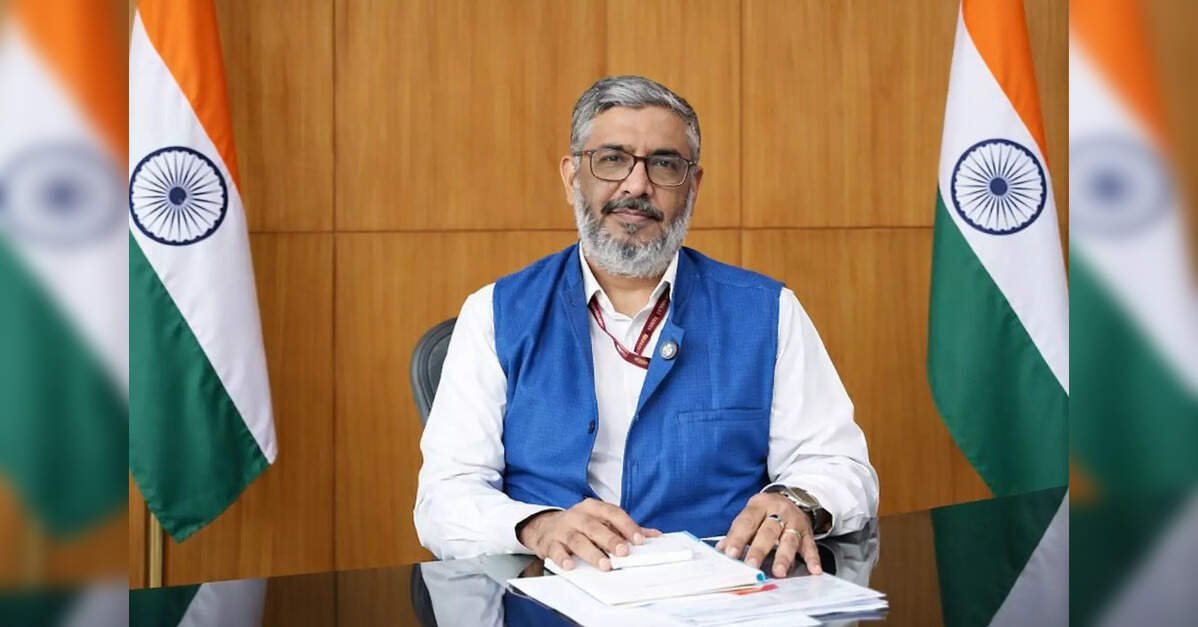
In this conversation with Anoop Verma, Professor Pankaj Arora, Chairperson of the National Council for Teacher Education (NCTE), reflects on the implications of regulatory unification, the “light but tight” model of accountability, and the evolving ecosystem of accreditation and standards.
He also outlines how NCTE is operationalising NEP 2020 through the Integrated Teacher Education Programme, the National Professional Standards for Teachers, and the National Mission for Mentoring—initiatives designed to create a robust, future-ready teacher for a globally competitive India.
Edited excerpts:
How do you view the significance of the Viksit Bharat Shiksha Adhishthan Bill, in reshaping India’s higher education ecosystem?
There has been a long-standing discussion that if we genuinely want to streamline recognition and governance in higher education, we cannot continue with multiple regulators functioning in silos. The National Education Policy 2020 clearly envisions that higher education institutions should transform into multidisciplinary institutions. If institutions are becoming multidisciplinary, then the regulator must also be unified and multidisciplinary.
At present, institutions often have to approach different bodies—UGC for liberal courses, AICTE for technical education and NCTE for teacher education. Under the VBSA framework, this fragmentation will be revisited. Recognition for multiple courses across disciplines would come under one umbrella. This represents an ease-of-governance model aligned with NEP 2020.
Importantly, VBSA proposes three verticals—one for recognition, one for accreditation, and one for norms and standards. While these verticals will function independently, they will operate under a single umbrella structure. This ensures uniformity across programmes, facilitates smoother credit transfers, strengthens the Academic Bank of Credits, and enables flexible multi-entry and multi-exit options for students. The reform is not merely regulatory—it is academic and student-centric.
What key reforms does this Bill introduce to strengthen quality, accountability, and governance in higher education institutions?
One of the major reforms proposed is the self-disclosure mechanism.
The Regulatory Council will maintain a comprehensive public digital portal, where HEIs will be required to disclose information relating to financial probity, governance practices, finances, audits, procedures, infrastructure, faculty and staff, academic programmes, and educational outcomes. The data submitted on this public portal will also serve as the primary basis for accreditation, thereby ensuring transparency, accountability, and consistency across the higher education ecosystem.
NEP 2020 has described this approach as “light but tight.” ‘Light’, because the regulator will not micromanage institutions or impose excessive procedural burdens. ‘Tight’, because accountability will be strict and consequences for misinformation will be serious.
Another critical reform is harmonisation. A single body defining norms and standards across technical, teacher, and liberal education will enable uniform credit frameworks and learning outcomes. This integration will strengthen both regulatory clarity and academic coherence, ultimately benefiting students.
In what ways does the Bill align with the vision of Viksit Bharat and the goals of NEP 2020?
The Prime Minister has given a clear mandate to align our efforts toward achieving Viksit Bharat by 2047. Education is central to that aspiration. A developed nation cannot emerge without a robust education system.
Viksit Bharat implies that Indian education must achieve global standards. Indian students should be welcomed worldwide, and students from other countries should see India as a destination for quality education. We are already witnessing prestigious universities from countries such as the United Kingdom, Australia, United States, Italy, and Malaysia expressing interest in establishing campuses in India.
For India to occupy a meaningful place on the global platform, our academic standards must meet international expectations. Education strengthens the economy, preserves culture and language, and produces ambassadors of India who represent the nation abroad. VBSA supports this global integration while retaining national priorities.
How do you see this Bill impacting teacher education and institutions under the purview of NCTE?
At present, NCTE performs two core functions. First, we grant recognition to institutions offering teacher education programmes after verifying infrastructure and faculty. Second, we define academic norms and standards for programmes such as B.Ed., D.El.Ed., M.Ed., B.P.Ed., and M.P.Ed. However, we do not currently have a strong, independent quality-check mechanism, once recognition is granted. Institutions may comply at the time of recognition, but continuous quality monitoring remains limited.
Under the VBSA structure, a dedicated accreditation vertical will ensure that all institutions—including teacher education institutions—undergo systematic accreditation. This fills a crucial gap. From the perspective of NCTE, this is a significant opportunity. Teacher education institutions will benefit from a unified and credible accreditation framework.
What message would you like to share with educators and institutions regarding the opportunities and expectations under this new framework?
Whenever systemic change occurs, stakeholders naturally express apprehension(s). But the composition of VBSA is designed to be inclusive. It proposes representation from state and central universities, higher education institutions, academicians, and even experts from industry and the corporate sector. It is a holistic structure.
There is no reason for fear. Initial challenges may arise, as they do with any reform, but they will be addressed over time. The Bill is in the public domain, and the Joint Parliamentary Committee has been constituted. Stakeholders are welcome to submit suggestions to strengthen the framework. We should not look at the future through the lens of the past. We must approach it with fresh thinking, guided by NEP 2020. The transformation is intended to simplify processes, improve transparency, and serve institutions, industry, and community more effectively.
How is NCTE translating the vision of NEP 2020 into concrete reforms in teacher education?
Post-NEP 2020, we have launched three major initiatives. The first is the Integrated Teacher Education Programme (ITEP), a four-year dual – degree programme introduced in 2023. As on date offered by 77 institutions, it has now expanded to 223+ institutions from the academic year 2026–27. Seat availability has increased from 6,100 to 17,000+. This growth indicates strong acceptance, and early implementation challenges are being addressed through continuous guidance.
The second initiative is the National Professional Standards for Teachers (NPST), mandated by NEP 2020. This digital framework ensures that teachers adhere to defined professional standards. Around 8,000 teachers have already been onboarded. The Ministry of Education has now mandated 100 percent onboarding of Kendriya Vidyalaya teachers, Navodaya Vidyalaya teachers, and participation from 500 CBSE schools. By March 2026, the target is to onboard 25,000 teachers.
The third initiative is the National Mission for Mentoring (NMM). Every teacher should have access to mentorship. We have organised conclaves and workshops across regions, including a major conclave at NIT Calicut attended by the Hon’ble Governor of Kerala, followed by workshops in Andhra Pradesh, Telangana, Tamil Nadu and Puducherry. Similar programmes are planned in the northern region, including a major conclave at IUCTE, BHU. These initiatives collectively operationalise NEP 2020 in tangible ways.
How do the National Mission for Mentoring and the National Professional Standards for Teachers work together?
Many teachers, especially new entrants, are expected to develop independently—by consulting seniors, referring to books, using platforms like DIKSHA, or attending state-level training programmes. The National Mission for Mentoring introduces a structured, digital platform-based solution.
Teachers can register either as mentors or as mentees. Experienced teachers can identify up to three domains of expertise from 30+ defined domains. New or even experienced teachers seeking guidance can register as mentees and connect in areas such as assessment, educational technology, or pedagogy. The platform enables structured interaction and professional growth. NPST defines standards; NMM enables personalised support to achieve them. Together, they create a continuous professional development ecosystem—digital, scalable, and national in scope.
What challenges do you foresee in implementing the VBSA Bill?
India’s federal structure means that both the Centre and the States play important roles in education. A uniform framework must coexist with institutional autonomy and state flexibility. The Bill clearly states that institutional autonomy—including that of IITs and NITs—will remain intact.
VBSA will provide a harmonised academic and regulatory framework while allowing flexibility wherever required. Institutions will no longer need to approach multiple regulators for different programmes. Regulatory processes will become smoother and more coherent. Minor implementation challenges are inevitable during transition, but they will evolve and stabilise over time. I do not see insurmountable obstacles. The intent is to simplify, integrate, and modernise India’s higher education system in line with national and global aspirations.
