
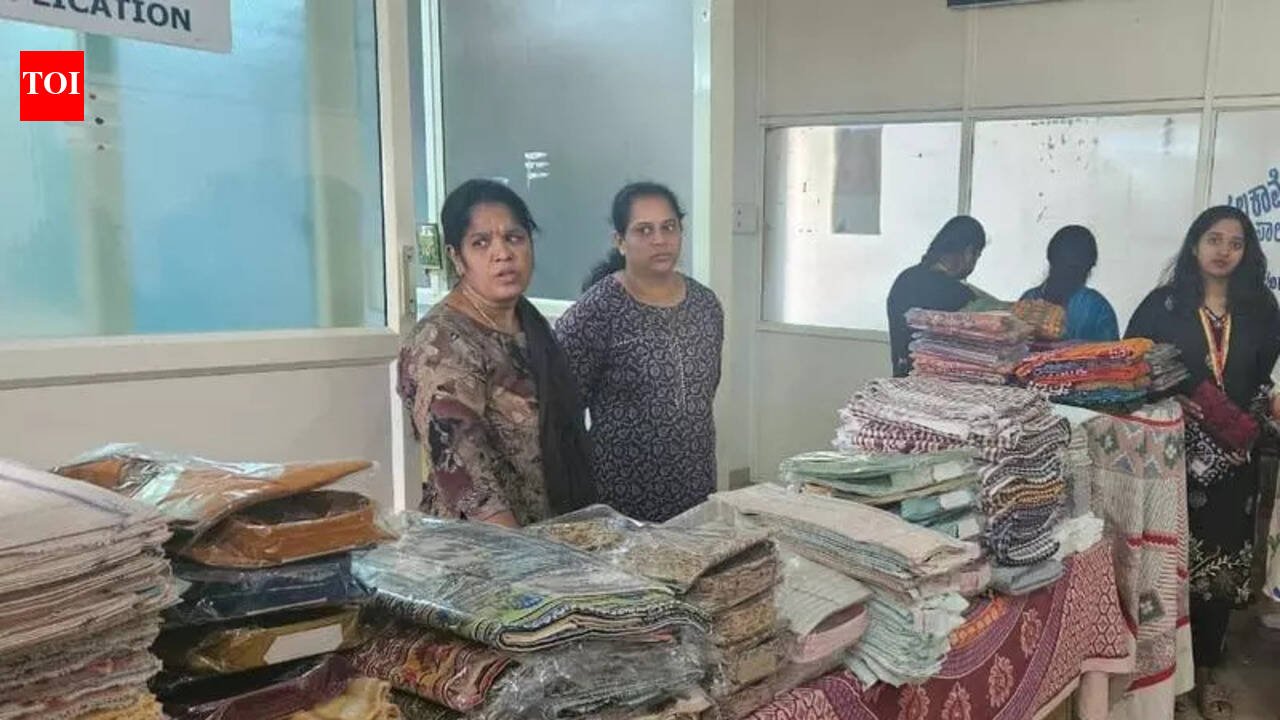
Hubballi: Complying with an order, state govt employees began wearing khadi on first Saturdays from Feb 7, but rather than spreading joy, traditional khadi makers are viewing the decision with trepidation. While govt employees have been posting photos of themselves in khadi attire on social media platforms, khadi activists fear the sudden spike in demand will spur production of fake khadi, a problem they say has existed from Mahatma Gandhi’s era. They argue that genuine khadi makers cannot meet the surge in demand and point out that fake khadi shops have even sprouted around Vidhana Soudha. They also say the govt should have consulted khadi associations before issuing the order. Shivanand Mathapati, secretary, Karnataka Khadi Gramodyoga Samyukta Sangh (KKGSS), Hubballi, told TOI that the association “wholeheartedly welcomed” the move since it would boost sales. “However, we are worried govt employees may buy fake khadi, which looks more fashionable and is available at lower prices,” Mathapati said. “Currently, we have sufficient stock. Though the chief secretary clearly said in the order that khadi should be purchased from 176 Khadi Sanghas registered with the State Khadi Board, employees may be deceived by fake shops. Also, though the govt asserted that it will be effective from April 24, staff are eagerly buying and wearing khadi clothes from Feb 7, but most purchases were from fake khadi shops,” he said. Santosh Koulagi, a khadi worker from Melukote, said even cloth certified by the khadi commission is “suspicious”. “Many Khadi Sanghas send yarn to mills in Tamil Nadu and buy milled cloth from there. Genuine khadi production is very minimal in the state; only handloom khadi is genuine. The other 80% is fake,” he said. He said Mahatma Gandhi himself distributed pamphlets about genuine khadi in Ahmedabad. “Khadi organisations should have been consulted. Providing an opportunity for fake khadi is an insult to Gandhi,” he said. A former member of the State Khadi Advisory Committee, said the sector today is “filled with confusion”. “Many handlooms stopped in the state, and the next generation of khadi handloom workers moved to other professions,” he said. “So, mill-made khadi dominates the market. It should not be called khadi, since it is just cotton cloth. If state and Union govts have real concern for khadi, they should ensure minimum wages are increased to Rs 800 per day for handloom khadi workers.” Box How to identify genuine khadi * Border is usually zigzag, not even * Cloth is rough * Fewer colour options * Highly absorbent; fibres are not compressed by machines
