
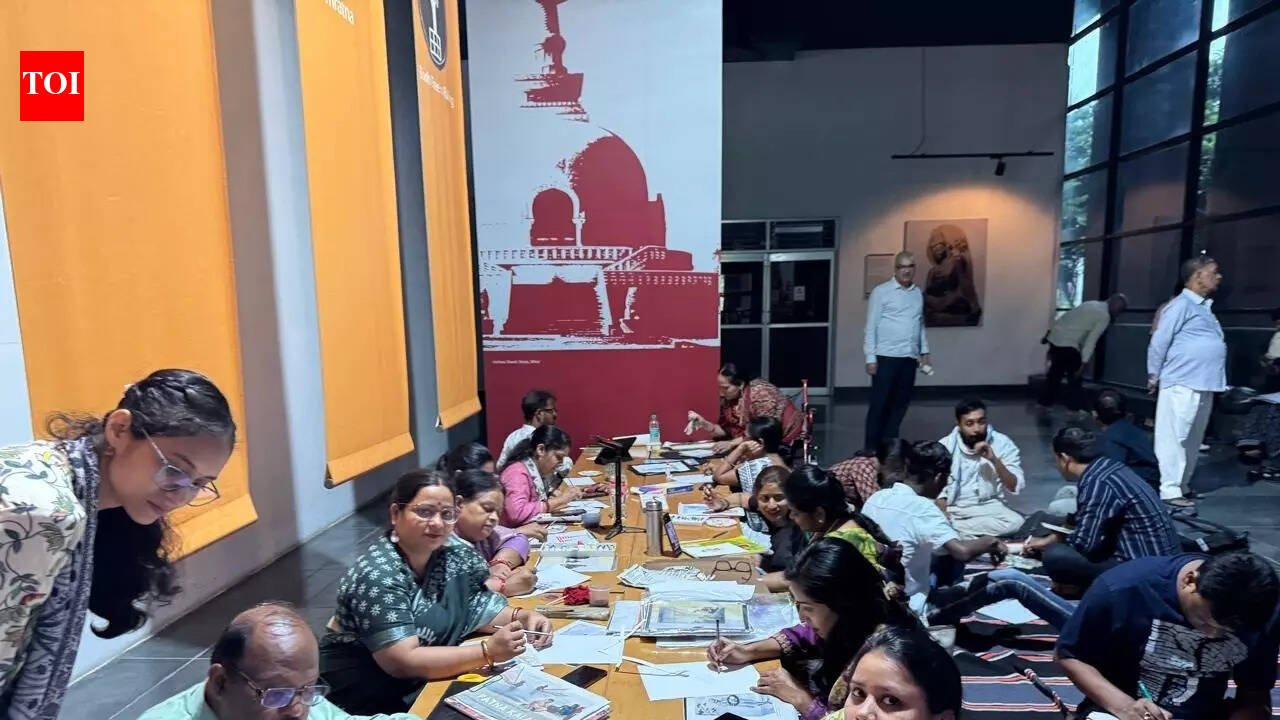
Patna: The style of the Patna School of Painting is regarded as a melting pot of two distinct influences — Mughal and European art. These paintings, dating from the 18th to the 20th century, are known for their naturalistic miniature style and the use of handmade, organic materials. They display formalised precision and are characterised by finely contoured facial features. Notably, these works rarely include elaborate landscapes, foregrounds or backgrounds.Recognised for their delicate line work, realistic figures and subtle colour palette, Patna Kalam paintings stand apart from other Indian miniature traditions due to their emphasis on everyday life and courtly elegance rather than mythological drama.Key materials included homemade paper (tulat or bamboo/jute sourced from Nepal), ivory and mica sheets, all painted using natural pigments derived from minerals, plants and bark, and applied with specialised animal-hair brushes.Themes: Unlike many Indian schools that focused heavily on religious or epic narratives, Patna Kalam artists depicted scenes of contemporary life. These included courtly gatherings and royal durbars; festivals such as Holi, Diwali and Chath, as well as processions; tradespeople, musicians and artisans; and portraits of nobles and elites.Principal of the College of Arts and Craft, Rakhee Kumari, said this emphasis on social realism gives Patna Kalam immense historical value. She added that this focus on everyday life makes it “an important visual record of life in eastern India during the Mughal and early colonial periods.”Technique: The Patna Kalam tradition evolved an individualistic style and technique, markedly different from the Mughal School, which bore strong Persian influence, and the less formal Rajput School. Moreover, Patna artists prepared their own pigments, brushes and paper, continuing practices followed by their ancestors in the Mughal courts.The paintings were executed directly with a brush, without preliminary pencil sketches. This distinctive method was known as ‘Kajli seahi’.Colours and pigments: The colours used were typically sourced from natural materials such as plants, flowers, bark and metals. The palette was generally muted — earth tones, browns and ochres — accented occasionally with brighter shades such as red or gold. The Kajli Seahi (lamp black) technique was widely used for outlining directly with a brush, without the use of pencils.The co-convener of Indian National Trust for Art and Cultural Heritage (INTACH), Bihar chapter, Shiv Kumar Mishra, said the pigments used to paint subjects were derived from readily available natural sources. He said the figures were usually rendered in deep sepia and muted red ochre. Clothing in the paintings was depicted in dull white with soft grey shadows, enhanced by touches of deep crimson and occasionally highlighted with dull gold and deep peacock blue.Brushes: For intricate detailing, artists used brushes crafted from the tail hair of squirrels. For bolder and broader strokes, they relied on hair taken from the tail of a goat or the neck of a hog.Medium: The paintings were generally created on sheets of handmade paper, often produced from cotton or rags (tulat), or from jute and bamboo, typically pasted together. Ivory was specifically used for miniature portraits. Mica — transparent sheets — was employed for delicate works such as festive scenes or decorative lampshades. Silk was occasionally used for ornamental paintings.
