
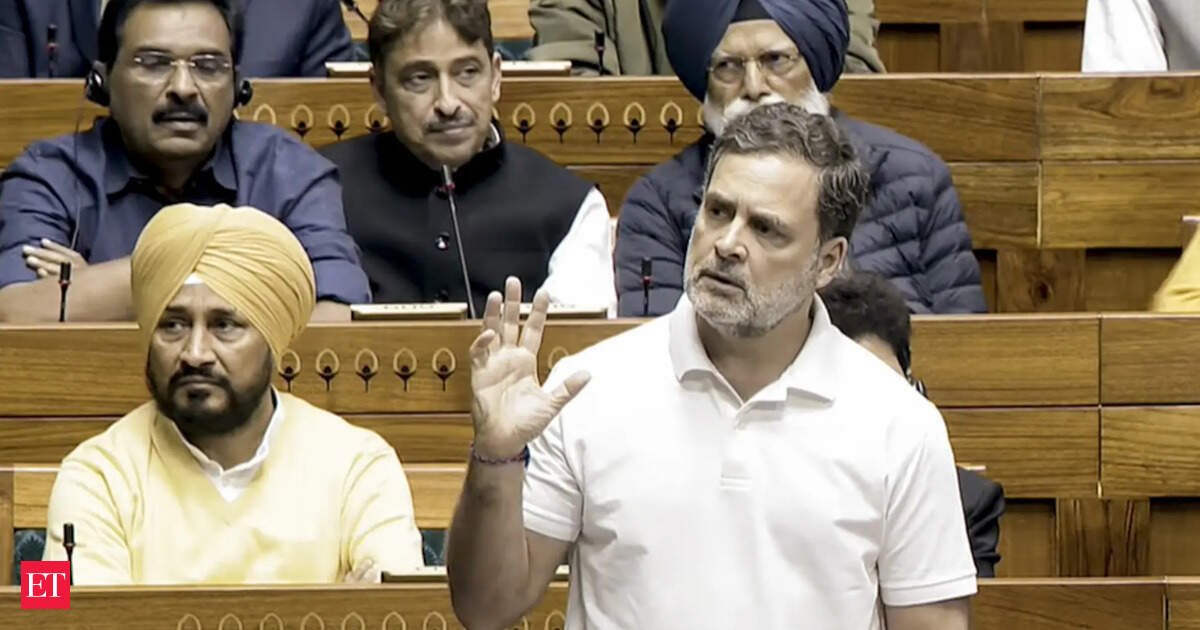
Participating in the debate on the Union Budget, the Congress MP and Leader of Opposition in the Lok Sabha said, “You’ve done a trade deal… The thing that is going to transform India in the 21st century, the thing that is going to make us a superpower in the 21st century, this is what the Modi government has done with our data. We give up control over our digital trade rules. Number two, there is no need for data localisation. Number three, free data flow to the United States. Number four, limit on digital tax. Number five, no need to disclose any source code. The finance minister is smiling. She likes to smile a lot. 20-year free tax holiday to anybody who wants it, to the big tax company. This is what you’ve done on data…”
Escalating his criticism, Gandhi accused the government of betraying the country’s sovereignty and dignity. “You have sold India. Are you not ashamed of selling India? You have sold our mother, Bharat Mata,” he said, describing the agreement as one-sided and damaging to national interests.
Read more: US tariffs on India jumps 6x to 18%, Rahul Gandhi slams trade deal with Donald Trump
He further alleged that the deal would hurt Indian farmers by allowing agricultural products from the United States to flood domestic markets, undermining local producers.
Gandhi also claimed that the Indian textile industry had been “finished,” arguing that key sectors had been compromised under the terms of the arrangement.
Framing the agreement as a broader strategic capitulation, the Congress leader said the government had effectively surrendered India’s control over critical aspects of its digital economy, including data governance, taxation, and regulatory oversight, which he argued are central to the country’s long-term technological and economic strength.Also read: Rahul Gandhi brings up Epstein files, Adani allegations in Lok Sabha
The government has not publicly responded in detail to Gandhi’s remarks in Parliament, but the India–US interim trade understanding has been positioned by the Centre as part of a broader effort to deepen economic ties with Washington and expand market access.
