
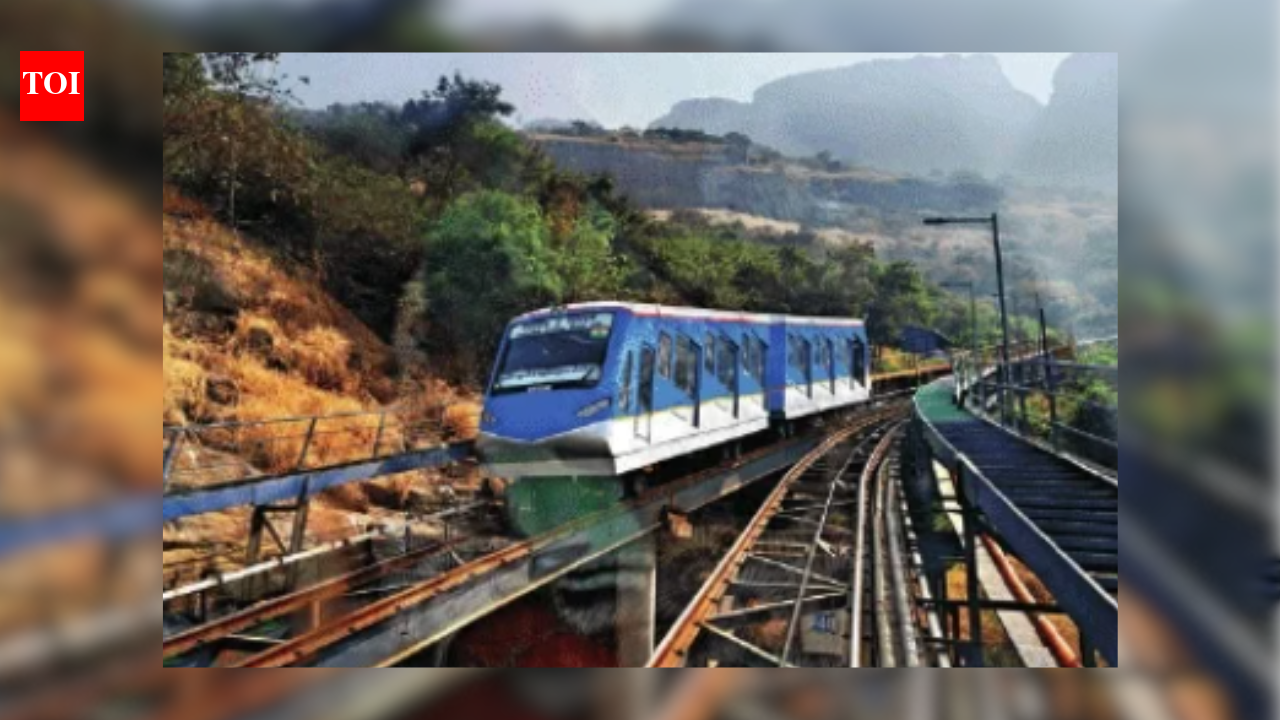
KALYAN: Malang Gad hill, popularly known as Haji Malang, has witnessed a major transformation since the launch of India’s longest funicular railway last month. The new railway has resulted in a four- to five-fold increase in the number of devotees visiting the historic shrine as well as tourists exploring the scenic hill, giving a strong boost to religious tourism and the local economy.The sharp rise in footfall has benefited 2,500 to 3,000 residents living on the hill. Most locals earn their livelihood by selling flower garlands to devotees, running hotels, shops, and operating guest houses near the shrine. Around 72,000 passengers have used the funicular railway in the last three weeks. On average, 3,500 passengers use the service every day. On peak days, the number crosses 8,000. Officials from the company operating the railway have said that considering the growing public demand, plans are underway to increase the frequency of trips as they have capacity to carry up to 16,000 passengers aday.
The shrine, located at an altitude of 2,590 ft, holds immense religious importance. Muslims believe it to be the dargah of Sufi saint Haji Malang Baba, while Hindus regard it as the samadhi of Baba Machindranath. Although the matter is currently under legal consideration, devotees from both communities continue to visit the site in large numbers. In addition to pilgrimage, Malang Gad is also a well-known trekking destination, attracting adventure enthusiasts to nearby Balekilla (fort on top of hill), situated at a height of 3,200 ft.With the funicular railway now in operation, a journey that earlier took nearly two and a half hours on foot can be completed in just seven minutes. Despite this convenience, many tourists and trekkers still prefer the traditional route, climbing 2,600 steps to enjoy the trekking experience during a two-and-ahalf-hour ascent.The funicular railway project was implemented through the Public Works Department (PWD) and constructed by Supreme Infrastructure India Limited. Company Director Pankaj Sharma said the railway is 1,174 meters long, making it the longest funicular railway in India.Supreme Infrastructure’s Chief Operating Officer, Zaheer Sheikh Ahmed, who has been associated with the project for the past 13 years, said construction on the hill posed several challenges. The work had to strictly follow guidelines of the Forest Department, Matheran EcoSensitive Zone, Ministry of Environment and Forests, and the Central Empowered Committee. Construction materials were manually transported using local labour, often under difficult weather conditions.
