


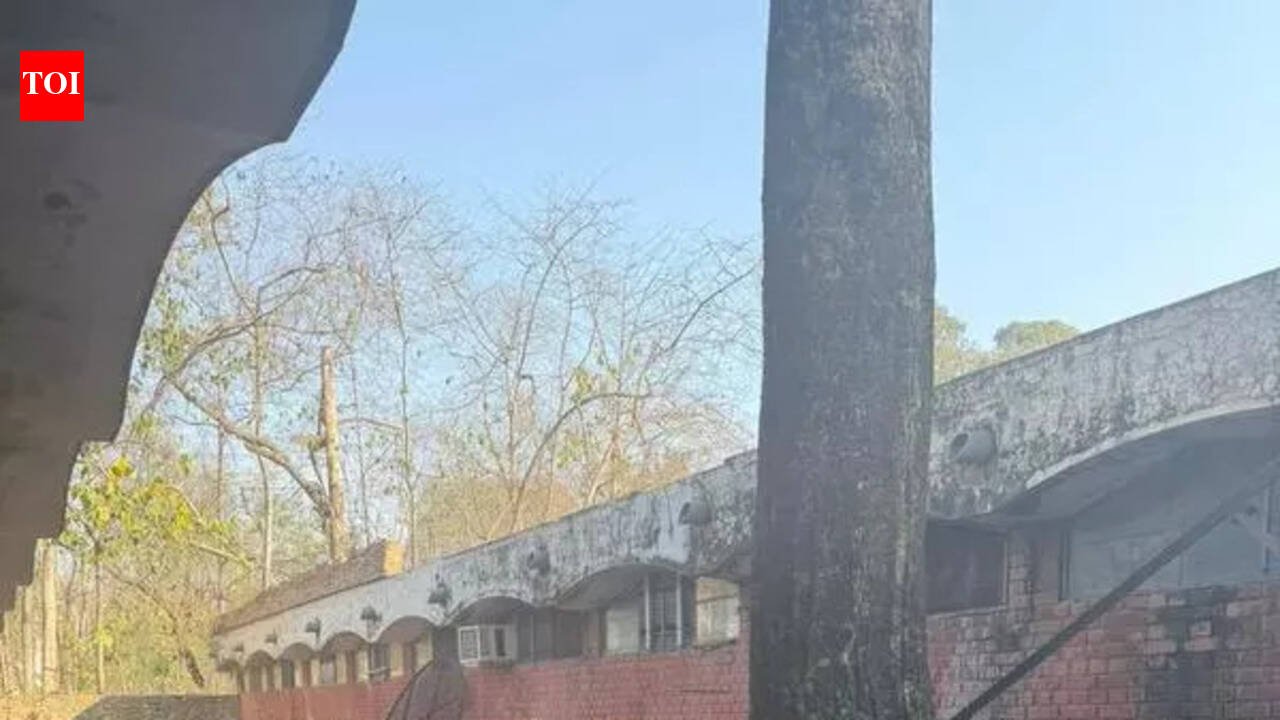
Chandigarh: The condition of the Experimental Wing of the Central Animal House at Panjab University has raised questions about compliance with statutory animal welfare norms and institutional accountability, following an on-site visit that found deteriorating infrastructure in areas used for housing laboratory animals for research.During the visit, broken and uneven flooring, water seepage marks, exposed masonry near ventilation points, debris-filled corridors and exhaust openings partially blocked with cardboard were observed in several experimental rooms. In some rooms, rainwater enters rooms where animals are housed. Walkways outside the rooms were poorly maintained, with visible waste and accumulated soil.Researchers working in the Experimental Wing said the condition of these rooms has remained unchanged for years. Multiple scholars said only a limited number of rooms have air conditioners, many of which were installed using personal or project funds. Others said tiles, exhaust fittings and minor civil repairs were paid for by researchers themselves to make the rooms functional for experiments.Concerns were also raised about temperature regulation and power supply. Scholars said no heaters are provided during winter and that frequent power cuts affect temperature control. Researchers working with mice said maintaining prescribed environmental conditions becomes difficult during extreme weather.The visit and questioning of authorities reportedly led to pushback within the university. Faculty members from departments whose researchers house animals in the facility, particularly pharmacy and zoology, said they were questioned by colleagues and seniors about why concerns were being raised. According to faculty members, the focus shifted to identifying complainants rather than examining the condition of the facility.When contacted, Prof Navneet Agnihotri, coordinator, Central Animal House, clarified at the outset that the Experimental Wing is not under the administrative control of the Central Animal House and that responsibility for these rooms lies with the departments to which they were allotted. She said the Central Animal House oversees only the breeding wing.Prof Agnihotri said the Central Animal House is maintained in a clean and hygienic condition in line with prescribed norms and that animal welfare and compliance are regularly monitored. She said the annual inspection of the Central Animal House is conducted by the CPCSEA main nominee, an external member, and the most recent inspection was held on January 20, 2026.On funding, she said the expenditure reflected under the Central Animal House in the Panjab University budget documents is meant exclusively for the breeding wing and not for the Experimental Wing. She added that the breeding wing, located immediately behind the Experimental Wing, is a restricted-access area.However, the Panjab University website lists the Experimental Wing as part of the Central Animal House and that animals housed there fall under the same statutory framework. According to officials, administrative distinctions do not alter legal obligations related to animal welfare.Budget documents accessed from the university’s accounts portal show repeated allocations under a single consolidated head titled Central Animal House, without a separate budget line for breeding and experimental facilities.The situation has raised questions about how responsibility, funding and ethical oversight are delineated when animals are housed in facilities that are publicly described as part of the Central Animal House but administratively disowned for maintenance and infrastructure.BOX: What norms mandateUnder the Prevention of Cruelty to Animals Act, 1960, and rules framed by the Committee for the Control and Supervision of Experiments on Animals (CPCSEA), every registered animal house and all areas where animals are housed or handled must comply with the following:Buildings must be structurally sound, leak-proof and maintained in good repairWalls and floors must be impervious, smooth and easily cleanableVentilation openings must be properly constructed, without gaps or temporary fixturesAnimal rooms must be protected from rain, dampness and extreme weatherTemperature and humidity must be maintained within species-specific limits at all timesContinuous power supply or backup arrangements are mandatory to maintain environmental conditionsAnimal rooms and surrounding areas must be kept clean, hygienic and free of waste accumulationCPCSEA guidelines explicitly state that all animal holding and experimental areas are subject to inspection and ethical oversight, and do not recognise internal administrative distinctions such as breeding wing or experimental wing for the purpose of animal welfare compliance.BOX: What budget documents showCentral Animal House listed as a single budget headAnnual expenditure roughly Rs 46–53 lakhIncludes salaries, maintenance and laboratory expensesDevelopment fund items include ACs for animal experiments, cages, freezers and computersNo separate allocation shown for breeding and Experimental Wings
