



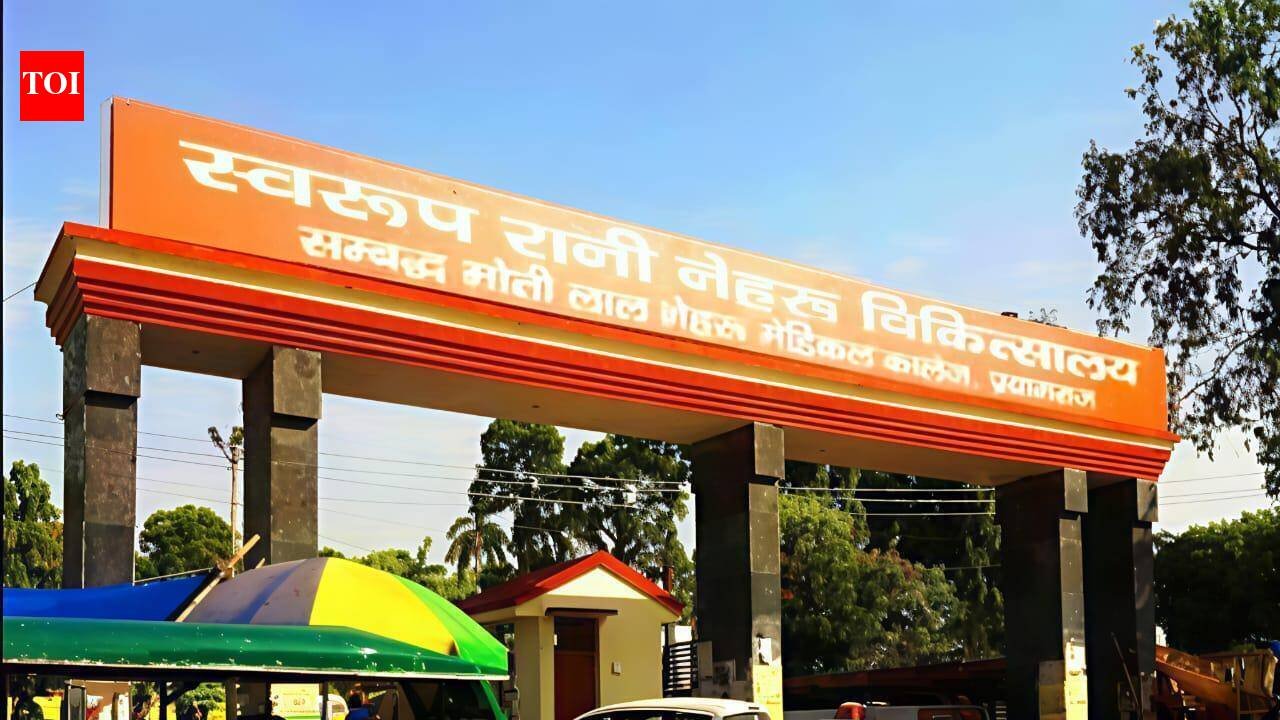
Prayagraj: In a move aimed at reducing delays in treatment of critically ill patients and preventing disputes over admission at the medicine emergency unit, the administration of Swaroop Rani Nehru Hospital (SRN) has started a dedicated Medicine Emergency Unit on the ground floor of the trauma centre. The facility will allow critical patients to undergo registration, preliminary assessment and treatment at the same location without being shifted to the medicine emergency on the second floor of the new building.The decision comes amid a dispute between doctors and lawyers following an alleged assault on an assistant professor of the medicine department on Monday and an earlier clash between doctors and advocate Sarvesh Shukla on Oct 22. Hospital authorities said the new arrangement is intended primarily to ensure that critically ill patients do not lose valuable time while being shifted between different sections of the hospital.Patients suffering from breathing difficulty and asthma, snakebite, sepsis and severe infections, brain stroke and haemorrhage, poisoning and drug overdose, among other serious conditions, will initially be managed in the new unit. The administration has kept 10 beds in the unit and two medicine doctors will remain on duty round the clock, says media in-charge, SRN hospital, Dr Santosh Kumar Singh.Earlier, most serious patients arriving at the trauma centre were shifted to the Medicine Emergency Unit on the second floor. According to Additional Medical Superintendent Major Dr Jitendra Shukla, shifting a patient to the unit could take around 30 to 35 minutes, including the time required to move the patient through the hospital. At times, when no bed was available, the situation led to arguments between attendants and doctors.Under the revised system, a patient will be registered and provided immediate treatment at the trauma centre. Once the patient’s condition is stabilised, he or she can be shifted to the second-floor medicine emergency if required.The hospital has also strengthened patient assistance at the trauma centre. Eighteen patient assistants will be deployed in four shifts, including two women. They will wear a designated uniform and will assist patients from the moment an ambulance reaches the trauma centre. Their responsibilities will include arranging stretchers and taking patients to the triage room. TPrincipal Dr A K Verma said, “Our priority is to ensure that no critically ill patient loses valuable time and, at the same time, we are taking steps to ensure a safe and orderly environment for patients, attendants and healthcare workers.”
