




Actor Imran Khan is set to get temporary relief in his legal battle against a notice directing him to leave India by October 28. The Bombay High Court on Monday deferred the hearing on his petition until November 2 at 3 pm after the Centre sought more time. The government assured the court that no coercive action would be taken against the actor in the meantime, and the notice would remain in abeyance until the next hearing.
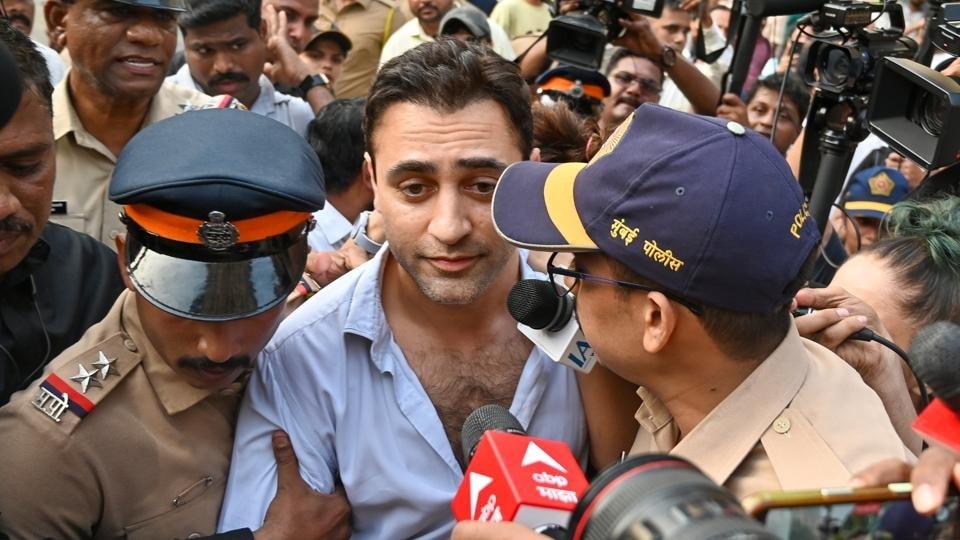
The development comes a day before the deadline given to Imran by the Foreigners Regional Registration Office (FRRO) to leave the country. The actor, who is a US citizen and holds an Overseas Citizen of India (OCI) card, has challenged the notice, calling it arbitrary and questioning the grounds on which it was issued.
What happened at the hearing?
According to Bar and Bench, a division bench comprising Chief Justice Mahesh Chandra Tripathi and Justice Advait Sethna heard the matter on Tuesday. The bench was informed in the morning that Solicitor General Tushar Mehta would appear on behalf of the Union government. Senior Advocate Venkatesh Dhond, representing Imran, later requested that the matter be taken up in the afternoon.
During the proceedings, the Additional Solicitor General sought more time and suggested that the matter be heard the following Monday. Dhond pointed out the urgency of the situation, saying, “but I have to leave tomorrow”. The ASG responded, “may keep it on Monday. Nothing will happen. That is an oral assurance.”
The court subsequently adjourned the matter to November 2 at 3 pm, with the order under challenge to remain in abeyance until the next hearing. The Centre’s assurance means Imran will not face coercive action under the notice before the matter is taken up again.
Why has Imran Khan been asked to leave India?
The case stemmed from an incident on October 10, when Mumbai Police detained the actor near August Kranti Maidan. The actor, a US citizen with an Overseas Citizen of India (OCI) card, was at the spot during a protest seeking Chief Election Commissioner Gyanesh Kumar’s resignation over the Special Intensive Revision (SIR) of electoral rolls. He was detailed along with his partner Lekha Washington and his cousin Zayn Marie Khan.
On October 14, the Foreigners Regional Registration Office (FRRO) issued a Leave India Notice (LIN), asking Imran to leave India by October 28. The notice was issued under Sections 7(2)(C) and 29 of the Immigration and Foreigners Act, 2025.
He challenged the notice through a writ petition, Imran Khan Pal v. Union of India & Ors., filed by lawyers Zulfiquar Memon, Parvez Memon and Kunal Vajani. He argued that the notice was arbitrary, violated Articles 14 and 21 of the Constitution, and had been issued without giving him a prior hearing or following the proper show-cause procedure.
What does his petition say?
According to Bar and Bench, Imran Khan challenged the notice in the High Court, calling it “arbitrary, illegal, perverse and drastic.” In his petition, he questioned the basis for the order, saying it was issued “without disclosing any reasons, supporting material, or specific statutory contravention.”
His lawyers argued that the authorities had neither conducted an inquiry nor issued a show-cause notice or given him a chance to explain his position before asking him to leave India. The petition also alleged that the action stemmed from a politically motivated complaint and showed “patent non-application of mind.”
He denied actively participating in the protest, maintaining that no demonstration was underway when he arrived at the spot. He also claimed that he had been detained along with family members without any valid justification. Questioning the severity of the action, his petition stated: “Not only is the notice manifestly disproportionate, if implemented, it would reduce the very principles of natural justice that the Respondents are duty bound to uphold to nothing but a dead letter.”
The actor also cited his longstanding ties to India, where he had lived since the age of two. He pointed to his family, marriage, education and professional life in the country, while stressing that he had no criminal antecedents. He sought interim protection against the notice and asked the court to quash it.
