



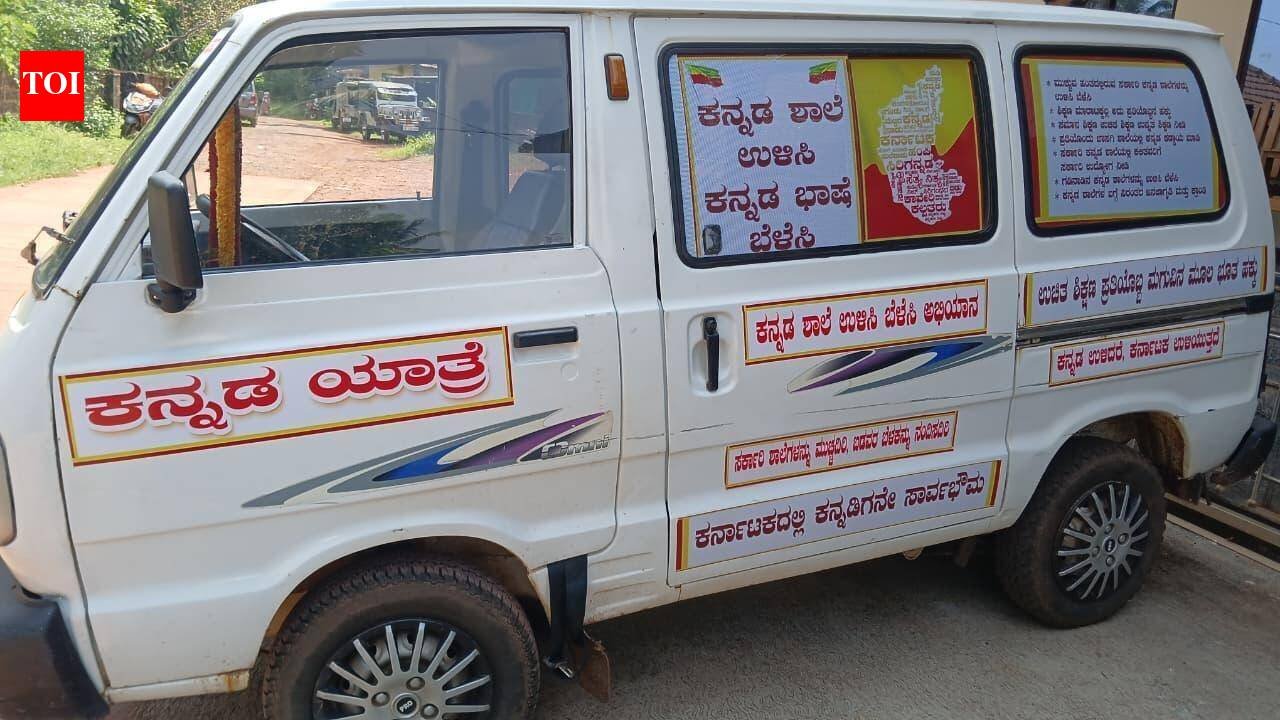
Mangaluru: Kannada-medium schools facing closure, children struggling to reach classrooms and teachers unable to teach in Kannada are among the challenges a year-long campaign will document across Karnataka’s 31 districts and 239 taluks. The drive will also include Kannada-medium schools in the border regions of neighbouring Goa, Maharashtra, Telangana, Andhra Pradesh and Tamil Nadu.Unais Peraje, state convener of ‘Kannada Shala Ulisi Belesi Abhiyana’, began the journey in Kasaragod, Kerala, planning to spend five days there. He eventually stayed for 40 days, visiting schools and trying to understand their problems first-hand.The campaign found Malayalam-speaking teachers teaching in Kannada-medium schools and raised the issue with local education authorities. Near Panathur, it found a Kannada school at risk of closure due to low enrolment.The campaign has so far made a small donation and plans to seek assistance from the Border Area Development Authority.In Delampady, children must walk about half a kilometre along dirt tracks to reach school. Peraje said the campaign has urged the local MLA to get the road repaired.“Our priority is to ensure that Kannada schools do not shut down. We believe our culture can be preserved only if Kannada schools survive,” Peraje told TOI.Peraje said more than 5,000 schools had closed across Karnataka in recent years. Over the past decade, the campaign has supported around 170 schools with furniture, stationery and equipment.Its key demands include preventing govt school closures, ensuring free and equal education for every child, and giving preference in govt recruitment to those educated in govt schools. It also seeks to make Kannada compulsory in private English-medium schools and wants govt employees to enrol their children only in govt schools.The journey is largely self-funded, with a team of four to five members travelling to schools and experiencing local challenges first-hand. Residents join them along the way.Besides documenting school conditions, the campaign records Kannada heritage, including inscriptions and forts, and recognises people working to promote the language.
