




Mumbai: The government’s proposal last month to repeal the Maharashtra Gramdan Act, 1964, has triggered a debate over the future of 21 villages in the state that are governed by a collective land-management system inspired by Gandhian thinker Acharya Vinoba Bhave.
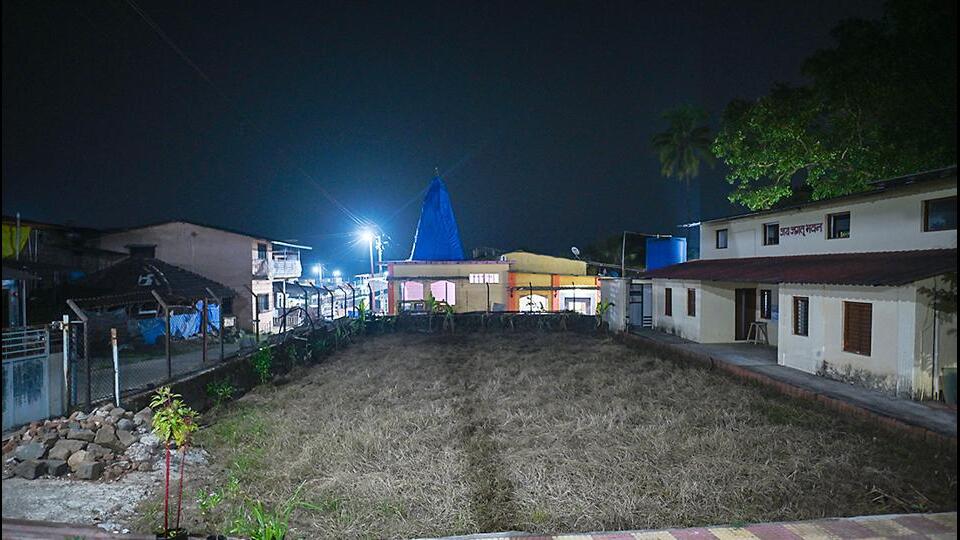
The Bhoodan movement rooted in the idea of trusteeship and Sarvodaya i.e. welfare of all, was an effort to appeal to the conscience of wealthy landlords to voluntarily give away one-sixth of their lands for landless peasants. This evolved in the late 1950s into the Gramdan movement under which entire villages were run on the trusteeship model rather than as agglomeration of individual landholdings.
At present there are 21 villages in Maharashtra—16 in Vidarbha, 1 in Kolhapur and 4 in Konkan—that are run on this model. The last village to adopt this model was Gadchiroli district in 2013. Instead of the panchayats, a village cooperative mandal is the governing unit in these villages.
But now, the Maharashtra government, citing changing socio-economic conditions, administrative difficulties and the need to do away with outdated laws, has proposed scrapping the Gramdan Act. Under the draft proposal, cooperative gramdan mandals would be scrapped and the villages folded in the panchayati raj framework, land ownership would be restored to original owners or their legal heirs based on historical revenue records, while land allotted to landless people and community groups would be regularised under specified tenure conditions.
“Lands donated decades ago will be returned to the original farmers or their legal heirs under the same tenure classification as recorded in pre-gramdan revenue records. Land allocated to landless labourers or community groups will be formalised under Occupant Class-II tenure. Tahsildars will verify historical 7/12 extracts to update land records, maps and e-registries. In cases where gramdan land has been transferred to third parties through registered transactions, district collectors will conduct inquiries. Permissible transfers will be regularised, while other transfers may be regularised under Occupant Class-II tenure upon payment of the prescribed state premium (Nazrana),” says the draft notification.
If the Bill gets passed in this winter session of the Assembly, it would fundamentally alter the existing arrangement of collective land management. The Maharashtra Pradesh Sarvodaya Mandal has opposed the repeal calling it an invitation to land grab whilst there are others who say collectivisation comes in the way of villagers getting bank loans and access to certain government schemes.
Ramesh Dane, president of the Maharashtra Pradesh Sarvodaya Mandal, conceded that farmers in the 21 gramdan villages (Maharashtra has over 42,000 villages) often struggle to obtain bank loans because the land is vested in the Gram Mandal rather than held entirely in their individual names. They also face problems accessing compensation for crop losses and other government benefits. But instead of repealing the original Act, the government should amend it so that its original objectives of social justice, community welfare and protection of land remain relevant. “Banks should be allowed to lend to Gram Mandals, which could assume collective responsibility for repayment. Repealing the law would be a mistake when targeted amendment in the law could resolve the practical difficulties,” said Dane.
Vijay Diwan, a disciple of Vinoba Bhave who looks after the Vinoba Bhave Janmasthan Pratisthan at Gagode in Raigad strongly opposed the proposed move and threatened satyagraha should the Gramdan Act be repealed. Upcoming infrastructure projects have driven up property prices across Raigad, and Gagode is not immune to development pressures. “The government itself has become an exploitative institution. Various laws are being enacted to acquire land from farmers and give it to industrialists. Forget giving land to the landless, the government is even taking away land owned by farmers,” he said. “This village (Gagode) has a 400-acre hill that is collectively owned. This location is picturesque and the hill is located between three dams. It is obvious that some people are eying the land.”
Devaji Tofa, former sarpanch of Mendha (Lekha) village in Gadchiroli, similarly alleged that the Gramdan Act was being repealed to free the land held by these villages to benefit industry. “This will be done at the cost of the tribals for whom Jal, Jungle, Jamin (water, forest and land) is their way of life. To say that the collectivist model is outdated and depriving farmers of government schemes is a false narrative. In fact, the principal objective of the Act is to ensure that no one remains landless, jobless and deprived of education, health facilities as the gram mandal is their guardian,” he said. Mendha (Lekha) was the last village in Maharashtra to announce its Gramdan status as recently as 2013. However, that too was mired in delay. The state government notified a gram mandal there only in February 2024, following an intervention by the Bombay High Court. The court had also observed that the prolonged inaction had frustrated the Act’s objectives.
Sarvodaya activists have urged chief minister Devendra Fadnavis to suspend the repeal process and publish a comprehensive list of gramdan villages, detailing their land and administrative status. They have also sought consultations with affected villages, a review of the Mendha (Lekha) case and the Bombay High Court’s ruling, and a white paper on the Act’s implementation over the past six decades. They have also demanded amendments to outdated provisions to clarify rules governing land ownership, cultivation, inheritance, transfers and access to credit, along with a clear definition of the powers and responsibilities of gram mandals and gram panchayats.
But land collectivism comes up short when it comes to issues like land acquisition for infra projects. Maharashtra Sarvodaya Mandal chief Ramesh Dani points to the dispute over land in Kundewahal village in Pen taluka of Raigad district as an example. According to Dane, 365 acres at Kundewahal were donated under the Bhoodan movement, of which 150 acres were acquired by CIDCO in 1994 for the Alibaug–Virar Industrial Corridor. The Bhoodan Gramdan Samiti has approached the court over compensation. As the land is owned by the gram mandal, villagers in possession of the plots cannot claim the entire compensation in their individual capacity. Their rights extend to 60% of the compensation, while they are seeking the full amount.
Randhi Savarkar, BJP lawmaker from Akola and Sai Dahake, the BJP MLA from Karanja, have argued that the gramdan system has become outdated and that it leaves farmers at a disadvantage compared to those in villages governed by conventional gram panchayats. “The gramdan concept was introduced at a time when land redistribution and the welfare of rural communities were important concerns. Our taluka has three such villages, which are deprived of government schemes like loan waiver, crop insurance as the land ownership of the farmers from these villages is disputed. The government can’t make exceptions for these villagers because of legal constraints,” said Savarkar.
Further, he said that in the gramdan villages representatives are elected by voice vote which was “against the constitutional concept of a secret ballot.” Savarkar claimed he did not see any benefit to the villagers from the gramdan model. “Restrictions or uncertainties surrounding transfer of land can also create practical difficulties. People may hesitate to accept or purchase such land because they fear complications involving the village community, ownership rights, mortgages and future transactions. These issues need to be examined to understand whether the original objectives of gramdan remain relevant, and how the system can be made more practical today,” he said.
