



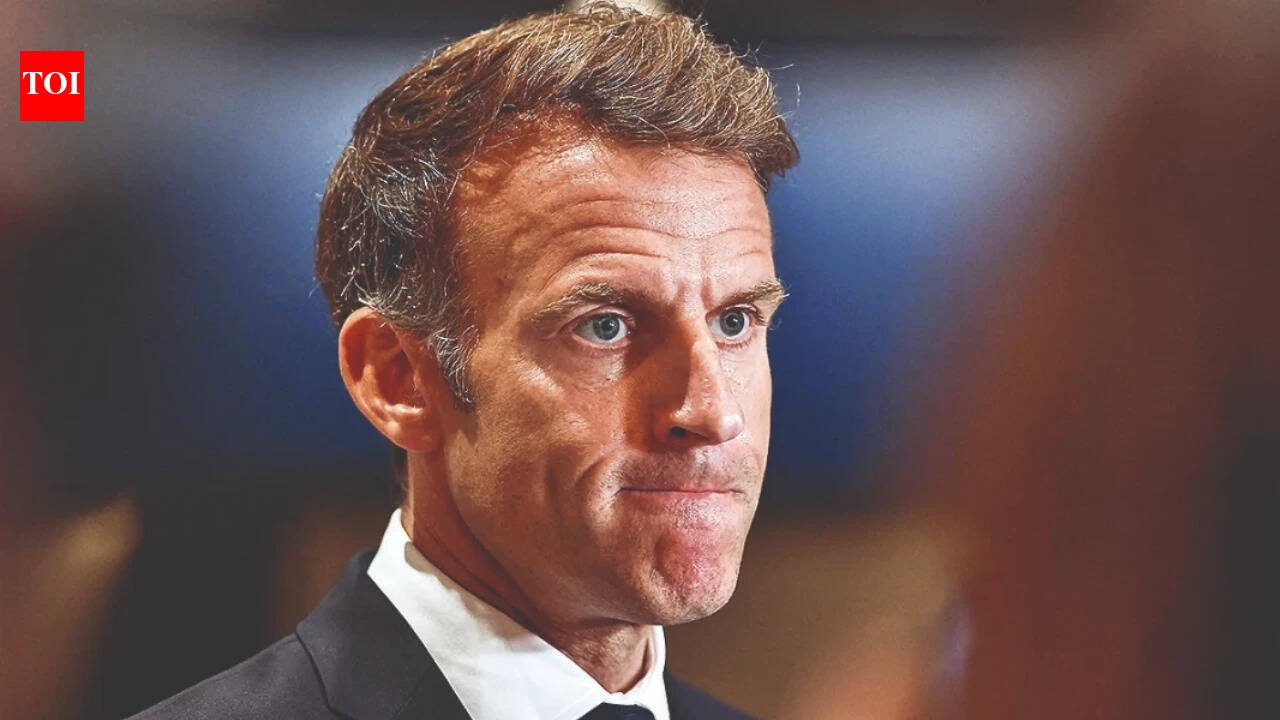
French President Emmanuel Macron on Thursday said “illegitimate” protests would be banned in the coming days, as authorities stepped up security measures ahead of another weekend of demonstrations following widespread riots and looting across the country.Macron also announced plans to convene a defence council meeting on Friday to review the security situation, with fresh protests expected over the weekend.Speaking after a meeting with intelligence officials, Prime Minister Sebastien Lecornu and senior ministers, Macron said demonstrations organised by recognised groups, including trade unions, would be offered alternative routes to protect businesses from further damage. “France will bar protests that are not organised by unions in coming days,” he said, as quoted by Reuters.The French president further blamed “seditious” ultra-left groups and vandals for the violence that swept across France last Saturday, when masked protesters clashed with police, looted shops and set vehicles on fire.His remarks came as authorities banned demonstrations planned for Thursday in several major cities, including Paris, Lyon, Lille and Grenoble, citing fears of renewed violence.In Paris, restrictions were imposed around sensitive locations, including the Elysee presidential palace, parliament buildings and major railway stations. The ban, effective until 8 pm local time, also covered central areas that suffered extensive damage during the weekend riots.The restrictions have raised concerns over the right to protest, even as the government maintains that tougher measures are necessary to prevent further destruction.Authorities are preparing for another major demonstration on Saturday, when activists associated with the “yellow vest” movement, which shook France with protests over fuel prices in 2018 and 2019, are expected to join the mobilisation.Lecornu, who met trade union representatives on Wednesday, said a “massive” security operation would be deployed to prevent a repeat of last weekend’s violence.Union representatives, however, said the talks failed to produce concrete proposals to address their concerns. They are now preparing for another nationwide day of action on November 5, urging public and private sector employees to participate.
How did the protests begin?
The unrest began last month at a high school in Creteil, southeast of Paris, where students protested against staff shortages. The demonstrations soon spread to other Paris suburbs and eventually across France, with students organising class strikes, blockades and marches.Students have raised concerns over inadequate school funding, deteriorating infrastructure and teacher shortages, particularly in lower-income neighbourhoods. Some have also demanded changes to the university admissions system, which they consider complicated and unfair.What began as a student-led movement has since evolved into broader protests over the rising cost of living and dissatisfaction with the government’s response to social and economic grievances.The unrest comes months before France’s next presidential election, adding to the political pressure on his administration as it struggles to contain the demonstrations while addressing demands for reform.
