



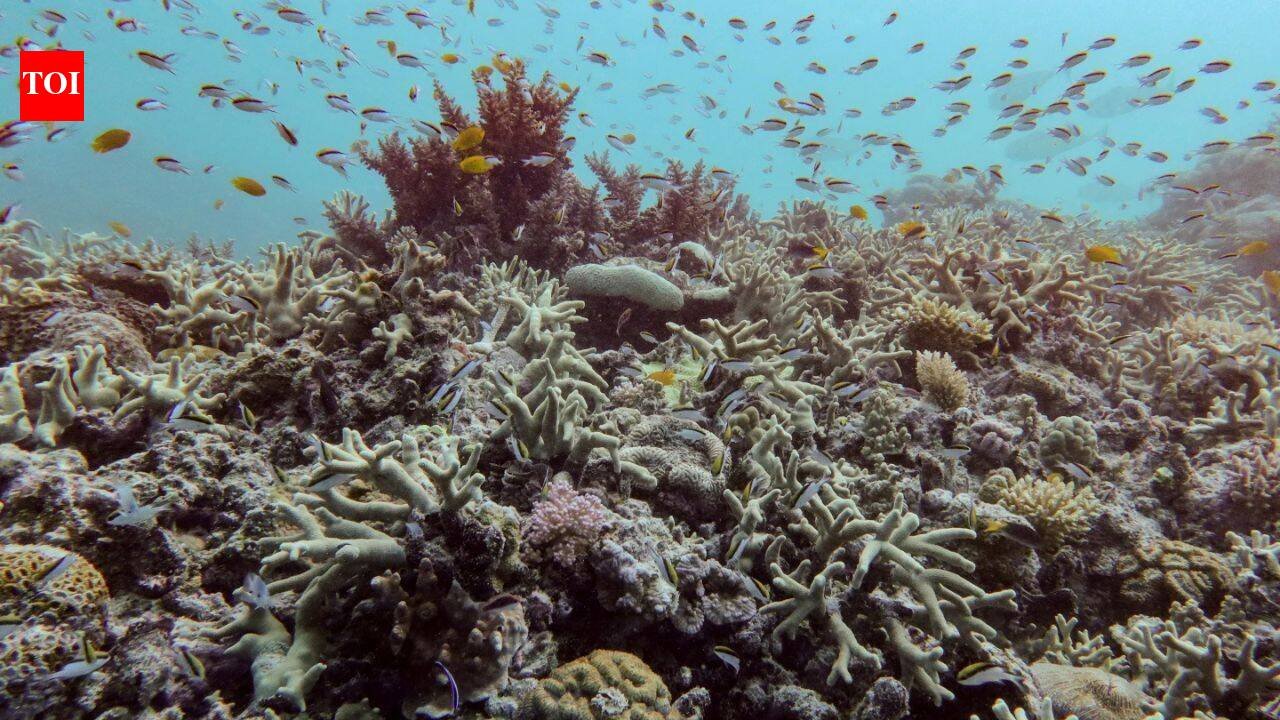
Almost all of the world’s shallow-water coral reef ecosystems could face collapse by 2075, as rising ocean temperatures and increasingly severe marine heatwaves push some of the planet’s richest marine habitats towards a critical tipping point.According to a global assessment by the International Union for Conservation of Nature (IUCN), 96 percent of shallow-water coral reef ecosystems face a critical risk of collapse when projected climate change impacts are taken into account.The findings were announced on the sidelines of a United Nations biodiversity conference in Albania on Thursday, with the IUCN warning that warming oceans and marine heatwaves are pushing coral reef ecosystems towards collapse.The assessment’s scientific lead, Mishal Gudka, said the escalating threat should serve as a warning to accelerate conservation efforts rather than trigger despair.“The risk of coral reef collapse is escalating, but this must be a wake-up call rather than a cause for despair,” Gudka said.IUCN director-general Grethel Aguilar also stressed the importance of coral reefs as an indicator of ocean health, warning that their deterioration threatens ecosystems and communities that depend on them.“Coral reefs are one of the clearest vital signs of the ocean’s health,” Aguilar said.The assessment identified climate change as the “single most consistent threat driving coral reef decline worldwide”, with rising sea temperatures and marine heatwaves accelerating the deterioration of reef ecosystems.It covered 127 tropical and subtropical ecoregions and approximately 188,362 square kilometres of coral reefs globally, examining the threats that could undermine their long-term survival.The threat extends to some of the world’s best-known reef systems, including Australia’s Great Barrier Reef, the Coral Triangle in Southeast Asia and the western Pacific, the Mesoamerican Barrier Reef System and the Red Sea coral reefs.The assessment placed these major reef systems among those facing critical levels of risk, raising concerns over the future of marine biodiversity and the communities that depend on these habitats.Mishal Gudka, the scientific lead of the assessment, cautioned that the findings should not be interpreted as an inevitable end for all coral reefs.“Coral reefs have shown a remarkable ability to bounce back from devastating bleaching events,” Gudka said. “Pockets of surviving, resilient coral reefs can still remain in the future, so we must do everything within our reach to set them up for success.”Coral reefs, often described as the “rainforests of the sea”, support around a quarter of marine species and are among the world’s richest ecosystems in terms of biodiversity. They provide food and livelihoods through fisheries and tourism, while acting as natural barriers that reduce wave energy and help protect coastlines from erosion and storms.The IUCN assessment warned that when a reef ecosystem collapses, living hard corals disappear and are replaced by algae, rubble and sponges.This transformation reduces the habitat available to reef fish and other marine organisms, undermining the ecosystem’s ability to sustain biodiversity and support coastal communities.
