



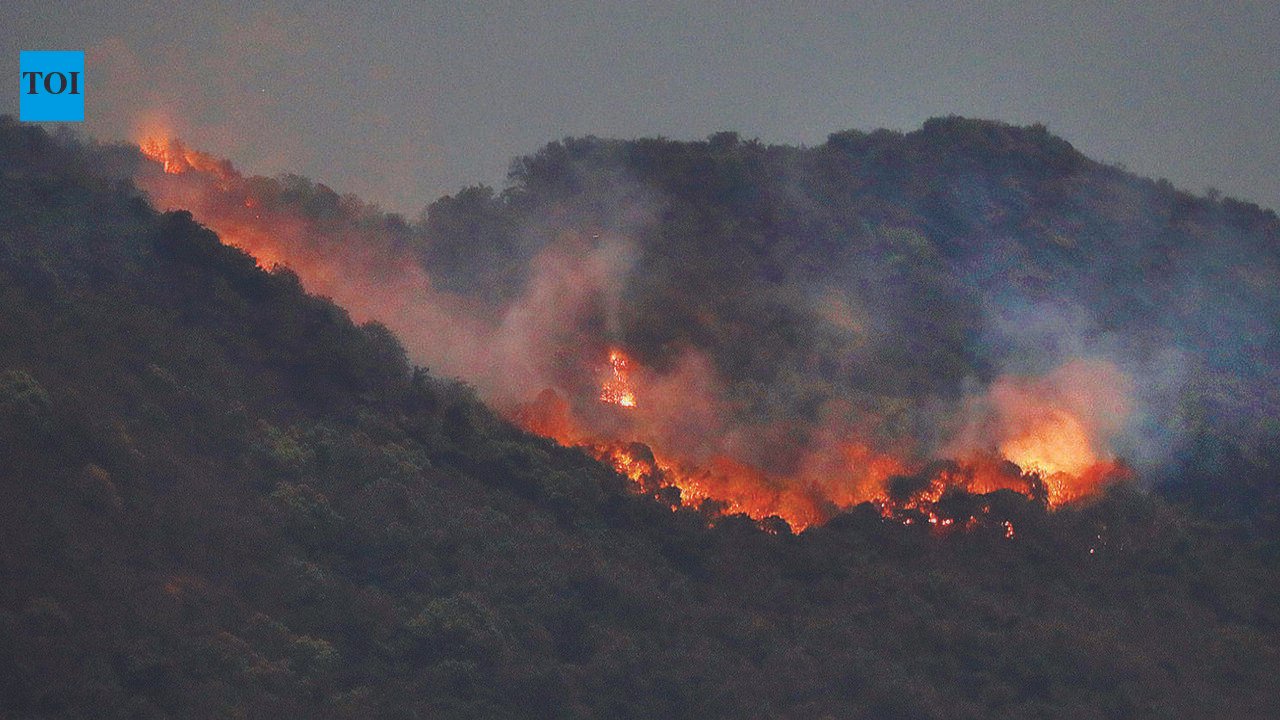
Panaji: With maximum temperatures in Goa touching 37°C in Oct and a potentially challenging dry season ahead, the forest department is preparing to issue an advisory on forest fire risks, while scientists are working on an early warning system to identify vulnerable areas and enable quicker ground-level responses.Conservator of forests Navin Kumar said that the department was assessing prevailing conditions and would formulate an advisory after further evaluation. The department is not planning to issue one immediately but expects to engage with the public by mid-Nov.“We are receiving scattered post-monsoon rainfall, so currently, nothing is alarming. However, the preparations come amid concerns over the expected El Nino phase between Dec and Feb, which could complicate conditions during the coming months,” he told TOI.Climate scientist and assistant professor at BITS Pilani’s Goa campus, Rajiv Kumar Chaturvedi, said that the forest department and scientists were working to prepare systems and refine operational procedures.Under an existing memorandum of understanding with the forest department, Chaturvedi’s team is developing a location-specific forest fire early warning system. It will use meteorological parameters, particularly humidity, alongside other weather indicators, to estimate fire risk across monitored areas.The system is expected to begin issuing alerts from Dec for locations where adequate observation infrastructure is available, particularly wildlife sanctuaries and other protected areas.“Currently, the network has six observation sites, including one established in collaboration with ISRO and the forest department. This limited coverage, however, presents a significant challenge. Goa has approximately 67% forest and tree cover encompassing extensive wildlife sanctuaries and territorial forests. The available observation network is insufficient to provide comprehensive, ground-based monitoring across the entire forest landscape,” he said.The proposed system will classify fire risk by location, helping ground teams increase surveillance and detect fires before they escalate. It is also being designed to forecast the likely direction of fire spread using wind speed and direction.“Once a forest fire reaches a certain intensity, controlling it becomes more difficult. Early detection and rapid response are therefore critical to preventing small incidents from becoming major fires,” he said.
