



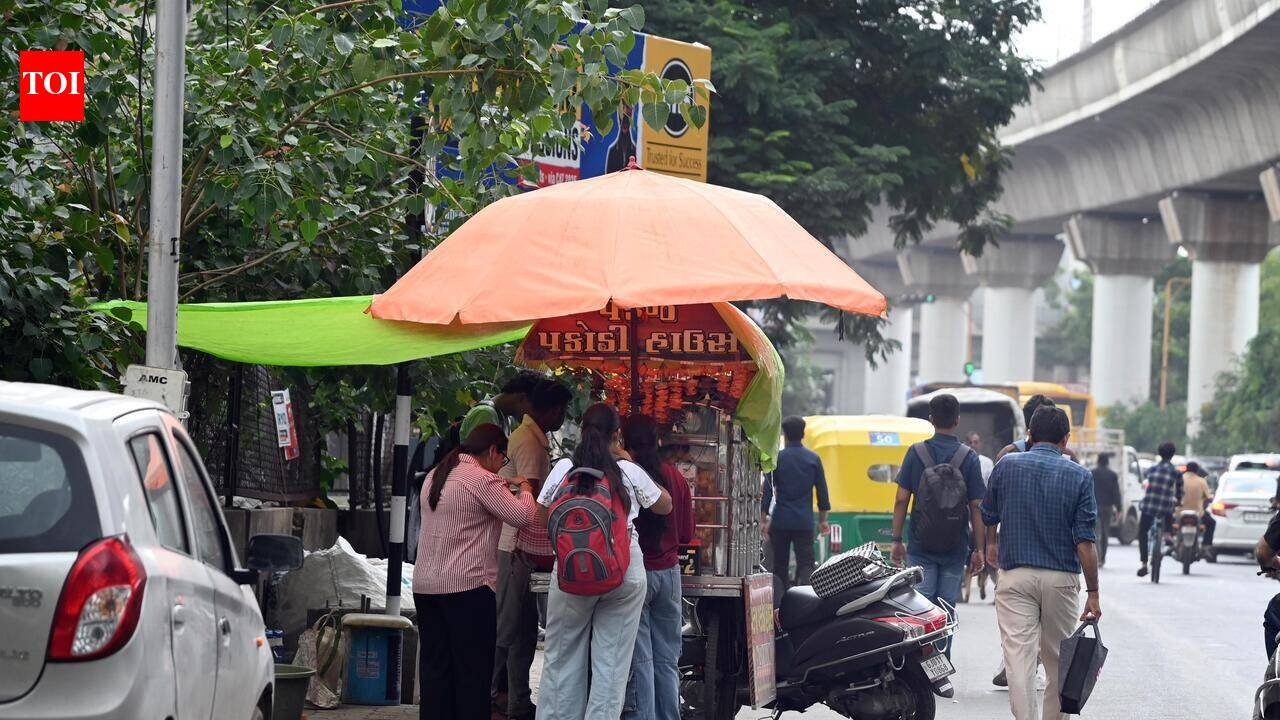
Ahmedabad: Ahmedabad has cycle tracks and footpaths, but parked vehicles, street vendors and poor utilisation often defeat their purpose. Now, a study involving 1,523 commuters has quantified what it would take to persuade Amdavadis to ditch their vehicles and embrace walking or cycling.The yet-to-be-peer-reviewed research paper, published on Elsevier’s SSRN platform, examines the factors influencing the intention to choose non-motorised transport (NMT) in Ahmedabad. Titled “Factors Affecting Behavioral Intention to Choose Non-Motorized Transport in Ahmedabad, India”, the study was authored by Anuj Bhardwaj and Shalini Rankavat, associate professor at Shiv Nadar University’s Transportation Engineering Laboratory.The research identifies accessibility as the strongest factor shaping commuters’ satisfaction with walking and cycling infrastructure. For at least half of commuters to be satisfied enough to regularly consider NMT, accessibility must reach 28% of its potential, followed by street design quality at 25.1% and comfort factors such as shade, cleanliness and lower noise at 21%.Environmental conditions, including air quality and protection from heat, must cross 17%, while basic safety provisions such as adequate lighting and safe pedestrian crossings need to reach 13.5%.
walkability study
But infrastructure alone cannot change travel habits. The study finds that positive attitudes towards walking and cycling must exceed 47.7%, while commuters’ confidence in being able to use these modes conveniently and safely must reach 40.9% for half the population to consider them.“Accessibility emerges as the strongest external determinant of satisfaction,” the study states.The challenge is steeper when the goal shifts from encouraging commuters to widespread adoption. Accessibility infrastructure must achieve 93.1% of its potential, while positive public attitudes must reach 97.7%.
