



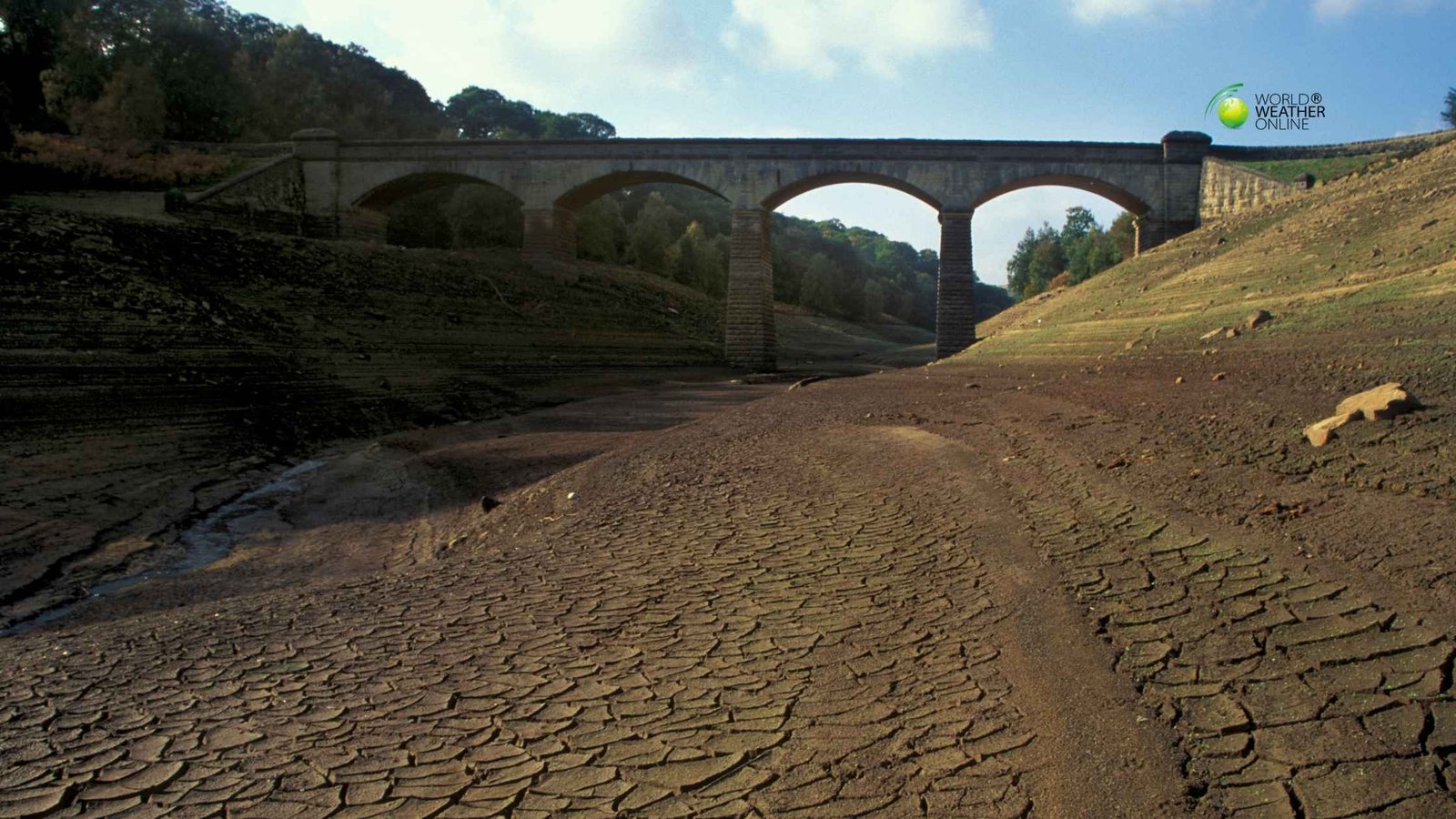
Autumn usually brings welcome rainfall to England, replenishing rivers and reservoirs after the warmer summer months. However, this October exposed reservoir beds and unusually low river levels, telling a completely different story. Despite occasional showers and cooler temperatures, much of the country remains trapped in a prolonged drought, with some water reserves approaching dangerously low levels.
Recently, on October 15, 2026, severe drought was declared in parts of Cornwall, Devon, Dorset, Somerset, and West Sussex. The latest figures show that around 82% of England remains in drought, while national reservoir storage has fallen to just 54% of capacity.
Ultimately, this situation raises an important question as winter approaches. Why are England’s reservoirs still running dry when the season for replenishing water supplies should already be beginning?
England’s Driest July in Nearly Two Centuries
However, this is not a newly emerged crisis. It has developed long before October, following months of exceptionally warm weather and inadequate rainfall.
According to a weather assessment of July 2026, England experienced its driest July in records dating back to 1836. The country received only 6.5 millimetres of rainfall, approximately 10% of the usual monthly total.
When compared with the previous records, last year in July, it was 13.4 mm, making this year’s rainfall shortage particularly remarkable. Parts of southern England also experienced exceptionally dry conditions alongside prolonged sunshine and high temperatures.
In fact, hot weather increases evaporation from soils, reservoirs and vegetation, while sustained dry conditions reduce the amount of water reaching rivers and underground aquifers. Meanwhile, household consumption and agricultural irrigation can place additional demands on already depleted supplies.
So, by the beginning of autumn, England had accumulated a substantial water deficit that scattered rainfall alone could not reverse.
Why Autumn Rain Has Failed to Refill Reservoirs
It is generally assumed that the arrival of cooler weather automatically ends a drought. But it does not, particularly when the ground and underground water reserves have been depleted for several months.
The Environment Agency’s latest drought report also reveals that England had received only 26% of its usual October rainfall by the mid of this month. The south-east and south-west had recorded just 18% of their monthly averages.
Rainfall must first restore moisture to dry soils before sustained runoff and underground recharge can help replenish some water sources. Reservoir recovery also depends on local catchment conditions, incoming river flows and continued water demand.
The latest weather monitoring shows how serious the shortage has become. Specifically, the National reservoir storage stands at just 54% of capacity, as mentioned earlier. Moreover, there are around 18 reservoir groups which are below 50%.
The UK Centre for Ecology & Hydrology also reported that September’s rainfall brought limited groundwater recovery, leaving many rivers and underground reserves below their normal seasonal levels.
Wimbleball and Ardingly Face Critical Water Shortages
Specifically, two reservoirs illustrate the severity of England’s autumn drought more evidently than the national average.
Wimbleball Reservoir in Somerset had fallen to approximately 16% of capacity, while Ardingly Reservoir in West Sussex stood at around 19%. Both were far below their expected seasonal storage levels of approximately 75%.
These reservoirs largely support public water supplies across parts of southern England, making their exceptionally low storage an immediate concern for the communities that depend on them.
Other reservoirs, including Clatworthy, Chew Valley, Colliford and Hanningfield, have also been classified as “exceptionally low”.
Although some northern reservoirs have shown modest improvement after recent rainfall, the recovery has not been widespread. More than two-thirds of monitored reservoirs recorded declining storage during October.
Therefore, this contrast aptly demonstrates why a few wet days in one region cannot solve a drought affecting most of England.
England’s Rivers, Wildlife and Farms Are Also Suffering
The drought extends well beyond household water supplies, with prolonged low river flows creating serious problems for freshwater ecosystems and agriculture.
There are around 403 confirmed environmental incidents linked to drought and dry weather during 2026 by mid-October. These included 99 incidents involving dead fish and 41 associated with algae.
Since reduced river flows can increase water temperatures, concentrate pollutants and diminish the oxygen available to aquatic wildlife. Some waterways and canals have also experienced restricted navigation because of insufficient water.
Furthermore, agriculture faces additional uncertainty as farmers prepare for the next growing season. Exceptionally low river flows may prevent irrigation reservoirs from refilling adequately during winter, potentially affecting crop production in 2027.
Will Winter Rainfall Finally End England’s Drought?
The coming months will be really crucial for England’s water reserves, although meaningful recovery will require sustained rainfall rather than a handful of wet weekends.
The Environment Agency estimates that some areas need around 120% of their normal rainfall over the next six months to recover from the current deficit. Even then, recovery may vary considerably between surface reservoirs, rivers and underground aquifers.
The UK’s hydrological monitoring outlook also indicates that river flows and groundwater levels in parts of south-east England could remain below normal despite a potentially wetter autumn.
Households can help reduce demand through shorter showers, repairing leaks and using appliances efficiently. You can also monitor upcoming rainfall through the most credible World Weather Online’s London weather forecasts.
In conclusion, England’s autumn drought is a reminder that water shortages do not necessarily disappear when summer ends. With reservoirs severely depleted and winter approaching, the coming rainfall season will help determine whether the country begins 2027 with recovering supplies or another difficult period of water scarcity.
