



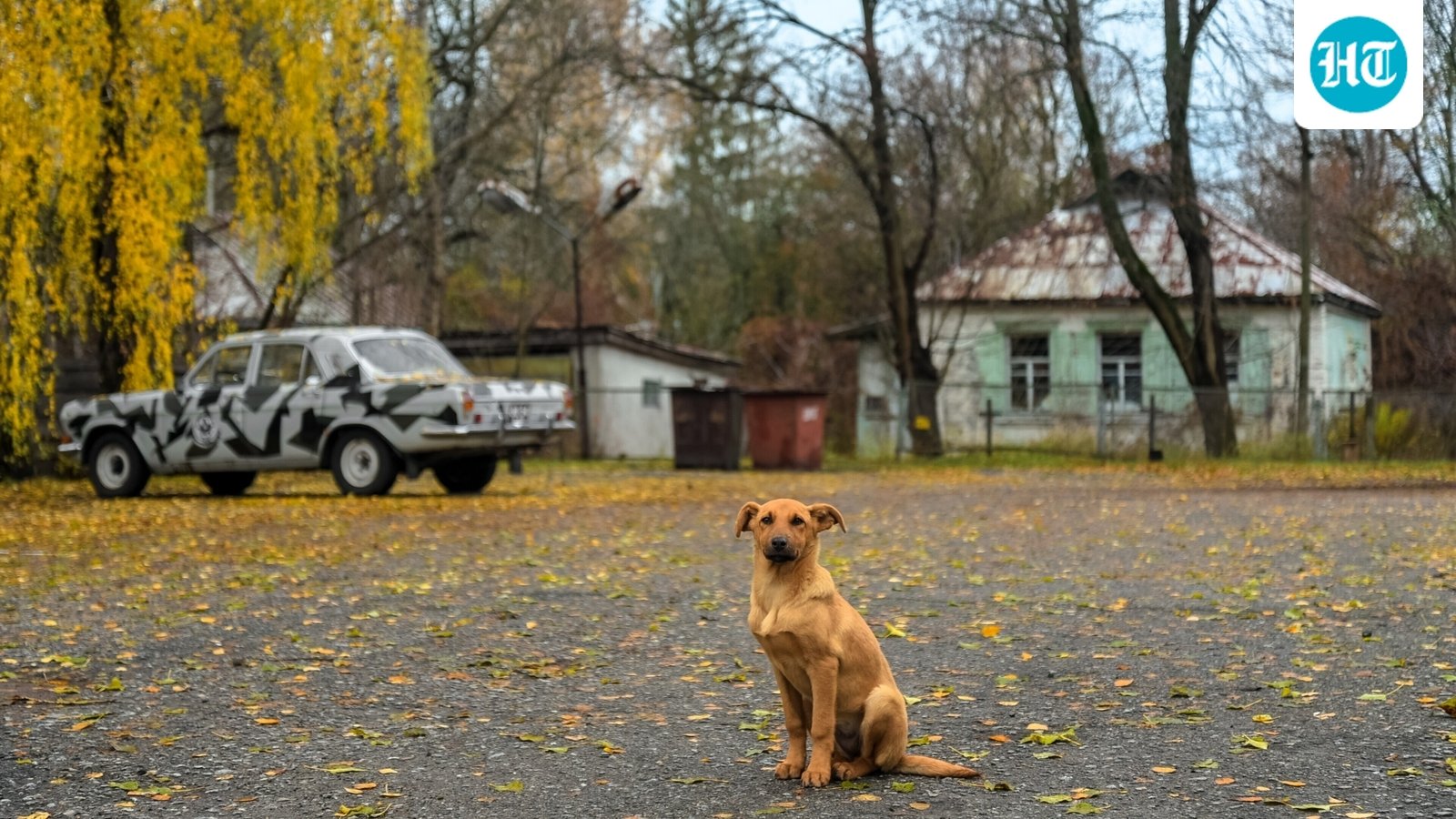
Following the explosion at the Chernobyl nuclear power plant in April 1986, many people had to evacuate their homes, and some could not take their pets with them. Decades later, free-roaming dogs continue to live around the nuclear power plant and neighboring settlements, in a region that has changed drastically since the disaster. The relationships among these dogs, along with their genetic diversity, offer researchers an opportunity to study how animal populations develop in an environment shaped by human displacement and nuclear contamination.
In March 2023, a study published in Science Advances analyzed the DNA of 302 dogs at three locations in the region. The researchers found genetic differences between dogs living near the nuclear power plant and those in Chernobyl City, about 15 kilometers away. They also identified 15 family groups, revealing a complex pattern of relationships among the animals.
What the dogs’ DNA has shown
The research team collected blood samples from free-roaming dogs between 2017 and 2019. The animals were sampled near the Chernobyl Nuclear Power Plant, in Chernobyl City and in Slavutych, a city about 45 kilometers from the plant. By comparing 129,497 genetic markers, the scientists examined similarities among the dogs and investigated how closely related individuals were.
The results showed that dogs living near the power plant had genetic profiles that differed from those of dogs in Chernobyl City. The researchers also identified a distinct population in Slavutych, indicating that the sampled animals did not form one genetically uniform group across the region.
To understand family relationships, the team examined parent-offspring connections among the sampled dogs. They found that 233 of the 302 animals, about 77%, had a parent or offspring represented in the dataset. The analysis identified 15 family groups, with the largest containing more than 162 dogs and including relatives sampled at different locations.
These family connections suggest that the populations were not completely isolated. Some dogs had relatives living in different parts of the region, indicating that animals or their ancestors may have moved between locations. However, the genetic differences between the populations remained evident despite these connections. The findings show that related dogs can be spread across different locations without making the populations genetically identical.
The scientists also examined ancestry associated with Western dog breeds and found differences among the sampled populations. This provided additional information about the dogs’ genetic histories, although the analysis did not trace every animal directly to a pet abandoned during the 1986 evacuation.
Why the findings matter beyond Chernobyl
The exclusion zone contains industrial facilities, abandoned settlements, and wooded areas, creating different conditions for animals living within it. Human activity also continues at the nuclear power plant, where workers provide food to some of the dogs. As a result, the animals’ survival reflects not only their ability to find resources but also their interactions with people and the surroundings in which they live.
The genetic findings offer a way to understand how these local conditions intersect with family relationships, breeding, and movement. Comparing dogs from several locations allowed the researchers to identify differences that might have been missed by studying a single population. It also helped reveal connections between animals living in different parts of the region, alongside the genetic distinctions associated with their locations.
Importantly, the study did not establish that radiation caused the genetic differences observed among the dogs. Its focus was on population structure, ancestry and family relationships, rather than demonstrating that radioactive contamination had produced particular mutations or adaptations. Further research would be needed to determine whether long-term, low-dose radiation exposure has affected the animals’ biology and to distinguish any such effects from other influences.
Forty years after the Chernobyl disaster, the dogs offer researchers an opportunity to investigate how a domestic species persists in an unusual environment. Their DNA provides insight into both the relationships among individuals across the exclusion zone and the differences between populations living relatively close to one another. Understanding these patterns can help scientists investigate how geography, breeding history, and environmental conditions shape animal populations over time.
