



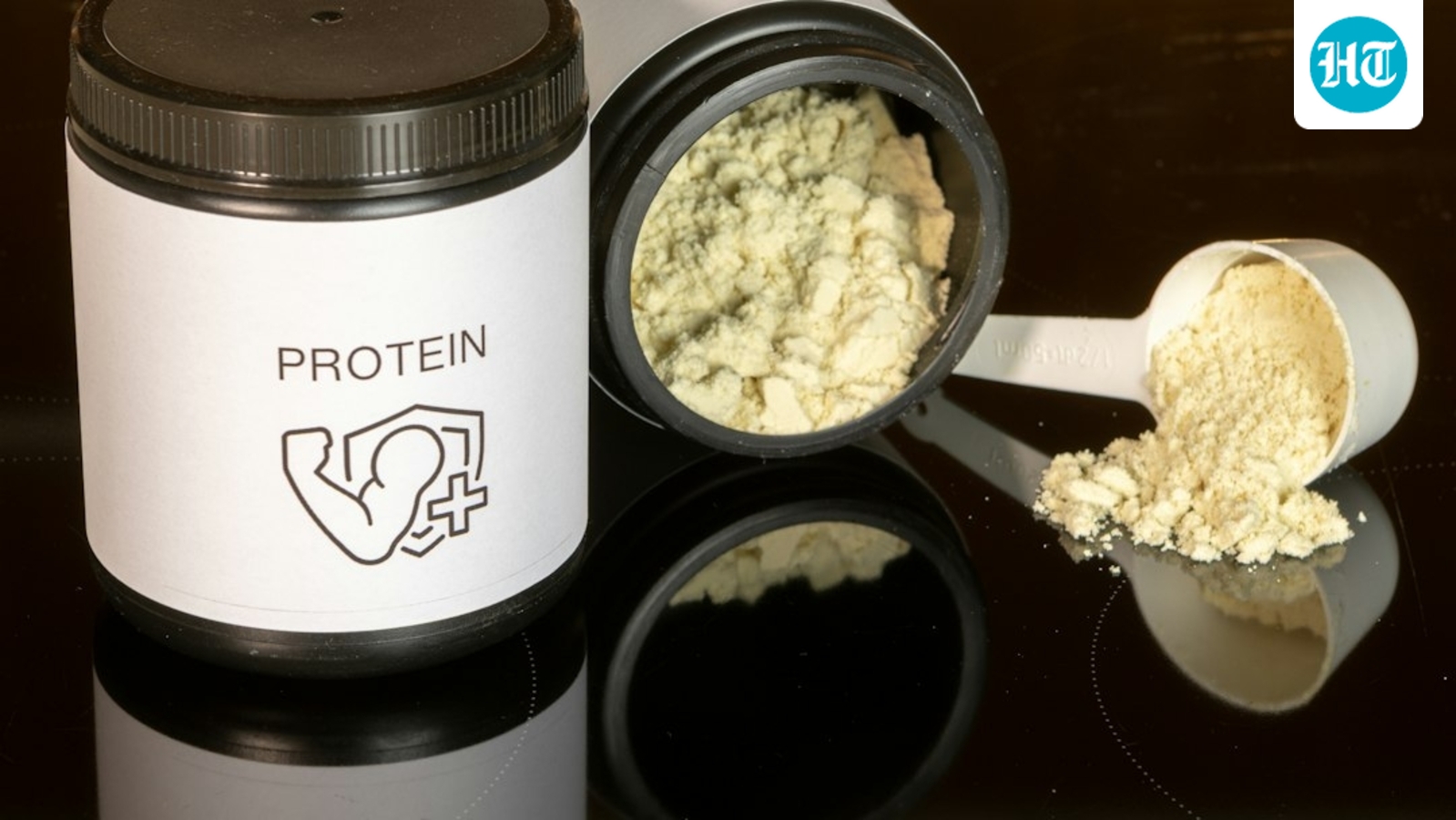
Protein powder has taken over the internet, with conversations around this essential macronutrient gaining momentum. However, with so many options on the market, choosing the right one can be challenging. In an interview with HT Lifestyle, Dr Rajeev Sharma, Vice President, Medical Affairs at Tata 1mg, shared a simple guide to choosing the right plant protein.
Also read | This chocolate lava cake with 13g protein and just 166 calories, ‘supports your goals, not ruins them’: Full recipe
Consider the texture
Dr Rajeev highlighted that texture sounds like a trivial thing to judge a protein on, next to grams and amino acids, and it is routinely dismissed as one. Plant protein has a long-standing reputation for being gritty and chalky, and that reputation is the single most common reason people give up on it. “A protein you find unpleasant is a protein you stop taking, at which point its nutritional quality is beside the point. So a smooth, genuinely drinkable texture is not a luxury. It is a legitimate quality criterion,” said Dr Rajeev.
Complete protein
The next thing to consider is whether it is a complete protein. This is where plant protein differs from dairy in a way worth understanding. According to Dr Rajeev, a whey or milk protein is complete on its own. Most single plant sources are not; taken individually, they tend to be low in one or more of the nine essential amino acids your body cannot make for itself. “The way a well-formulated plant protein solves this is by combining sources so that they compensate for one another,” explained Dr Rajeev.
When you read the label, look for a blend rather than a single protein, and for a clear statement that it provides all nine essential amino acids. That phrase is doing real work, and its absence is worth noticing.
Dose
A protein is only useful if each serving delivers a meaningful amount, and for most adults that means somewhere in the region of 20 to 25 grams per serving, with a reasonable quantity of BCAAs within that. When judging a protein powder, start by looking at the serving size and what each serving actually delivers.
A good benchmark to consider is that a 36-gram serving should provide around 24 grams of protein and 5 grams of BCAAs. Any less than that and you are often paying for flavour and filler around a small amount of actual protein, and having to take two servings to fulfil body requirements that one would have.
Sweetening
The fourth thing you need to check is how it is sweetened, because this is where a lot of otherwise reasonable products quietly fall down. If you are choosing plant protein in order to eat more cleanly, it makes little sense for it to arrive full of artificial sweeteners. “I would look for products naturally sweetened, carrying zero added sugar and free of artificial sweeteners and unnecessary additives,” said Dr Rajeev.
Quality
What separates a trustworthy claim from a hopeful one is whether it has been independently verified. Testing done in a company’s own facility is not the same as testing by an independent, accredited third party, and a single check at launch is not the same as testing every batch. The strongest signal you can look for is batch-level testing at a NABL-accredited laboratory, ideally with the results made available to you.
Consider your needs
Finally, match the protein to your own body. If dairy tends to leave you uncomfortable, which is the case for a great many people, a plant protein is very often the easier everyday choice, precisely because it is dairy-free. This is not a small consideration. A protein that suits your digestion is one you will take consistently, and consistency, more than any single feature on a label, is what actually delivers results over time.
Note to readers: This article is for informational purposes only and not a substitute for professional medical advice. Always seek the advice of your doctor with any questions about a medical condition.
