



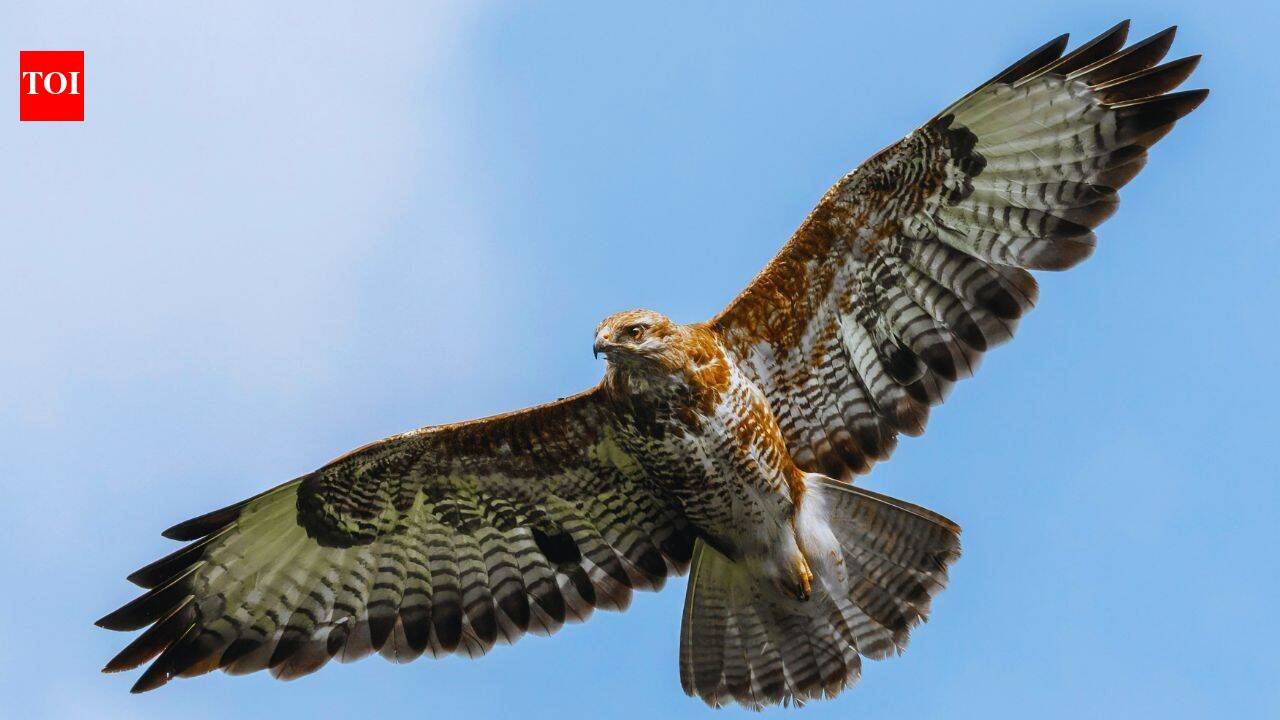
Every year, an extraordinary natural spectacle unfolds around the Doyang Reservoir in Northeast India’s Nagaland. Every year, as the autumn settles over Nagaland, thousands of migratory Amur falcons make their ways to the hills and forests of Wokha district. This is the time when this corner of Northeast India turns into an extraordinary natural spectacle, waiting to unfold. The place becomes an important stopover on one of the world’s remarkable bird migrations.But the story of Doyang is not just about birdwatching. It is also about how a community once associated with hunting these birds became instrumental in protecting them.Pangti village, the hero home of falcons
Nagaland (Canva)
This transformation is centred on Pangti village. The place offers travellers a reason to look beyond Nagaland’s familiar cultural festivals and mountain landscapes. Here, wildlife tourism comes with a powerful conservation story, showing how local knowledge, village institutions and community participation can help protect a species that crosses international borders.The Nagaland Tourism Department identifies Doyang as a major attraction in Wokha district. The department recommends October and November the best time for observing the Amur falcons.The incredible journey of the Amur falcon
Amur Falcons journey (Canva)
The Amur falcon (Falco amurensis) is a small bird of prey. It undertakes an extraordinary annual journey between its breeding grounds in parts of eastern Russia, Mongolia and northeastern China and its wintering grounds in southern Africa.During this journey, the birds travel through northeastern India in large numbers around Doyang Reservoir before undertaking a demanding flight across the Arabian Sea.Their migration can cover approximately 22,000 kilometres over the course of a year, making them among the most remarkable long-distance travellers in the bird world.Doyang damThe reservoir’s importance as a stopover grew after the construction of the Doyang dam in the early 2000s. The resulting habitat attracted large numbers of winged termites, providing a plentiful food source for the falcons. As the birds gathered in increasing numbers, the area became an important seasonal feeding and roosting site.For birdwatchers, this is a lifetime opportunity. It’s a compelling spectacle of falcons gathering in trees, moving across the sky in flocks and preparing for the next stage of their migration.From hunting grounds to a conservation success story
Amur Falcon sitting on a tree top (Canva)
The turning point came in November 2012. The reports of widespread hunting of Amur falcons near Doyang Reservoir triggered national and international outrage. Conservationists estimated that between 120,000 and 140,000 birds had been caught in just 10 days, equivalent to approximately 10% of the global adult population at the time.The subsequent media campaign brought intense scrutiny to Pangti and other villages in the region. The Nagaland government intervened, and the Pangti Village Council banned falcon hunting ahead of the 2013 migration season.A source of incomeHunting had become a source of seasonal income, and the ban affected people who had benefited financially from the birds’ arrival. Simply prohibiting the practice could not, by itself, guarantee lasting conservation.Hunters became guardiansThe conservation effort gradually moved beyond the initial ban. The Pangti Village Council worked alongside local organisations, the Nagaland Forest Department and conservation groups, including Wildlife Trust of India and Natural Nagas.An important development was the involvement of the Amur Falcon Roosting Area Union, which represents landowners around the birds’ roosting sites. Responsibility for protection and tourism management increasingly shifted towards local institutions, giving residents a more direct stake in safeguarding the birds.What it means for travellersFor travellers, this makes a visit to Doyang more meaningful than a conventional birdwatching excursion. The experience offers an opportunity to understand how people who know the landscape intimately can contribute to protecting a migratory species.For photographers, it’s the perfect opportunity to capture the landscape brimming with falcons.Doyang offers a combination of birdwatching, rural landscapes and insight into community-led conservation. The reservoir is surrounded by hills and cultivated valleys, with terraced fields and the settlements of Wokha district adding to the landscape.The main attraction during the migration season is of course the sight of Amur falcons gathering at their roosts.For visitors interested in conservation, a responsible local guide can help explain the area’s transformation and the relationship between the reservoir, the birds and the surrounding villages. Travellers should arrange visits in advance where possible and check the availability of local guides and accommodation before setting out.Best time to visit Doyang
Falcons
The best time to plan a birdwatching trip is October and November, when Amur falcons gather in Nagaland during their migration.How to reachDimapur Airport and Dimapur Railway Station are the nearest airport and railhead listed by the Wokha district administration. From there, travellers can continue by road towards Wokha and Doyang.Where to stayCheck accommodation in Wokha and confirm local homestays or camping arrangements near Pangti in advance.At Doyang, the spectacle in the sky is only one part of the experience. The other is the story on the ground: how a former hunting community began protecting the birds that return to its landscape every autumn.
