



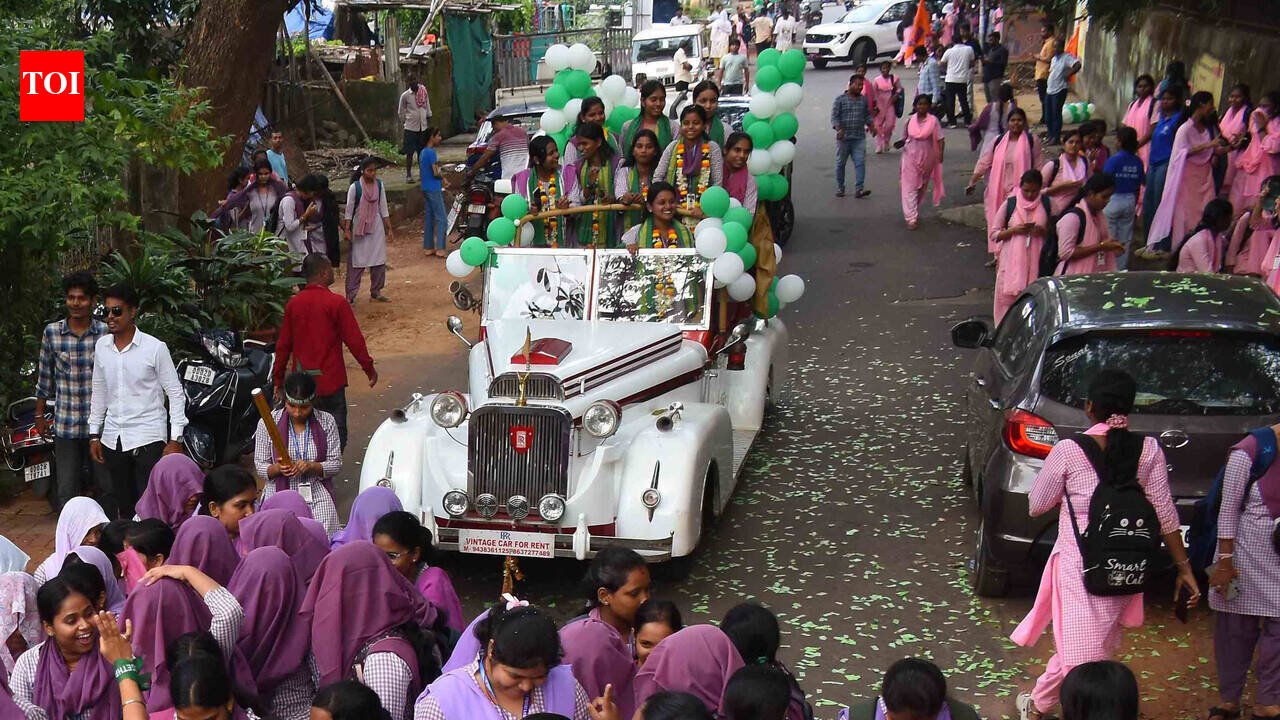
Bhubaneswar: From vintage car and SUV rallies to feasts ranging from elaborate breakfast spreads to biryani lunch — as student union elections returned to campuses after a nine-year gap, campaigning witnessed a conspicuous display of money and muscle, raising questions about compliance with the Lyngdoh Commission guidelines.The guidelines, aimed at curbing excessive spending in campus elections, cap a candidate’s expenditure at Rs 5,000. They also stipulate that candidates cannot draw on funds from sources other than voluntary contributions from the student body.Yet, the scale of campaigning across several campuses appeared at odds with the prescribed normsAt Kamala Nehru College in Bhubaneswar, candidates of a student outfit hired a vintage car for a campus rally on Tuesday, the final day of campaigning ahead of Thursday’s polls. The vehicle came at a steep price. Bana Bihari Pradhan, the vendor who supplied it, said renting a vintage car for six to seven hours costs at least Rs 20,000 to Rs 22,000, more than four times the prescribed expenditure ceiling for an individual candidate.At Utkal University, aspirants used a fleet of SUVs for a large procession on the final day of campaigning.A senior official in the higher education department said candidates must submit their campaign expenditure statements to their respective institutions within two weeks of the results. Failure to comply with the prescribed spending rules could lead to the candidate’s election being annulled, the official said.The campaign extravagance was not confined to rallies. Printed posters and other publicity material were widely visible outside educational institutions, despite restrictions under the Lyngdoh panel recommendations, which Supreme Court approved for implementation in campus elections. The recommendations bar printed posters, pamphlets and similar campaign material, while allowing handmade posters only at designated locations on campus.“The road medians and spaces outside Ramadevi University, Utkal University and other colleges in Bhubaneswar are plastered with printed campaign posters, many of them AI-generated. This is an open violation of the guidelines. These campaigns resemble a high-stakes political contest rather than an election meant to nurture democratic participation among students,” said faculty member Meenakshi Pati.From breakfast spreads to biryani for lunch, food, meanwhile, became a key tool for winning electors’ hearts.“Students can choose between food camps set up by the BCJD and ABVP. For candidates, these are ways to woo electors; for students, it is feast time,” said Niharika Lahari, a student of Ramadevi Women’s College.
