



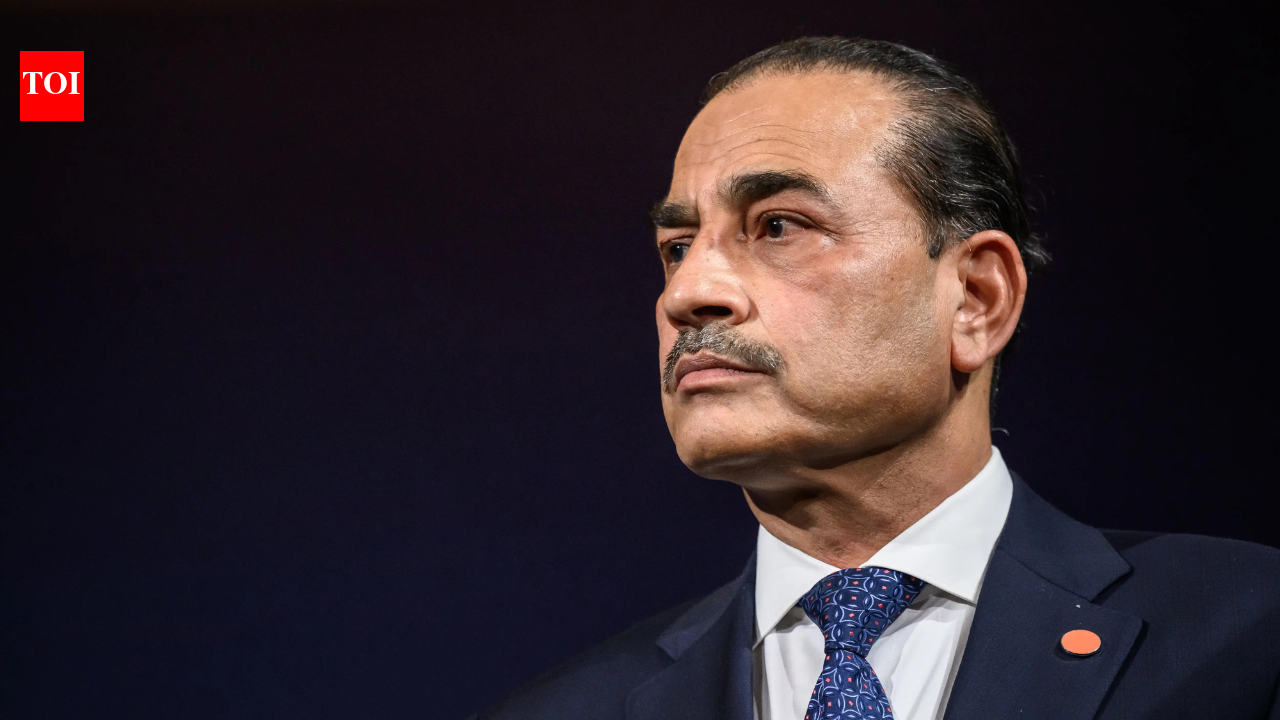
In Pakistan, the prime minister has the title, the president has the office, but the military chief has the power. Now, field marshal Asim Munir, the country’s most powerful man, is reportedly considering a way to redraw Pakistan’s political map.According to The Economist, Munir is considering a radical solution to Pakistan’s governance problems: Breaking up the country’s four provinces into 12 to 15 smaller provinces, or possibly reorganising administration into as many as 160 smaller units.Smaller units, according to the argument for restructuring, would be easier to govern. But in a country where the military has long wielded influence over civilian governments, the political question is whether they would also be easier to control.The proposal has also raised concerns that weakening provincial governments could shift more political influence from Islamabad’s civilian leadership towards the military establishment in Rawalpindi.
Smaller provinces, bigger control? The power game behind Asim Munir’s Pakistan plan
However, the plan remains unconfirmed, and its details are unclear. But dividing Punjab and Sindh, strongholds of powerful political dynasties, could weaken established parties.Restructuring Pakistan’s political map could also change who controls the country’s mineral wealth and other natural resources.The Economist has raised the possibility that the proposal could become a ‘divide and rule’ exercise, weakening regional power centres and making them easier for the military-backed federal government to manage.Pakistan’s population and resources are unevenly distributed, and many regions remain poorly served by their governments.Smaller administrative units could bring officials closer to citizens, improve public services and give neglected areas a stronger political voice.The question is whether the changes would make government more accountable to ordinary Pakistanis or concentrate more power in the hands of Munir and the military establishment.
The divide-and-rule calculation
Pakistan’s four provinces are Punjab, Sindh, Khyber Pakhtunkhwa (KP) and Balochistan. Each has its own elected assembly and provincial government, giving regional parties an institutional base from which to challenge decisions taken by the federal government.Their populations vary sharply. According to the 2023 census, Punjab has around 128 million people, slightly more than half of Pakistan’s population, while Balochistan has approximately 15 million, or about 6% of the national total.Punjab’s size makes administration difficult, and residents in remote rural areas can spend hours travelling to government offices to settle land disputes or access basic services.
Would breaking up provinces weaken political dynasties?
But dividing the provinces would have political consequences as well. Large provinces can sustain powerful leaders, substantial bureaucracies and networks of elected representatives with influence beyond individual districts. Breaking them into smaller units could fragment that influence.The military establishment could then be dealing with a greater number of provincial leaders, each with a smaller political base and potentially fewer resources to challenge decisions made in Islamabad.The outcome would not necessarily favour the centre in every case. New provinces could give regional leaders and communities that feel excluded from existing political networks a stronger voice. Much would depend on the powers, funding and autonomy granted to the new administrations.Still, the proposal raises a difficult question: Is Pakistan considering smaller provinces because its existing ones are too large to govern effectively, or because some have become too politically powerful to manage easily?
Punjab and Sindh: The biggest political stakes
Punjab and Sindh are likely to be at the centre of any serious attempt to redraw Pakistan’s provincial map. Both are major political strongholds, and dividing them could change the country’s balance of power.Punjab is the main base of the Pakistan Muslim League-Nawaz (PML-N), associated with the Sharif family.Nawaz Sharif has served as prime minister, his brother Shehbaz Sharif currently heads the federal government, and Nawaz’s daughter Maryam Nawaz is Punjab’s chief minister. The family and its party have dominated provincial politics for much of the past four decades.One longstanding proposal is to create a separate South Punjab province. Supporters argue that the region has not received adequate political representation or public investment compared with more developed parts of Punjab. A separate province could focus more directly on local infrastructure, education, healthcare and employment.But dividing Punjab could also break up the Sharif family-led PML-N’s large electoral and organisational base, creating new political battlegrounds for regional parties and local leaders.Sindh presents a different challenge. It is the principal stronghold of the Pakistan Peoples Party (PPP), whose political roots go back to Zulfikar Ali Bhutto. The party has remained under the influence of his family, including his daughter Benazir Bhutto’s widower, Asif Ali Zardari, now Pakistan’s president, and their son and party chairman Bilawal Bhutto Zardari.Karachi, the country’s commercial capital, is also in Sindh and central to its economic and political importance. For the PPP, dividing the province could weaken its established networks.For many Sindhi groups, however, the issue goes beyond party politics: Sindh represents a distinct historical, cultural and linguistic identity.Opposition to the proposal is already clear. On September 4, the Sindh assembly passed a resolution rejecting attempts to divide the province or create administrative units that would alter its boundaries. Chief minister Syed Murad Ali Shah said there would be no compromise on Sindh’s geographical unity, Dawn reported.Resistance continued in October. According to Dawn, a multiparty conference held on October 11, attended by representatives of the PPP, PML-N and other political groups, resolved to oppose attempts to create new provinces or administrative units in Sindh.Any attempt to divide the province could therefore trigger a wider confrontation over political power, identity and provincial autonomy.
The mineral wealth behind the debate
Pakistan’s natural resources add another dimension to the proposed restructuring.Balochistan has deposits of copper, gold, chromite, coal and iron ore. Sindh has coal, limestone, silica sand and other industrial minerals, while KP has gemstones, marble, granite, gypsum and other deposits. Punjab is known for rock salt, iron ore, limestone and fire clay. PoK’s Gilgit-Baltistan and other areas of Pakistan-occupied Kashmir also have deposits of precious and semi-precious stones and other minerals.
From Balochistan to Khyber Pakhtunkhwa: Mapping Pakistan’s mineral wealth
These resources have long been at the centre of disputes over mining rights, royalties, investment and the distribution of economic benefits. Provincial governments and local communities have sought a greater say in decisions affecting their land and livelihoods.The proposed restructuring has also raised concerns that weakening provincial governments could give the military-backed federal establishment greater freedom to pursue mineral extraction projects in resource-rich regions without facing the same level of resistance from local authorities.These concerns have not been independently established as Munir’s motives. Nor has a detailed plan been made public showing how a new provincial structure would change control over minerals or the distribution of revenues.The concern, however, is clear. A provincial government can negotiate with Islamabad over mining projects, royalties and development spending. A smaller unit with limited revenue and greater dependence on federal funding could find it harder to resist pressure from the centre.Balochistan illustrates the sensitivity of the issue, with long-running disputes over who benefits from the province’s mineral wealth and how much local communities gain from projects in their region.Mineral extraction and investment are not, by themselves, evidence of a political power grab. The key question is whether decisions would be made transparently, with meaningful local participation, or imposed by a powerful centre with limited accountability.
Why Khyber Pakhtunkhwa could be a test case
Developments in Imran Khan’s party stronghold Khyber Pakhtunkhwa have added to concerns about the military’s influence over provincial affairs.On October 11, President Asif Ali Zardari declared a state of emergency in the province, imposing Governor’s rule and effectively suspending the elected government led by Pakistan Tehreek-e-Insaf (PTI), the party founded by jailed former prime minister Imran Khan.The Shehbaz Sharif-led government cited rising militant violence and the provincial administration’s alleged failure to control the security situation.Imran-led PTI rejected the move, calling it an attack on its political stronghold and accusing the federal establishment of undermining an elected government.Reuters reported that the emergency was accompanied by the appointment of a new governor and the deployment of troops, amid political tensions over a planned march to Islamabad demanding Khan’s release. PTI has denied supporting militancy and disputed the Sharif government’s account of its handling of the security situation.KP is a key centre of PTI’s political influence. Suspending its government has changed the balance between Khan’s party and the Islamabad administration.Imran Khan’s prolonged imprisonment and the imposition of emergency rule in KP could also be viewed in the context of Asim Munir’s long-standing tensions with the former prime minister, who also led Pakistan to its Cricket World Cup victory.However, the emergency does not establish that Munir intends to divide KP or use it as a model for restructuring other provinces. It has nevertheless raised concerns about the federal government’s ability to override elected provincial authorities, including in decisions affecting resource-rich regions.Similar concerns have been raised about the possibility of greater federal intervention in Balochistan and Sindh. But there is no established evidence of a coordinated plan to impose such measures across provinces.
Is Pakistan’s provincial system failing?
The argument for smaller provinces has a basis in the governance challenges Pakistan faces. Its population has grown substantially since 1947, while the current four-province structure has remained in place since 1970. Administering a province as populous as Punjab is a major task, particularly when public services remain inadequate in many areas.Interior minister Mohsin Naqvi has argued that the country’s governance system has “collapsed” and that the existing structure cannot adequately manage population growth, debt and other pressures. He has called for smaller administrative units as part of wider reforms.
Pakistan is world’s fifth-largest country in population
But new boundaries alone would not solve corruption, weak public services or economic mismanagement. Smaller provinces would need their own institutions, budgets and administrative staff. Without adequate funding and clear powers, creating new units could increase the cost of government without improving people’s lives.The military’s own role in Pakistan’s governance problems is also part of this debate. The country has spent long periods under direct army rule, and the armed forces continue to wield considerable influence over security and foreign policy, even under civilian governments.In recent months, Munir has wielded extraordinary power, from visiting Washington and cultivating ties with Donald Trump to earning the US president’s “favourite field marshal” label and attempting to broker a deal over the Iran war.Under his tenure, Pakistan’s army chief has expanded his influence well beyond military affairs, playing an increasingly prominent role in the country’s foreign policy.The Economist has argued that the military cannot be separated from Pakistan’s governance problems, pointing to its share of public resources, landholdings and commercial interests, as well as its influence over civilian administrations.Pakistan’s economic difficulties have several causes, including debt, inflation, weak investment and structural problems in public finances. But the military’s political and economic position remains a central issue in debates over accountability and the allocation of resources.Munir’s authority has grown against this backdrop. Reuters reported on October 8 that the military had taken on a larger role in foreign and defence policy, including a decision to deploy additional troops to Saudi Arabia under a defence arrangement without parliamentary approval.If provincial governments are weakened while the military’s influence grows, critics fear there could be fewer institutions capable of challenging decisions made by the centre. At the same time, smaller provinces could create opportunities for new regional leaders, depending on how much independence they are given.The key issue is not simply the size of the provinces, but who would control their budgets, appointments and natural resources after any restructuring.
Can Munir get the plan through?
Even if the military and civilian leadership agree on restructuring, Pakistan’s Constitution presents a major hurdle.Article 239 requires a constitutional amendment to secure a two-thirds majority of the total membership of each house of parliament. If an amendment changes a province’s boundaries, it must also be approved by the concerned provincial assembly by at least two-thirds of its total membership before it can be presented to the president for assent.
The general vs the dynasties: Who holds the real power in Pakistan?
That makes dividing Punjab or Sindh politically difficult. The PML-N may have reasons to consider a separate South Punjab province, but splitting Punjab could weaken the Sharif family’s political base.The PPP, meanwhile, has repeatedly rejected proposals to divide Sindh, its strongest provincial stronghold.The Sindh assembly’s September resolution and the multiparty conference reported by Dawn in October show that opposition extends beyond a single party. Any attempt to alter the province’s boundaries without political consensus could provoke a wider confrontation.Balochistan remains a major challenge for the Sharif-Munir duo, with separatist sentiment, demands for greater autonomy and sustained militant activity complicating Islamabad’s efforts to assert control over the province.Senator and former Imran Khan ally Faisal Vawda has suggested, in reporting by The Economist, that a referendum could be held in the coming months. But such a proposal raises questions about the legal process and whether a referendum could replace the constitutionally required approvals.There is also a distinction between creating 12 to 15 provinces and establishing as many as 160 administrative units.The first would fundamentally change Pakistan’s federal structure. The second could involve districts or other administrative divisions, depending on their legal status and powers.Until a detailed plan is announced, it remains unclear which model is actually being considered.
What happens next?
Pakistan’s debate over new provinces brings together several long-running disputes: The balance between civilian and military power, the influence of regional political dynasties, and control over natural resources.Supporters argue that smaller provinces could improve governance and give neglected regions a stronger voice. Critics fear that dividing established political strongholds would weaken regional parties and leave provincial governments more dependent on Islamabad.
One military chief, powerful political families: The contest shaping Pakistan
The constitutional hurdles are substantial, and opposition in Sindh is already organised. Developments in KP have added to concerns about the centre’s willingness to override provincial authority in the name of security.Pakistan faces serious governance challenges, but whether redrawing its map would address them is another matter. Smaller provinces could help address regional inequalities if they receive adequate resources, meaningful autonomy and accountable institutions.If the changes instead weaken elected governments while concentrating control over funding and natural resources in the centre, the promised benefits may never reach ordinary citizens.
