



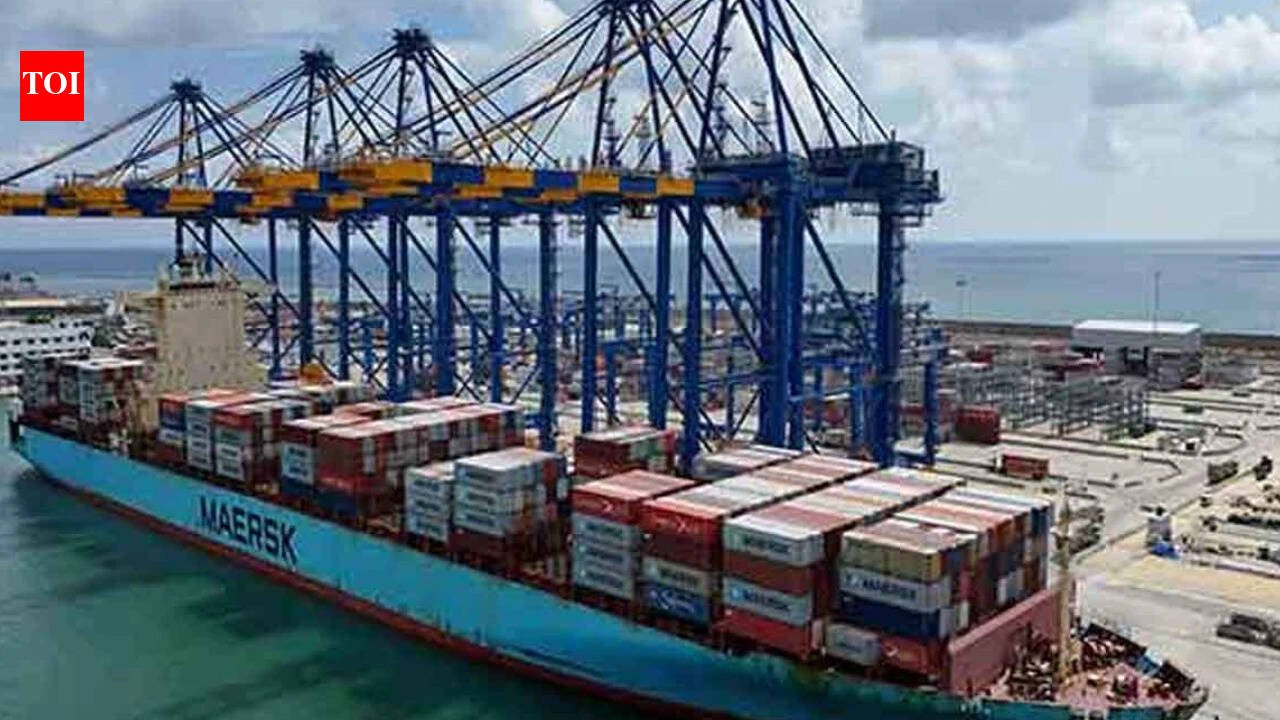
MUMBAI: All major and non-major ports in India must adopt uniform digital procedures, integrate with the Maritime Single Window platform and publish tariffs electronically by March 2027, following decisions taken at the 21st Maritime State Development Council (MSDC) meeting in Mumbai on Tuesday.The measures aim to reduce procedural differences between ports, improve transparency in charges and ease business for exporters, importers and shipping companies.The council also called on states to develop port-linked industrial clusters with ready-to-use infrastructure and faster approvals, with implications for Maharashtra’s coastal economy and logistics sector.Chaired by Union ports, shipping and waterways minister Sarbananda Sonowal, the meeting was the first since the MSDC became a statutory consultative body under the Indian Ports Act, 2025, notified on May 15, 2026.Constituted in 1997, the council now has an enhanced mandate to coordinate maritime policy and infrastructure development between the Centre and states.Under the One Nation One Port Process (ONOP) initiative, reforms covering standardised documentation, port-process re-engineering and inter-ministerial coordination must be implemented across ports by March 2027.All ports must also integrate with the Maritime Single Window, MSW Sagar Setu, by the deadline.The Centre launched a Ready Reckoner to guide implementation, incorporating references to circulars issued by the Central Board of Indirect Taxes and Customs, the ministry of home affairs and the ministry of health and family welfare.Electronic publication of port tariffs was also mandated to improve access to information on charges.
Insurance cover for shipbuilders
The council saw the launch of two credit-risk insurance products under the National Shipbuilding Mission to protect shipyards against payment-related risks in long-duration projects.The Shipbuilding Project Credit Risk Insurance Policy (SbPCP), developed by ECGC Ltd, will cover export projects, while the Business Credit Shield Policy-Shipbuilders (BCSPS), developed by The New India Assurance Company Ltd, will cover domestic projects.According to the release, the government will subsidise premiums and provide direct support to insurers if shipyards file claims.“Building a ship is a massive, multi-year journey; a single missed milestone payment could stall an entire shipyard’s operations,” Sonowal said, describing the policies as a financial safety net for the industry.
States get three months for rules
The council approved draft regulations and guidelines on port data and tariff transparency and directed states and Union territories to notify subordinate rules under Section 77 of the Act within three months.It also endorsed the National Perspective Plan and called for faster multimodal connectivity through roads, railways, inland waterways, pipelines and conveyors.States were urged to develop port-linked industrial regions with available land, plug-and-play infrastructure and expedited approvals.The council adopted targets under Maritime India Vision 2030 and Maritime Amrit Kaal Vision 2047, covering more than 500 initiatives across ports, shipping, inland waterways, shipbuilding and green shipping.States and maritime boards must prepare master plans for non-major ports aligned with these national targets. Maharashtra fisheries and ports development minister Nitesh Rane attended the meeting.The council also prioritised Sagarmala connectivity projects, coastal cargo movement, ship-repair and recycling clusters, and cruise infrastructure at major and non-major ports.Implementation by states and port authorities will determine whether the reforms translate into faster clearances, greater transparency and improved logistics efficiency.
