



The Congress also said the Parliamentary Standing Committee on Education‘s report, titled “Reforms and Strengthening of the National Testing Agency (NTA)”, has highlighted that the Ministry of Education made the “blatantly false” claim to the panel “that no paper leak” occurred in an exam conducted by the National Testing Agency (NTA) since its formation in 2017.
Also Read: Congress differs on Special Intesive Revision in Keralam, national level: BJP state chief
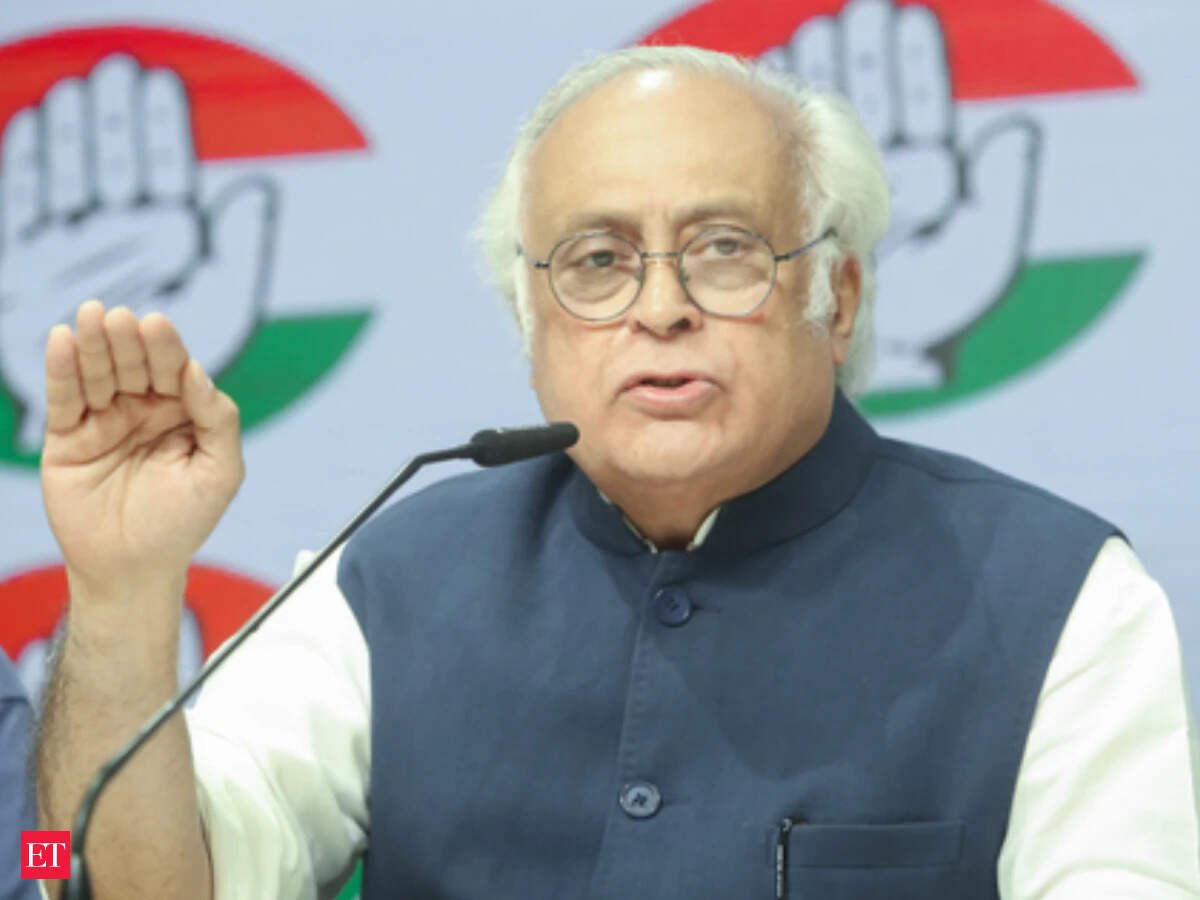
In a statement, Congress general secretary in-charge communications Jairam Ramesh said the Parliamentary Standing Committee on Education under the chairmanship of Rajya Sabha MP Mukul Wasnik “catalogues the grave incompetence and malpractice in the NTA and the Ministry of Education”.
Sharing the statement on X, Ramesh said, “GyaneshGate is dominating the news now but three months ago it was NTAgate that had launched the youth protest movement. Here is our statement on the NTA based on the report of the Parliamentary Standing Committee on Education that has just been submitted to the Chairman, Rajya Sabha.”
Also Read: CJP to hold press conference today after leaders released from detention in Delhi
Listing the six main highlights from the report, Ramesh said the Ministry of Education made the “blatantly false and audacious claim” to the parliamentary committee “that no paper leak has occurred in an exam conducted by the NTA since its formation in 2017 till 2025.”
“There have been 9 paper leaks and irregularities in NTA-conducted exams that we know of. What hope is there for a fair investigation or accountability when the Ministry even refuses to acknowledge what went wrong in the first place?” the Congress leader said.
“The NTA is registered as a Society under the Societies Registration Act, 1860. It is not a statutory body that has been created by an Act of Parliament. It therefore functions with limited accountability and parliamentary oversight,” he said.
Ramesh said the panel report highlighted that the NTA has been designed as a “khokhla (empty) body” that hands over all key responsibilities to private contractors.
It highlighted that the NTA only has 39 sanctioned positions, which means that it must rely on private contractors to conduct examinations, he said.
“Of the 39 sanctioned posts, only 23 officers are currently in position — a vacancy of 41%. This is despite the emphasis of the K Radhakrishnan Committee on building the NTA’s staff strength,” Ramesh said, citing the report.
All the 39 permanent posts that exist in the NTA are filled through a deputation mode, with officers serving only a 2-3 year tenure, he said, adding that this prevents the development of institutional expertise and know-how.
“The NTA’s structure and design is not transparent and serves to enable the paper leak mafia. Despite repeated recommendations of the Parliamentary Standing Committee on Education, there is no nation-wide blacklist of firms who have a track record of failure in providing examination-related services such as paper setting, logistics, printing, administration, etc.
Firms that are blacklisted in one state routinely get government contracts in other states,” he said.
The NTA does not publish NEET-UG results in a publicly accessible manner (unlike the UPSC), Ramesh said, citing the report.
The anonymity of the results and the absence of test-center-wise data prevents transparency and the detection of anomalous patterns in the performance of candidates and test centres, he said.
Between the NEET paper leak of 2024 and the NEET paper leak of 2026, the position of Director General of the NTA was held by officers as an additional charge, he said.
At a time when the NTA was already tackling multiple paper leaks and was supposed to implement the reforms proposed by the K Radhakrishnan Committee, the Modi government failed to even appoint a full-time officer to lead the agency, Ramesh said.
He said the NTA has become a financial profit-making business.
A total revenue surplus of Rs 590 crore was earned by the NTA and invested in fixed deposits to earn interest, rather than being used to assist students or build exam infrastructure and capabilities, Ramesh said.
“The former Mantri (Dharmendra) Pradhan had dismissed this Standing Committee’s previous recommendations on reforming the NTA because the Committee ‘had members of the Opposition in it.’ We can only hope that the Modi government sheds its arrogance for the limited time it has remaining and takes this report seriously,” the Congress general secretary said.
The parliamentary standing committee examining the role of the National Testing Agency (NTA) in the wake of NEET UG paper leak and cancellation on Friday called for a legislative mechanism to ensure the agency’s accountability to both Houses of Parliament.
Noting that trust in the examinations conducted by the NTA was a matter of social justice and national integrity, the Parliamentary Committee on Education, Women, Children, Youth and Sports, in its detailed report said, “The education department may introduce appropriate Parliamentary framework that ensures NTA’s accountability to Parliament.”
The committee, while recognising NTA’s past efforts at improvement, said the cancellation of NEET (UG) 2026 implies that further improvement is necessary.
The NTA on May 12 cancelled the NEET (UG) 2026 exam conducted on May 3 amid allegations of a paper leak.
