



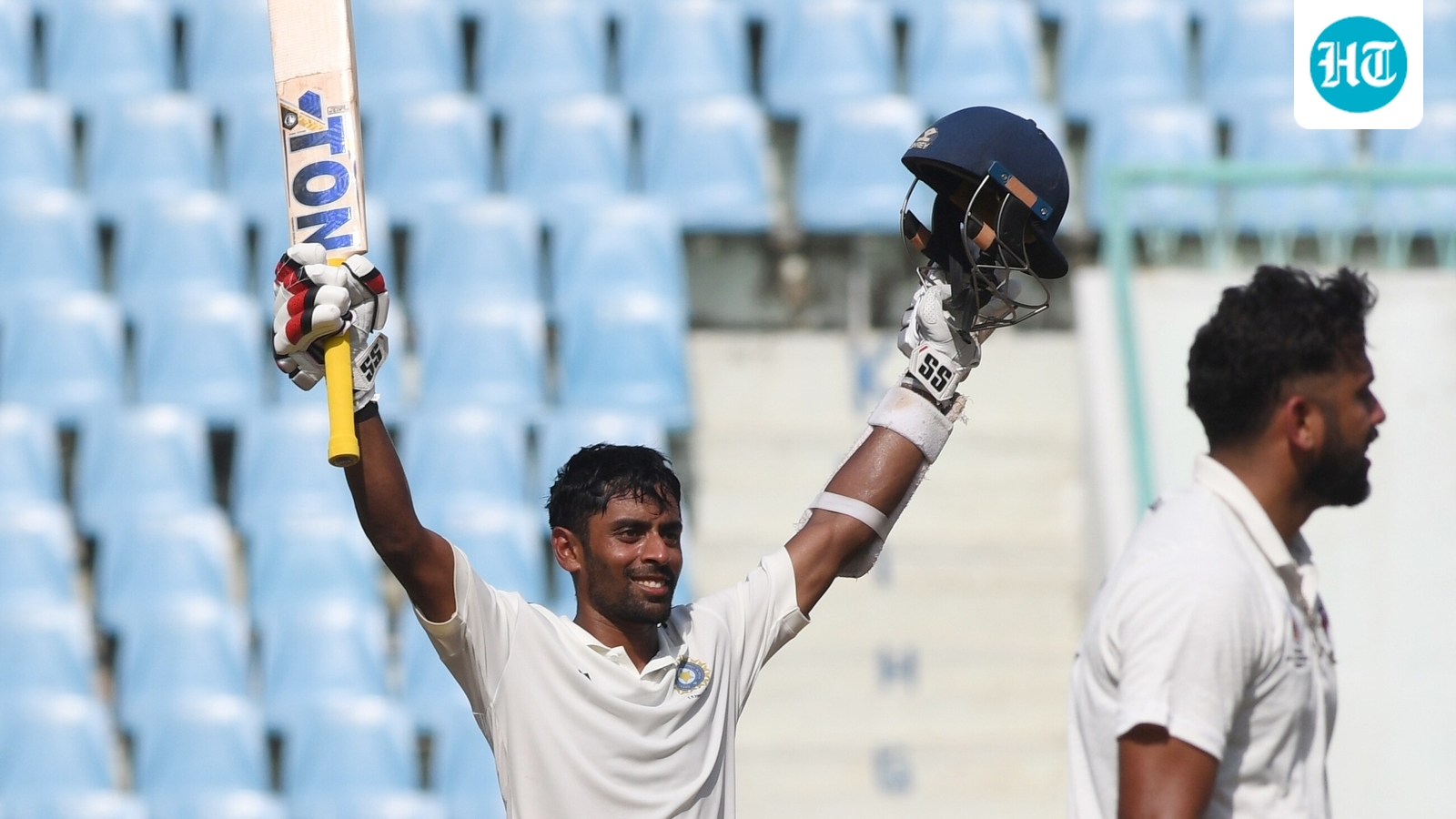
Kolkata: There is a particular kind of patience required to be Abhimanyu Easwaran. For years, the Bengal opener has done what a batter in his position is supposed to do: score runs, build an imposing first-class record and wait for an opportunity. He has scored heavily enough to earn India call-ups, including for the home Test series against England in 2024 and the subsequent tour of Australia, but a Test debut has remained elusive.
At 31, the distance between a long-held ambition and its fulfilment is becoming harder to ignore. Yet Easwaran, also Bengal’s captain, has not given up on India. Nor does he intend to let the uncertainty dictate how he plays. “That has always been the dream… to play for India, win games for India,” he said. “That has been the dream from day one. That will always be in the back of the mind.”
There is no pretence that the ambition has disappeared. What has changed, perhaps, is his understanding of what can be done about it. Easwaran has accumulated first-class runs for more than a decade, but selection remains beyond his control. His response is to concentrate on the work in front of him, beginning with Bengal’s opening Ranji Trophy fixture against Delhi.
“When I am playing for Bengal or be it for any other team, even if it’s a club team, I make sure I give it my all for the team,” he said. “Because I feel if I can be in the moment, that is when I can give it my best.” He added: “There is no point in thinking about selection. I think that is something which will take care of itself. And if I keep performing well, that will happen at some point.”
It is a sensible philosophy, although it can’t entirely disguise the predicament. Indian cricket has rarely lacked for opening batters, and the competition for a Test place is unforgiving. Easwaran’s persistence has earned him recognition without yet delivering the opportunity he wants. He made his reputation as a classical opener, comfortable leaving the ball and defending for long periods. But in an era when the influence of T20 cricket is felt across formats, it might be tempting to assume that such a method needs reinvention. He isn’t convinced though.
“There is no specific definition to scoring runs in first-class cricket or any level of cricket,” he said. “It is about finding a way to score on that particular day, on that pitch, against whatever bowlers you face from the opponents.” That also means working on broadening his scoring options, developing the range of shots available to him so that he can adapt to different surfaces and bowling attacks. “There are areas where I want to improve my scoring areas in a few different shots,” he said. “It is just about having a better range.”
Even after years at the crease, the process remains unfinished. “Even if I play cricket for, say, 10 more years, there will always be a place where I would want to get better,” he said. It’s the sort of answer that could sound routine from an experienced professional, but for a batter whose career has become a prolonged exercise in proving himself, the insistence on improvement doesn’t sound cliched.
For now, his more immediate responsibility is towards Bengal, who have repeatedly approached the summit without managing to scale it. In 2019-20, Saurashtra won the final on the basis of a first-innings lead. Three seasons later, Bengal returned to the final at Eden Gardens, but Saurashtra won by nine wickets. Last season’s campaign ended in the semi-finals, this time against eventual winners Jammu & Kashmir, who won by six wickets.
That defeat was especially dispiriting because Bengal had taken a first-innings lead, making the collapse that followed all the more costly. Easwaran scored 49 in the first innings as Bengal made 328, with Sudip Gharami’s 146 providing the backbone. Jammu & Kashmir replied with 302, but Bengal were then dismissed for 99, leaving the visitors with a relatively easy chase of 126.
Asked what Bengal must do differently this season, Easwaran said: “I wish I knew.” Then he added: “But again, I feel, when you play knockout games, there are moments which you have to win to win those games. We’ve not been good enough in those moments. I think it is just about taking that extra responsibility and getting the job done.”
Which, recent evidence suggests, Easwaran has been doing pretty well. In last month’s Duleep Trophy, he made 69 against Central Zone in the semi-final, helping East Zone secure a four-wicket victory in a tense chase. In the final against South Zone, he followed that with 72 from 86 balls, laying the platform for East Zone’s formidable first-innings total of 708. These weren’t hundreds, and they did not resolve the larger question hanging over his career.
But they were reminders of a batter who can still make a substantial contribution in red-ball cricket, balancing the patience of a traditional opener with the ability to score at a brisker tempo when conditions allow. For Easwaran the Bengal captain, the challenge is not simply to keep accumulating runs but also to turn them into victories, while accepting that even the most consistent domestic performances can’t guarantee selection for India.
That demand will also fall on a formidable bowling group. Mohammed Shami, Akash Deep and Mukesh Kumar give Bengal an attack with international experience, pace and the ability to exploit different conditions. Akash Deep’s return from injury adds another dimension, while Shami’s record at the highest level and Mukesh’s familiarity with domestic cricket make them valuable resources for their captain.
“It’s always a good feeling as a captain when you have a bowling attack like this,” Easwaran said. “Because you know that these guys have delivered again and again for whatever teams they’ve been playing.”
First to challenge Bengal, in Kalyani, are Delhi. But the entire campaign itself too is set to test their adaptability, with white-ball competitions sandwiched between two bookending tranches of Ranji Trophy. It runs the risk of disrupting rhythm but Easwaran sees this as a challenge shared by every side, not an excuse. “When you are a professional playing at this level, you have to adjust to all of these things,” he said. “You’ve got to find a way to get quicker at just switching formats.”
