



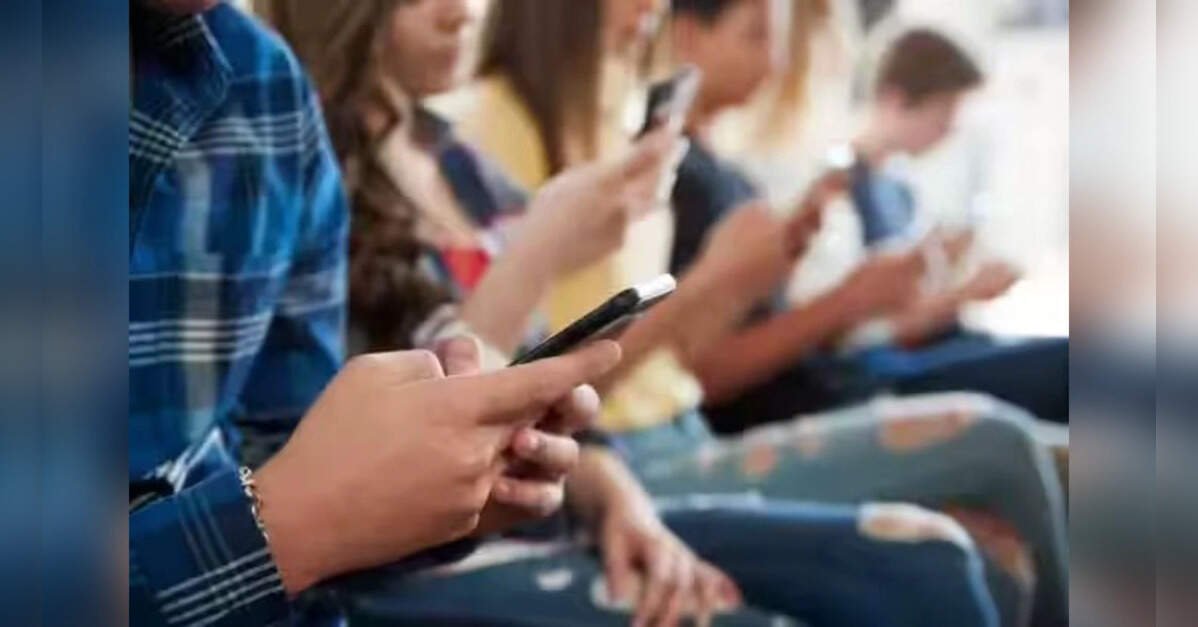
Mumbai: For most, the day begins with checking the phone. The scrolling carries on through the commute, over meals, during conversations, in front of the television and ends only before bed.
While adults may be better equipped to detach themselves from the internet, screen addiction and social media often ends up having a much bigger impact on children, and teens in particular.
As the lines between the online and offline worlds blur, doctors say they are seeing an increasing effect of screen addiction on younger patients. On World Mental Health Day, ETHealthworld explores the toll of doomscrolling on young minds, the warning signs to watch for and the small changes that can help.
The pressure of being online
The biggest concern is not social media itself, but how it is designed and how it is used, says Dr. Sameer Malhotra, Principal Director – Department of Mental Health and Behavioural Sciences, Max Super Speciality Hospital, Saket.
He says social media harm can take several forms, starting with constant social comparison, exposure to emotionally distressing material and cyberbullying.
“Constant exposure to curated images of other people’s lives can create feelings of inadequacy, low self-esteem and FOMO, or fear of missing out. Algorithms tend to make things worse by repeatedly exposing a person to emotionally intense or distressing material, reinforcing anxiety, anger, body-image concerns or negative thinking,” he adds
Late-night scrolling takes a further toll by disrupting sleep, which in turn affects mood, attention and emotional regulation, Dr Malhotra adds.
Impact of addiction
Excessive screen use is increasingly linked to behavioural problems among teenagers and children, and the numbers are rising.
Data from WHO’s Regional Office for Europe revealed a sharp rise in problematic social media use among adolescents, with rates increasing from 7 per cent in 2018 to 11 per cent in 2022.
The study titled “Health Behaviour in School-aged Children”, surveyed 2,80,000 young people aged 11, 13 and 15 across 44 countries and regions in Europe, central Asia and Canada in 2022.
Girls reported higher levels of problematic social media use than boys (13 per cent vs 9 per cent).
The report defined problematic social media use as a pattern of behaviour characterized by addiction-like symptoms. These include an inability to control social media usage, experiencing withdrawal when not using it, neglecting other activities in favour of social media, and facing negative consequences in daily life due to excessive use.
Doctors in India say they are seeing the same pattern play out.
Dr. Pretty Duggar Gupta, Consultant, Psychiatrist, Aster Whitefield Hospital says “A clear change is the presence of patients in their teenage years and twenties coming with symptoms of anxiety, sadness, insomnia, concentration problems, and difficulty turning their minds off. It does not always need to be the primary reason, but very often it becomes a significant factor, especially when patients use computers past midnight or their usage is problematic.”
The problem is also evident in pre-teens and younger children, says Dr Nitin M, Consultant Pediatrician & Neonatologist, Motherhood Hospitals, Electronic City, Bangalore.
“In recent times, we are increasingly getting younger patients, especially kids, who experience anxiety, sleep issues, inability to concentrate and emotional fatigue.The screen time is usually a contributing factor in such cases, especially in terms of the impact on sleep, physical exercise and interaction with people.”
However, Dr Nitin notes that it is almost never appropriate to blame these complaints only on social media, as sometimes it is just a contributor to pre-existing conditions.
Warning Signs
Doctors believe that the red flag has nothing to do with the amount of time that you spend online, but whether you are unable to control and regulate it.
Dr Trideep Choudhury, Consultant Psychiatrist, ADAYU Fortis, says social media use becomes problematic when it begins having a negative impact on other aspects of a person’s life
“Early warning signs that social media use has become a problematic behaviour are if the person starts avoiding other necessary tasks just to remain online or feel low when they cannot be online. Sometimes they may be easily irritated, having erratic sleep schedules as they tend to sleep late, and miss their daily routine as they wake up late.
“Such people also lose track of time as they are scrolling, giving rise to a lot of physical signs due to too much scrolling like headaches , watery eyes , blurry vision. They may complain of lack of focus in their work. As this usage goes uncontrolled, there may be a lot of abstaining from school, work and even other activities like physical play which the person liked earlier are neglected.”
Corrective Steps
Doctors say the simplest fix is to change the environment rather than lean on willpower.
Dr Malhotra suggests creating a “friction point” to make it harder to reach for the phone.
“The one practical step I would recommend is to create a “friction point”: choose one high-risk period, particularly the hour before sleep, and keep the phone physically outside the bedroom or out of immediate reach. It is much easier to change behaviour when we change the environment rather than relying entirely on willpower.”
However he adds that, “If someone is experiencing significant distress, functional impairment, self-harm thoughts, or an inability to control the behaviour despite repeated attempts, that is a point to seek professional help, assessment and timely treatment.”
For families, Dr Nitin recommends a consistent screen-free routine for both adults and kids, particularly during meals and before bedtime.
