



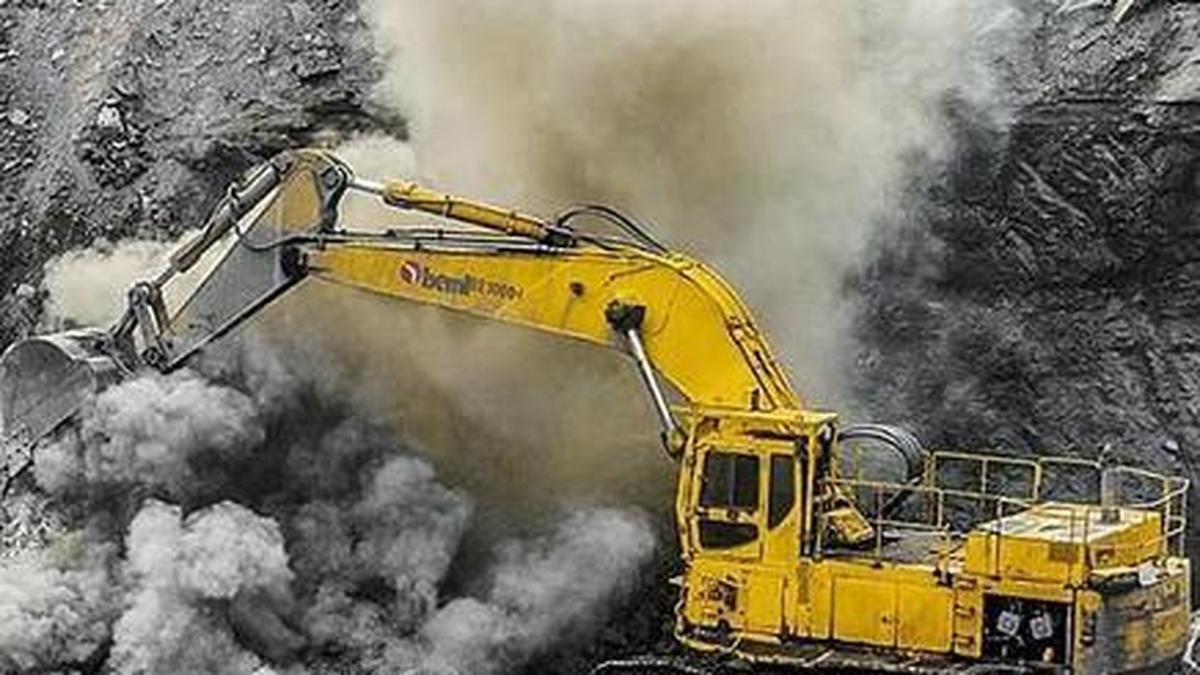
Coal India and its subsidiaries offered power plants with existing supply agreements the option to lift additional coal beyond their annual contracted quantities
| Photo Credit: The Hindu
Daily coal supplies to the power sector have risen 36% from their post-monsoon lows in September and are averaging about 9% higher in October than in the preceding month, the government said on Friday, signalling an improvement in fuel availability for power generation.
Rail-based supplies have also been strengthened, with an average of 465 rakes dispatched daily in October, the government said, adding that road-based supplies had improved as well.
Last month, state-owned Coal India and its subsidiaries offered power plants with existing supply agreements the option to lift additional coal beyond their annual contracted quantities through road transport, supplementing their regular rail-based supplies.
The Coal Ministry expects daily rail loading of 465–475 rakes to be sufficient to meet power demand, which is expected to moderate by mid-October in line with historical trends.
“With the monsoon receding and peak demand expected to moderate by mid-October (as per historical trends) sustained loading of 465–475 rakes per day should support further stabilisation and enable stock rebuilding ahead of the festive, winter and subsequent summer demand periods, thereby reducing the number of plants in the critical category,” it stated.
The ministry also said the depletion of coal stocks — the difference between consumption and incoming supplies — had slowed sharply, from 0.243 million tonnes (MT) a day in September to 0.116 MT in October.
“The position is therefore stabilising, although stock rebuilding is yet to commence,” it added.
The ministry’s statement came in response to reports flagging concerns over low coal inventories at power plants.
Clarifying the significance of plants classified under the ‘critical stock’ category, it said the criterion — which identifies plants holding less than the prescribed threshold of normative coal stocks — was primarily intended as an early-warning mechanism to flag potential shortages.
“A plant appearing on this list is, by design, an early-warning entry and not an indication that it has run out of coal or is at imminent risk of shutting down,” it argued.
Published – October 09, 2026 07:41 pm IST
