



Walk through open fields to watch deer munching on wild berries, then sip your evening tea under the shade of a mango tree before heading home — this is what made me consider a drive to Sila in Kurnool.
I drove four hours to find out if it meets the promise, covering 230 kilometers from Secunderabad (Telangana) to Kurnool (in Rayalaseema) to reach Sila by Ervana Farms. Was it worth it? I wasn’t sure, but I took the chance. The drive itself is a smooth affair — NH44 won’t make you regret the decision.
The place
Sila is run and managed by Ervana Farms at Ulindakonda is spread across 100 acres along NH44 between Hyderabad and Bangalore. Ervana Wildfarms is a land-led system focussed on restoring soil, rebuilding ecology, and rethinking cultivation through permaculture. At its centre is Sila, the farmside dining space where nearly 90% of the vegetables and lentils used are grown on-site.
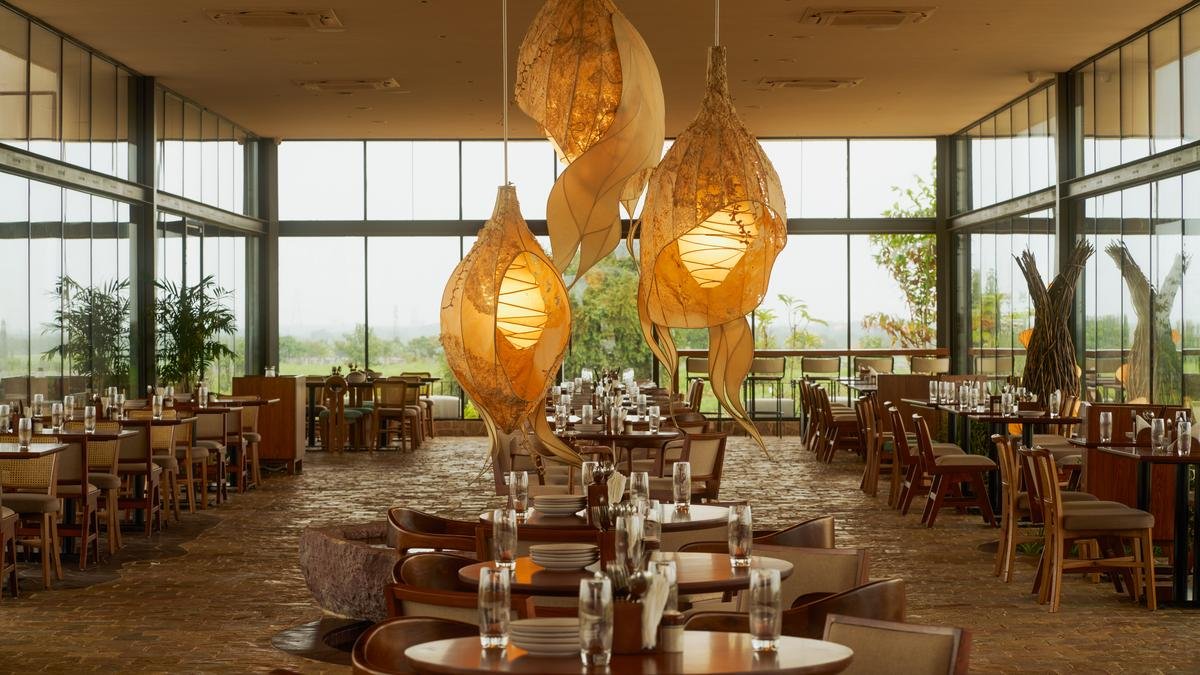
The first thing that draws your eye is the entrance — a rectangular, tall, stone-framed foyer. A tribute to the rocks of the Rayalaseema region? A nod to a cave? Co-owner Pratyusha Kethinedi also the architect behind the space, settles the question: “South India is known for its intricate temple engineering. One more feature of the temples is the tall doorways. I drew inspiration from those doorways. Building it big and tall was not the only objective — I wanted to bring the elements of the region here. So I decided to use limestone rocks, which are found in abundance.”Inside, it’s clearly a design-led space that simply makes the farm part of it. See-through glass walls give an endless view of the greenery around — like an infinity pool, but as a restaurant, with trees and crops stretching as far as the eye can travel. The limestone rocks add to the beauty and blend seamlessly with the view outside.
Breakfast: starting the ‘Seema’ way
You can’t be in Rayalaseema and skip starting your meal the ‘Seema’ way. On offer: dosa, vada with a choice of chicken and mutton preparations, puri, and uggani. I went straight for dosa with chicken curry, because Seema-style gravy isn’t easy to find in Hyderabad. By ‘Seema style,’ I mean Rayalaseema cuisine — not fiery hot or so heavily spiced that it overwhelms, but gravies made creamy with nuts, aromatic and balanced, without tipping into excess. Paya came with vada, just as crispy as the dosa.
All of this happened in the open air, breeze and birdsong standing in for piped music. I also tried the uggani at the team’s insistence — new to me, and something I’d probably enjoy more as a mid-morning snack than a full breakfast dish.
The philosophy behind the farm
For lunch, the plan was already set, but Apuroop Arja — third-generation farmer and owner of Ervana Farms — set the scene first: “Imagine eating gongura mutton while watching the gongura patch sway in the wind, or listening to the rustle of mango leaves as you savour that last spoonful of mango pappu on your plate.”
Poetic, but with a belly already full of dosa and vada, the imagination wasn’t quite landing. A walk through the farm helped with digestion — and with Julie, Sila’s in-house dog, leading the way, I got the fuller story from Apuroop.
“Sila is actually an outcome of Ervana Farms,” he explained. “While developing Ervana, the founders (started eating food prepared by the farmers who came to work on the fields.” Bringing the farm to its current state meant reintroducing regenerative practices — composting, neem-based inputs, crop diversity, intercropping, and crop rotation — to rebuild soil health after years of chemical farming.
“Water conservation remains central to the farm through seven percolation tanks and a large pond that support irrigation, groundwater recharge, and biodiversity,” he added. “Organised through permaculture zoning principles, the land allows farming, ecological restoration, wildlife, and human interaction to coexist in balance.”
Pratyusha and Apuroop
| Photo Credit:
Special Arrangement
This meant areas closer to human activity included intensively managed vegetables and herbs, followed by orchards of perennial crops such as mango, sapota, guava, lemon, and pomegranate. Larger field crops like ragi, pulses, and groundnut occupy outer zones, while certain sections are intentionally left semi-wild, allowing ecological processes to unfold without intervention.
That time spent with farmers, and their food, revealed something the area lacked: a place for families to stop, eat, walk, or simply rest — not a rest stop to eat and dash from. “This place was built to suggest relaxation. Come for a long drive, eat, relax, and then decide your next move. Things we ought to do to step away from everyday life,” Apuroop said.
What’s on the menu, and why
Sila’s menu leans on everyday staples and food memories of the region — millets, brinjal, meat — alongside seasonal dishes built around whatever’s being harvested, including Banganapalle mangoes. Dishes like gongura pappu with ragi sangati, and gutti vankaya kura with jonna rotte, tie the cuisine back to the agricultural system it has always come from. The region’s extreme dry conditions have shaped not just what grows here, but how people eat — hence the menu’s focus on millet, tomatoes, brinjals, chillies, and meat. It’s a cuisine shaped by drought, resilience, and a deep understanding of the land.
Lunch
Sila by Ervana
After a 90-minute walk, some rest, and playtime with Julie, I was ready for lunch — and there was a lot of it. The standout for me was the kulcha: I never expected to taste one that could put many Hyderabad restaurants to shame.
Gongura pappu made an appearance, alongside Seema-style kodi roast and ragi sangati with a choice of mutton gravy. There are biryani and bagara options too, but I’d skip those in favor of the specials — the gutti vankaya pulao especially. A seasonal pineapple curry was a hit with other diners as well. When here, the curry leaf flavoured mushroom fry is a must try.
Service is quick, and the food doesn’t come floating in oil — no two curries taste alike.
Dessert
The one dish worth remembering: bhakshalu. Small, puri-style, with a sweet stuffing that plays beautifully against the salt in the puri.
