



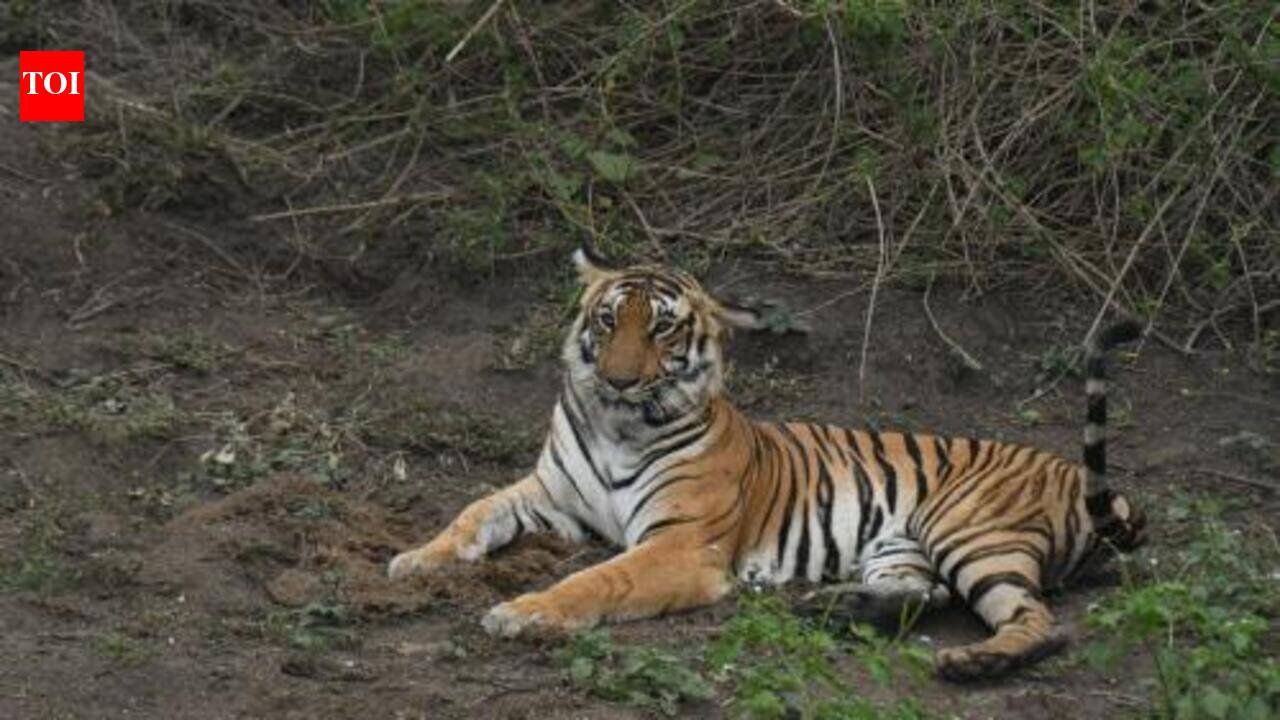
Bengaluru: A preliminary state-level analysis of tiger images collected during the All-India Tiger Estimate (AITE) exercise has indicated that Karnataka could have more than 700 tigers in the wild.The analysis, conducted using an in-house software tool developed by the Karnataka forest department, has identified around 575 unique tigers across 50 forest divisions. The animals were recorded both within protected areas, including tiger reserves, and in wider landscapes comprising reserve and deemed forests outside protected areas.The forest department is yet to complete its analysis. The findings will subsequently be shared with the Wildlife Institute of India (WII) for assessment and incorporation into the AITE exercise.Making a presentation on Karnataka’s conservation legacy during the valedictory function of the 72nd Wildlife Week celebrations in Bengaluru, Kumar Pushkar, IFS, Principal Chief Conservator of Forests (Wildlife) and Chief Wildlife Warden, said camera-trap surveys had covered more than 51 forest divisions.“AITE was held across India, including Karnataka. We carried out the study in over 51 forest divisions by installing camera traps. Of these, 50 divisions have revealed around 575 unique tigers, ascertained by our software, which recognises individual tigers based on their stripes. We are verifying one more division. These unique tigers, along with tigers that are constantly on the move, could take the numbers to 700,” Pushkar told TOI.The projected increase comes with growing concerns over protecting tigers in landscapes outside protected areas. The issue assumes significance following the killing of a tigress and tiger cubs in 2025, as well as a shootout involving suspected poachers near Hanur in Chamarajanagar.The 2023 AITE put Karnataka’s tiger population at 563, second only to Madhya Pradesh’s 785 and just ahead of Uttarakhand’s 560. If the preliminary estimate is borne out by the final assessment, it would represent an increase of nearly 25%. The final figure is expected to be released by the National Tiger Conservation Authority (NTCA), likely in early 2027.Retired PCCF (Wildlife) B.K. Singh said the state’s projection may have factored in the methodology used by the NTCA, including detection probability and estimates derived from sampled areas and the number of unique tigers.Tigers thriving beyond protected areasForest officials said the preliminary findings showed encouraging tiger numbers within protected areas while highlighting a growing presence outside tiger reserves. Cauvery Wildlife Sanctuary and Male Mahadeshwara Hills Wildlife Sanctuary have recorded considerable tiger densities, while Bhadra and Kali tiger reserves have reportedly recorded lower densities than expected.The expansion into non-protected landscapes, however, could intensify human-tiger conflict. Officials said many tigers outside protected areas are preying on livestock. Nearly 6,000 cattle have been killed by tigers, according to forest department records, with livestock estimated to account for about 30% of the prey base in these landscapes.
