



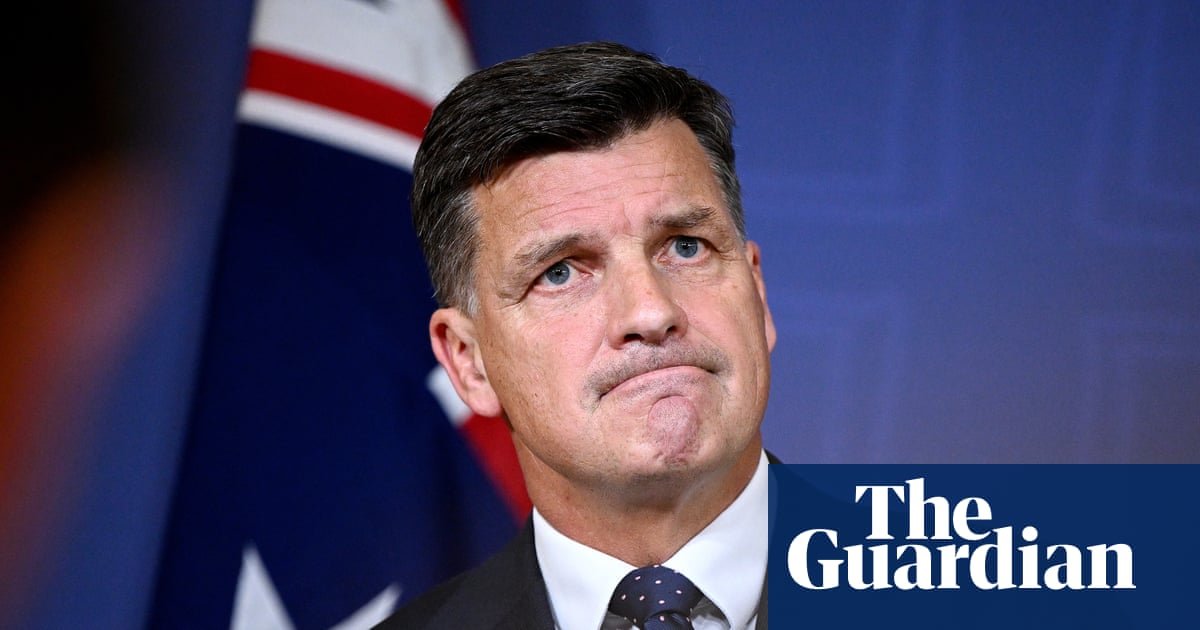
Angus Taylor says a Coalition government would reduce net overseas migration to 100,000 for two years, calling the plan “the biggest cut to immigration in the history” of Australia.
Following moves by One Nation and Labor to capitalise on growing anti-migration sentiment, the opposition leader announced plans by the Liberals and Nationals on Tuesday, promising net overseas migration rates of 130,000 in the third year and 160,000 in the fourth.
Taylor said the plan would reduce the number of temporary visa holders by about 650,000 people over four years – more than a third of current levels – but promised to maintain the permanent skilled migration program of 185,000 places a year.
Opposition figures put the total number of temporary visa holders this financial year at 1,766,200.
Humanitarian visa places would be slashed to 10,000, a 50% cut from Labor’s cap of 20,000. A future Coalition government would dramatically reduce the number of bridging and temporary protection figures to 20,000 from more than 400,000 this year.
Other changes in the Coalition’s policy include:
Tougher screening of visa applicants.
Revising the temporary skilled priority list.
Establishing a strike force to clear the backlog of skilled construction applications to address workforce shortages.
Doubling the talent and innovation allocation to 7,000 places, through a new Aukus and Five Eyes visa.
Linking each student visa to the enrolling institution.
Introducing a new agriculture visa from 2030.
One Nation wants to limit net arrivals to 130,000 people annually, after a brief initial period of net negative migration. Labor’s policy is to use a series of rules changes to bring Nom down to 245,000 this financial year, and 225,000 in 2027-28.
“There is a better way,” Taylor said. “A better way with lower numbers and with higher standards, and what we are proposing today is the biggest cut to immigration in the history of this country.”
“We will regain control of our borders. We will regain control of immigration in this country, and we will ensure that immigration policy is in the interests of our great country and no one else.”
He said the new plan would be “budget neutral” and would not weaken the economy.
The Nationals leader, Matt Canavan, called the plan “an Australia first migration plan”.
“We’re not just a campground, we are a nation of borders, we’re not a booking.com site, and we owe Australians a living wage, not to have their salaries undermined by a cheap foreign labour force.”
Taylor said overseas arrivals would be linked to housing completions in Australia, promising to target international student numbers and accusing the country’s tertiary education sector of selling visa pathways, not education.
International student commencements will be cut to 240,000, allowing the share of overseas enrolment in higher education institutions to fall below 25%. Temporary graduate visas will be abolished and most students’ family members blocked from coming to Australia.
Skilled worker places would be prioritised by profession, income, age, English language skills and full-time employment. Construction will be prioritised.
The Coalition will apply a fee increase to working holidaymaker places, but give exemptions to backpackers prepared to work in regional areas, supporting hospitality and agriculture.
Labor calls policy ‘catastrophic’
Speaking before the announcement, Labor frontbencher Matt Keogh said the migration cuts would be “absolutely catastrophic” for the economy and services Australia relies on.
Western Sydney MP, and former Labor minister, Ed Husic, accused the Coalition of “playing politics” with immigrants amid a global skilled labour race.
“We’re in a global competition for labour because we’re not the only advanced economy that’s got capacity constraints,” Husic told News24.
“So we can’t have a situation where we make immigration a political football and then try and bring skilled workers in that environment where we need to get the job done.”
after newsletter promotion
One Nation announced last month it would cut the number of temporary migrants in Australia by more than 750,000 over three years, targeting international students and family members of skilled migrants.
Last year Australia issued more than 337,000 international student visas, of which about 45,000 went to dependants or family members of the primary applicant.
Labor’s plan, outlined by the home affairs minister, Tony Burke, last month will see a series of policy changes to bring Nom down to 245,000 this financial year, and 225,000 in 2027-28.
Most students will not be allowed to bring family members, and so-called visa hopping would be banned, limiting the changes students can make to their enrolment.
Nationals MPs have warned Labor’s plans to limit the number of working holidaymakers staying a second and third year in Australia would badly hurt regional industries including fruit picking, and have pushed for carve-outs.
Taylor is under pressure to stop and reverse an exodus of support to One Nation, as the party surpasses the Coalition and Labor in some opinion polls and its leader Pauline Hanson increasingly sets the terms for political and policy debate on immigration.
Before the official announcement, Hanson accused the opposition of turning up late “to the grand final after both teams have headed back to the change rooms, waving a photocopy of One Nation’s immigration policy”.
By the early afternoon, Hanson said both major parties had been “dragged kicking and screaming” to her immigration policy position.
“It might sound like Liberal and Labor are saying the right thing, but actions speak louder than words,” Hanson wrote on social media.
“Only One Nation can be trusted to stand up for Australians on immigration.”
Industry response mixed
The announcement has drawn a mixed initial response while lobby and advocacy groups consider how the settings would impact their industries.
The Australian Chamber of Commerce and Industry’s chief executive, Andrew McKellar, warned the “scale of these cuts will hurt our economy”.
“Business rejects the false binary that Australia must choose either fewer migrants with higher skills or more migrants with lower skills,” McKellar said.
“Australia is hitting its economic speed limit in second gear. Our economy is not growing fast enough to maintain living standards, yet it is still overheating. The real constraints are skills shortages, over-regulation and high taxes.”
The building and construction industry group, Master Builders Australia, welcomed the opposition’s focus on skilled migration but remained undecided on other aspects of the policy.
