



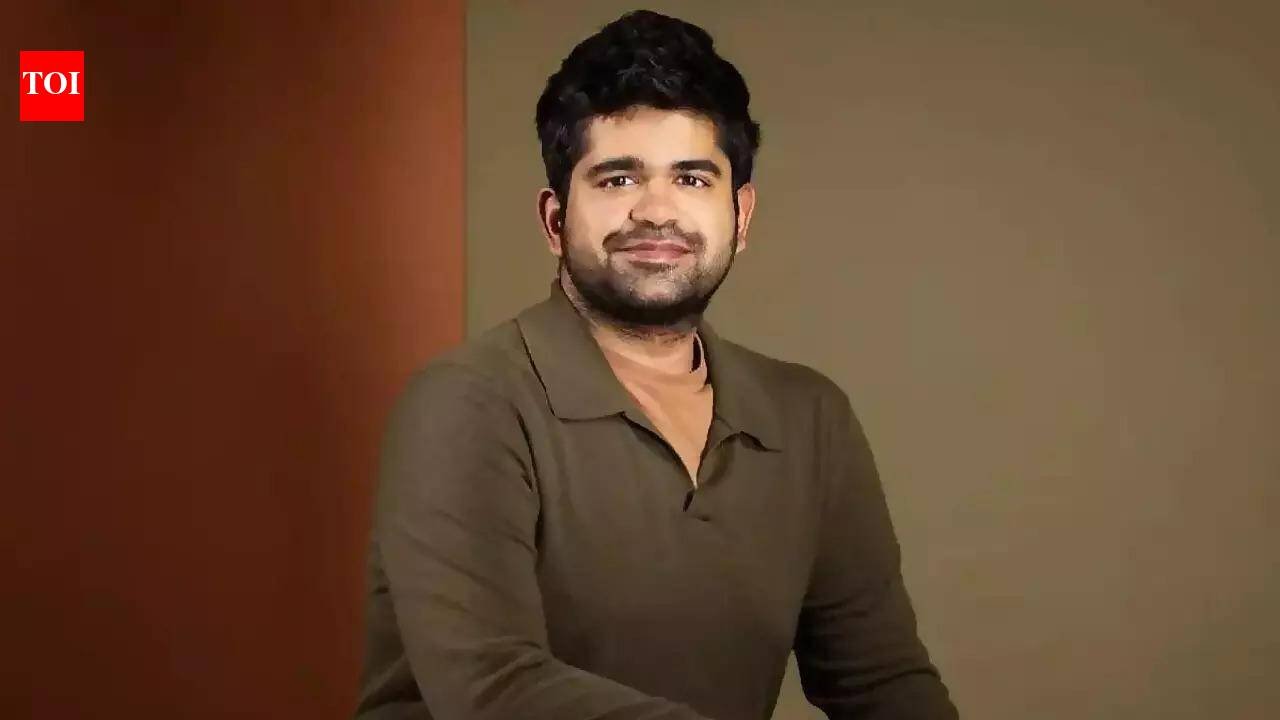
Imagine missing your dream course by just 0.01. That is exactly what happened to Aravind Srinivas, a young student from Chennai. After getting into IIT Madras for engineering, he tried to switch to another branch after his first semester, fell short of the cut-off by the tiniest margin, and felt another blow when he was rejected by MIT.Most people would have seen these as the end of the road. Srinivas saw them as motivation in a new direction and channelised his failure into success; today he is the co-founder of a renowned AI company and has a net worth of $2.1 billion, according to Forbes.Most success stories in the world do not follow a straight path, especially for those not born with a silver spoon in their mouth and those who carve out an identity for themselves.When doors of opportunity get closed in your face over and over again at the same time, it feels like the end of the road.Yet history is full of people who turned those moments into fuel, about how a detour from their planned route took them to immense heights of success, and this is one of those stories.
Meet Aravind Srinivas: The co-founder of Perplexity who channelised his failures into success
Aravind Srinivas, 32, is the CEO and co-founder of Perplexity with Andy Konwinski, Denis Yarats, and Johnny Ho, which was valued at $20 billion in early 2026.Srinivas got into IIT Madras, where he studied electrical engineering, but after the first semester he wanted to switch his branch from electrical to computer science; however, it came as a blow when he missed the cut-off by just 0.01 and fell just short of the CGPA cut-off.“At the end of your first semester, IIT gives you an option to change your branch if you get about a certain CGPA (Cumulative Grade Point Average), and I missed that by 0.01. I thought that was the end of the world. I was so mad at myself,” he said in the Aarthi and Sriram podcast on YouTube.The setback pushed him to teach himself programming, describing how, he revealed, “I went into a whole shell. But that’s when I discovered a lot of these online lectures, online competitive programming sites. I wasn’t talking to anybody else; I was just like, absorbing myself and learning all these things myself, trying to solve all these problems. I started coding a lot. As a kid, it was more out of like vengeance – ‘let me prove the world wrong I’m actually good at this’. All that helped me later.He later interned with Turing Award winner Yoshua Bengio, who recommended him for a PhD. Later again, even after being recommended, he faced disappointment, “MIT rejected me, Berkeley admitted me”, he said.
After Berkeley, he worked in top AI labs.
Srinivas met research scientist John Schulman at the University of California, Berkeley, who was working with OpenAI then.“John Schulman, the guy who invented ChatGPT at OpenAI, he was also from Berkeley. He noticed my work, and he invited me to do an internship. So, that changed my life. I got into OpenAI,” Srinivas said.After his first internship at OpenAI, Srinivas spent the next couple of years, from around 2019 to 2021, working at DeepMind and Google. In 2021, he went back to OpenAI, led by Sam Altman. But he didn’t stay long. About a year later, he decided to leave and start something of his own. In August 2022, he became the co-founder and CEO of Perplexity AI.Today, according to Forbes, Srinivas is worth $2.1 billion, placing him among India’s youngest billionaires.
