



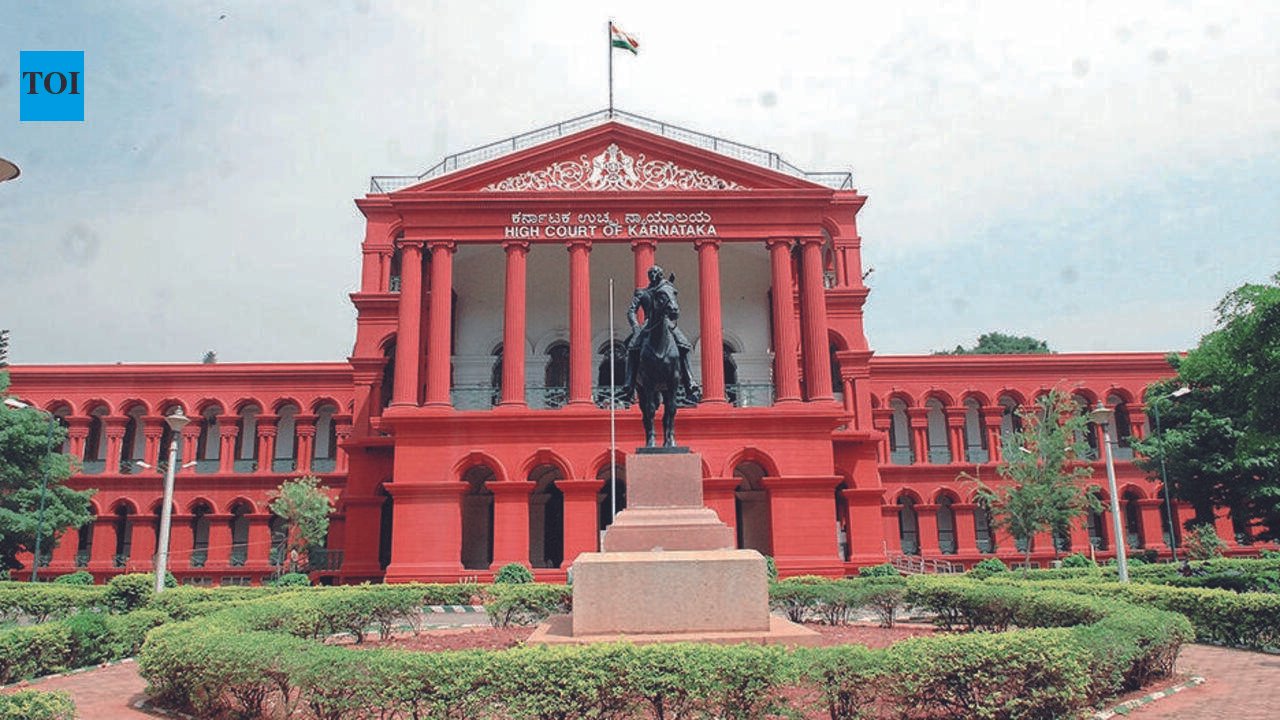
Bengaluru: Karnataka high court has ruled that revenue authorities cannot reject applications for genealogy, family tree or survivor certificates merely because the descendants or other family members of a deceased person are residing in different places.Justice MGS Kamal said the determining factor should be the place where the original ancestor had his or her permanent abode before death. If at least the persons claiming to be descendants or legal representatives of the deceased are residing within the jurisdiction of the revenue officer concerned, and a local enquiry does not reveal any objection or dispute, refusal to issue the certificate would be arbitrary, the court held.The court was hearing a petition filed by BS Abhinandan Kumar challenging endorsements issued by the assistant commissioner, Bengaluru South, and the sub-divisional tahsildar, Tavarakere, rejecting his application for a genealogy certificate covering 11 family members.The tahsildar had rejected the application on the ground that Kumar had not furnished address proof of family members and death certificates of deceased relatives. The assistant commissioner subsequently upheld the decision.Kumar told the court that his grandparents, parents, aunt and three unmarried sisters had died and that he had furnished their death certificates. He argued that merely because some of his ancestors and family members had lived in different jurisdictions could not be a ground to reject his application. He and one of his sisters were residing within the jurisdiction of the revenue authorities concerned, he submitted.Govt advocate, however, defended the rejection, contending that Kumar had failed to furnish address proof of family members residing within the jurisdiction.Rejecting this reasoning, Justice Kamal observed that genealogy, family tree and survivor certificates are issued based on information furnished by surviving legal heirs and are primarily intended to authenticate such information through local enquiry.Revenue officials such as village accountants and revenue inspectors are expected to be familiar with residents in their respective areas, the court said. A formal local enquiry is generally conducted by verifying the information furnished by the applicant with neighbours and other local residents.The judge also clarified that such certificates do not, by themselves, conclusively establish legal heirship.“If there is any dispute with regard to the claim of legal heirship or claim of legal representatives, such disputes are required to be adjudicated and determined only by a civil court of competent jurisdiction,” Justice Kamal observed.He added that the admissibility of such certificates would remain subject to proof of their contents under Indian Evidence Act, now Bharatiya Sakshya Adhiniyam, 2023.The court said the circulars governing the issuance of such certificates should be treated only as guiding factors and not as provisions imposing additional restrictions.Allowing Kumar’s petition, Justice Kamal directed the jurisdictional tahsildar to issue the certificate, subject to the petitioner furnishing details prescribed under govt circular dated July 17, 2026, and within the timeframe stipulated under Sakala scheme.
