



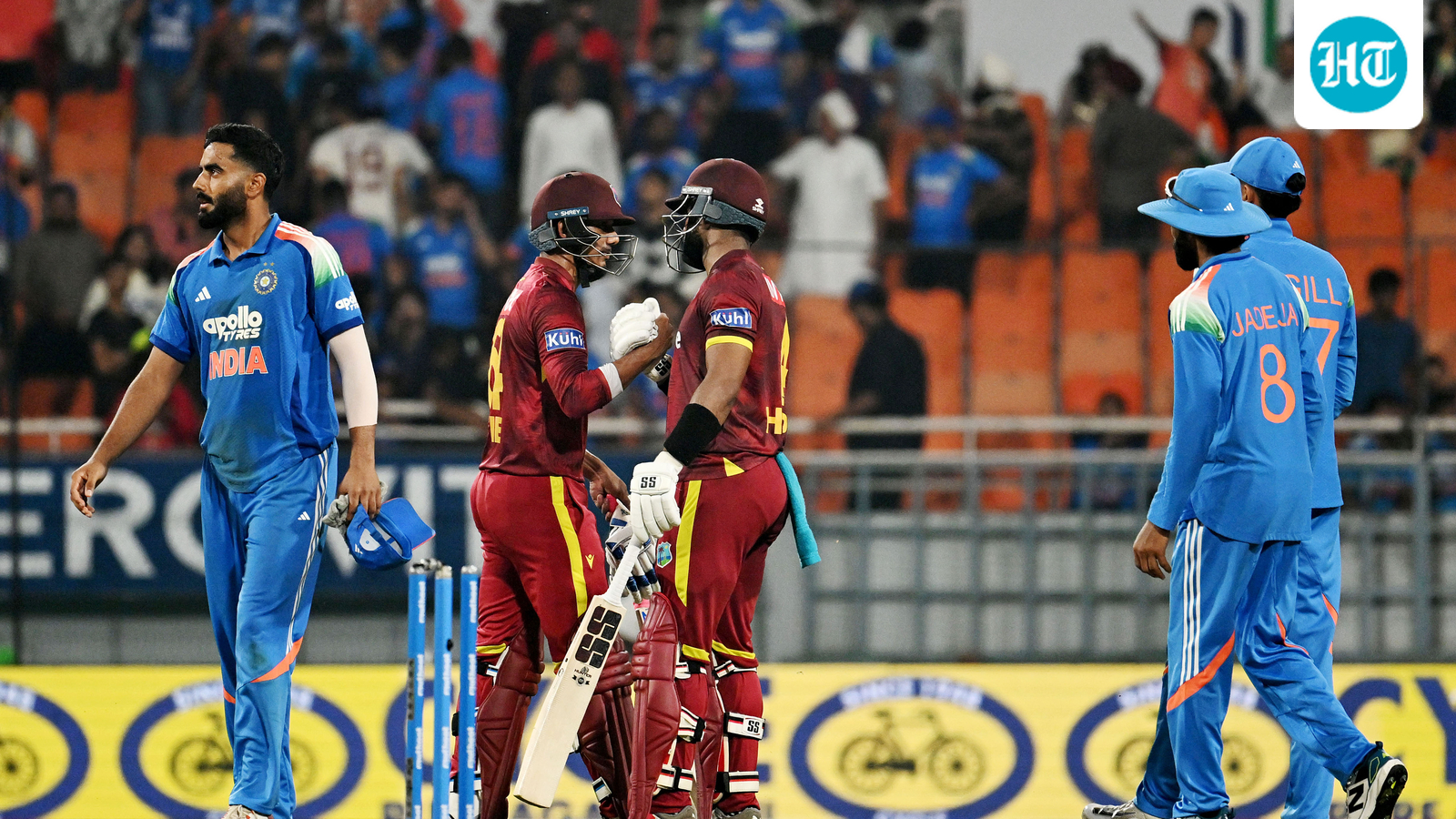
India and West Indies have both been fined for maintaining slow over-rates during the third and final ODI of the series between them. The match took place in New Chandigarh, and the visitors won while chasing a target of 351. The Indian team has been fined 20 per cent of their match fee, while West Indies have been fined 10 per cent. After allowing all the permissible time allowances, India were found four overs short of the required over rate, while the visitors were behind by two.
The sanctions were imposed by Prakash Bhatt of the Emirates ICC International Panel of match referees after the conclusion of the ODI at New Chandigarh. Under Article 2.2 of the ICC Code of Conduct for Players and Player Support Personnel, which deals with minimum over-rate offences, the players are fined five per cent for each over their team fails to bowl within the allotted time.
Both captains accepted the sanctions
There was no requirement for formal hearings, as both the captains pleaded guilty and accepted the sanctions proposed by the match referee. The charges were levelled by on-field umpires Jayaraman Madanagopal and Sam Nogajski, along with third umpire Sharfuddoula Ibne Shahid and fourth umpire Virender Sharma.
Slow over rates have plagued cricket and its flow for a long time. While ICC regulations have become stricter over time, they are designed to ensure that teams complete their allotted overs within the prescribed time. Time allowances for injury interruptions, weather-related issues or other legitimate delays are factored in before imposing any sanction.
In this case, the hosts were found to be four overs behind, even after applying these allowances. That resulted in the Indian team being fined twice as much as the visitors. Interestingly, it is these sanctions that mark the end of the series after the two teams accepted the match official’s findings without contest.
India won the series 2-1
As far as the cricketing part is concerned, India emerged as the superior side in the series, winning it 2-1. The Indian batting emerged consistently across the three matches, chasing 296 and a record 406 in the first two. In the third match, the hosts batted first and, after early pressure, posted 351 on the board. However, bowling had been Shubman Gill‘s real concern. The soft spots in the department were exposed during the final ODI, when West Indies chased down a target of 352 in 48.2 overs, losing only two wickets.
Despite the sanctions in the last match and the inability to address weaknesses in the bowling department, India will move ahead with many positives. The biggest of them being the form of the three top order batters – Rohit Sharma, Shubman Gill and Virat Kohli. While Rohit and Kohli each hit a century during the series, Gill looked in ominous touch, scoring a hundred in the first match and following it up with a record-breaking double hundred. As far as matters on the field are concerned, India will be relatively happy with how their final preparations for the World Cup 2027 have started.
