



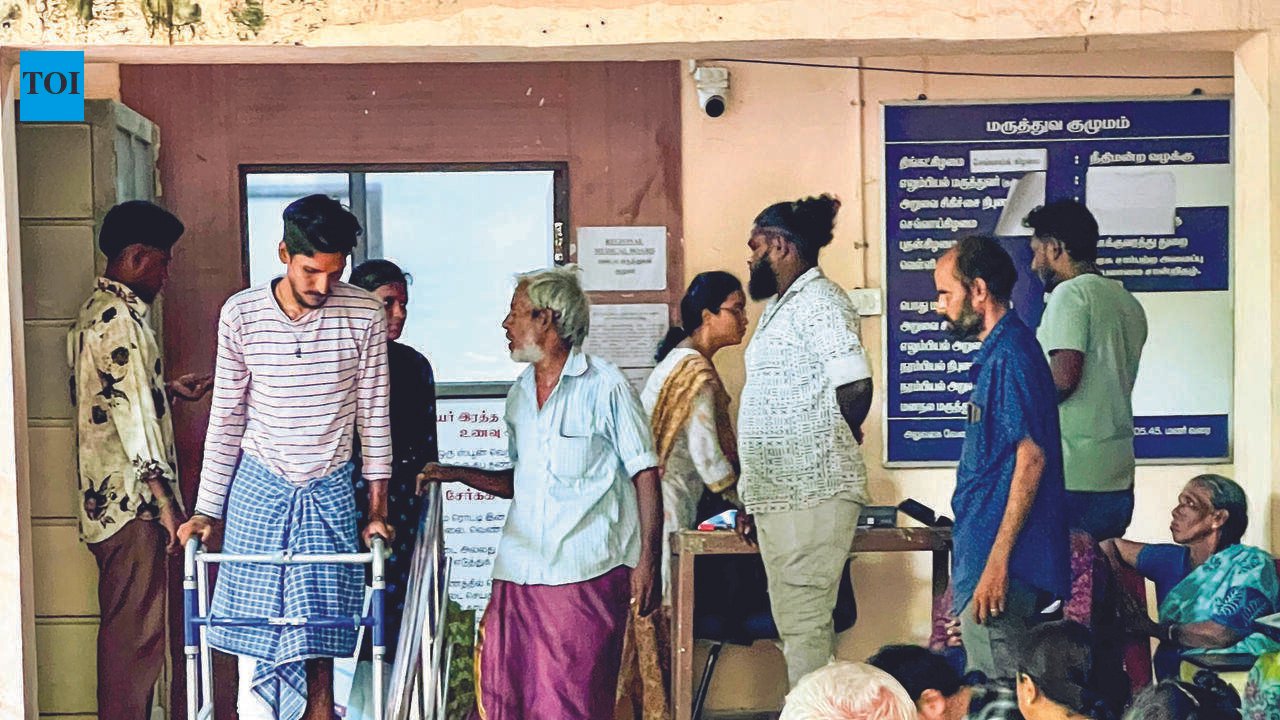
Chennai: Y Nagoor Meeran, 35, lost his left leg in an accident on a govt bus in Feb 2019. Seven years later, the marketing executive of a private firm is waiting for a medical-board report that could decide his compensation.In April 2019, a chief civil surgeon at a govt peripheral hospital certified that Meeran, then a 28-year-old engineering graduate, had 80% permanent locomotor disability. He filed a motor accident claim original petition (MCOP) before the court of small causes. To get the medical board report, he had to visit several govt hospitals. On June 8, Kilpauk Medical College Hospital asked him to appear at its orthopaedics block. He has appeared before that board twice and expects to return for a third visit.“I am tired of these tests and the long wait,” says Meeran. “I cannot work as I used to. I am unable to provide adequately for my family. I have suffered physical, emotional and financial losses. My marriage is at stake. I hope the money I get as compensation will help me set up a small business.”His case is one of thousands caught in a backlog. Figures presented at a meeting convened by the court of small causes on Sept 28 showed 2,085 medical board reports pending at four Chennai govt hospitals as of Sept 23. Govt Royapettah Hospital had 715 pending reports, Kilpauk 708, Rajiv Gandhi Govt General Hospital 381 and Stanley Medical College Hospital 281. The list included referrals dating back to 2017.Even if a private hospital treated a claimant’s injuries, the tribunal may seek a disability assessment from a designated medical board. Its report helps the court understand the lasting effects of the injury. The disability percentage is only one factor that determines the compensation. The court also considers the survivor’s age, his earnings before the accident and what the claimant can now do for a living.Hospital administrators said most reports remain pending because claimants do not appear when called. The boards meet at least twice a week and call about 30 people per sitting, according to court directions and waiting lists.Stanley Medical College Hospital dean Dr A Aravind says the hospital held two additional camps in Dec after discussions with the court. Of the 50 people called for a sitting on Aug 6, six appeared; of the 41 sent letters for another sitting on Aug 30, 15 appeared, he says. “How do we make assessments if they don’t come?”Some claimants appear once or twice but do not complete the assessment. Records at the Kilpauk hospital show 95 did not respond to at least three notices, while 218 stopped appearing after one or two visits. At Stanley, 172 had not responded to three letters and 100 stopped attending after one or two visits.Making a visit to the board based on a court order is not always the last step, doctors say. Some claimants must undergo tests and see several specialists before returning with the results. Royapettah medical superintendent Dr B Aysha Shaheen said the hospital does not have a neurosurgeon or psychiatrist, so claimants needing those assessments are referred to Kilpauk or the Institute of Mental Health. Others may need consultations in orthopaedics, ENT, ophthalmology or rehabilitation within the hospitals. “They are sent for various tests and will have to wait in queues along with our patients,” she said.Advocate V S Suresh, who handles accident claims, said the demands of repeated visits fall hardest on people coping with disability and lost income. “Some move to cheaper homes after an accident and miss notices sent to their old addresses,” he says. “We need a system that lets claimants update their addresses online and check hospital call letters on a website.” The hospital visits can be gruelling. “One client, an auto driver, had to stay at a govt hospital for assessments. He was asked to sleep on the floor. Such experiences force people to stay away,” says Suresh.Staffing also limits how quickly hospitals can clear cases. Professors and associate professors who sit on the panels also have to teach and take care of regular patients. “Hospitals must expand their capacities so accident survivors with disability don’t suffer,” says Suresh.
