



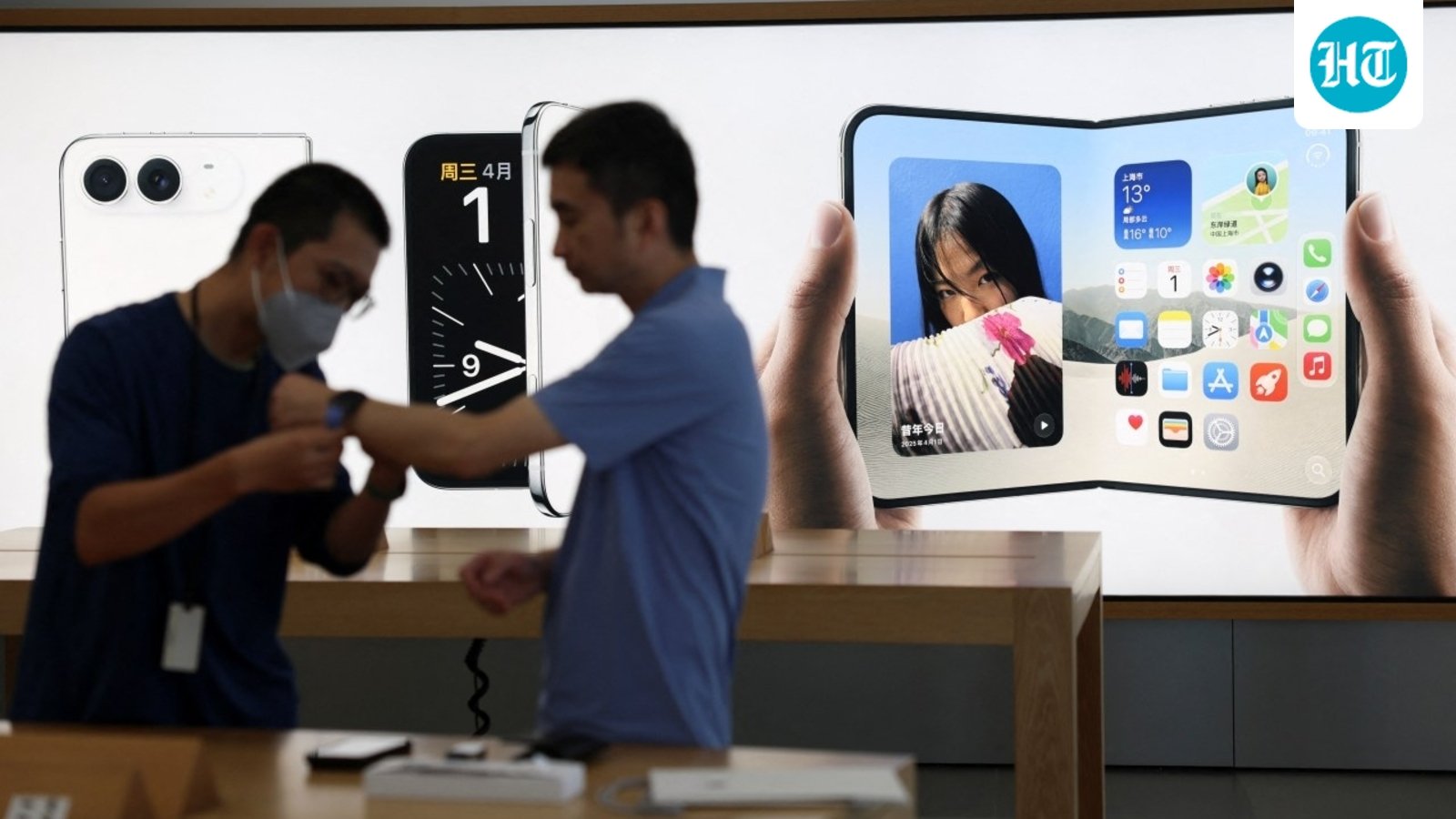
BEIJING—Demand for some foldable phones in China is surging, even before Apple’s new foldable iPhone Duo arrives.
That suggests an opportunity for Apple to expand what has been a niche category—if it can overcome competition from Chinese brands.
Winning over China is key to Apple’s fortunes. The country makes up more than a third of global folding smartphone sales and is the largest single market for foldables, according to research firm Counterpoint Research.
Chinese company Huawei is currently the market leader in China, both for foldables and smartphones generally. Huawei released its first folding smartphone in 2019. Other Chinese brands, including Xiaomi, Vivo, Oppo and Honor, have been selling foldables for years.
After Apple announced its first foldable iPhone in early September, sales during the following four days of Huawei’s Pura X Max—which has similar dimensions to the Duo—grew about 77% from the same period a week earlier, according to Huawei. More than 1.4 million units of the Pura X Max have been sold since its release in April, according to Huawei.
Xiaomi’s 18 Fold, another passport-size folding phone, notched record first-week sales for the company’s foldables after its release in early September, a representative said.
Richard Yu, chairman of Huawei’s consumer business, said the company has invested heavily to make breakthroughs in screen reliability and camera quality for its foldables.
“I know how hard-earned these achievements were, which is why we are a leader in this business,” said Yu.
Apple didn’t respond to a request for comment.
Foldables are still a relatively niche product, making up roughly 4% of smartphone sales in China and about 2% globally, according to Counterpoint. They can be fragile, and it is harder to put a good camera on a folding smartphone.
Still, brands hope foldables can attract higher-end customers. Huawei’s Pura X Max starts at the equivalent of more than $1,600. It also has been selling trifolding smartphones that unfurl twice, like a pamphlet. Huawei’s second-generation trifold, called the Mate XT2, released in early September, starts at nearly $3,000.
The iPhone Duo starts at $1,999 in the U.S. and 15,999 yuan in China, equivalent to nearly $2,400. Apple has said consumers in the U.S., China and many other countries will be able to preorder the iPhone Duo on Oct. 16, and it will be available a week later.
Fans of foldables often use the devices to work on the go. The larger screens help with multitasking and reviewing documents.
Wang Rui, an 18-year-old college student in Beijing, said he was considering buying the Mate XT2 and went to Huawei’s flagship store in Beijing to check it out. He also visited Apple’s store across the street in hopes of testing the Duo, but it wasn’t on display yet. He said he has previously used foldable phones made by Oppo and Vivo.
“I like cutting-edge technology,” said Wang, pulling up stock-market data on the Mate XT2’s 10.2-inch screen. “As of now, Apple hasn’t reached this level yet.”
Despite Apple’s late entry into the market, Counterpoint projects the company will sell up to six million foldable iPhones this year and take a quarter of the global foldables market. The firm predicts Apple will beat out Huawei’s 22% global market share.
Foldable pioneer Samsung, which has only a small presence in China, is expected to maintain its lead with a 38% global share in foldables, according to Counterpoint.
Huawei is effectively barred from selling its products in the U.S. It has been blacklisted by the U.S. government since 2019 and is effectively blocked from using American technology.
The company has gotten around these U.S. barriers by developing its own chips and operating systems. Its latest lineup of smartphones, the Mate 90 Series, released Thursday, uses technology to layer circuits within a single chip, aiming to boost computing power despite lacking access to cutting-edge machinery.
The global shortage of memory chips has pushed up smartphone prices. Sun Lei, a 50-year-old Huawei customer, said he was interested in buying the Mate XT2 trifold phone: “The only thing holding me back right now is money.”
