



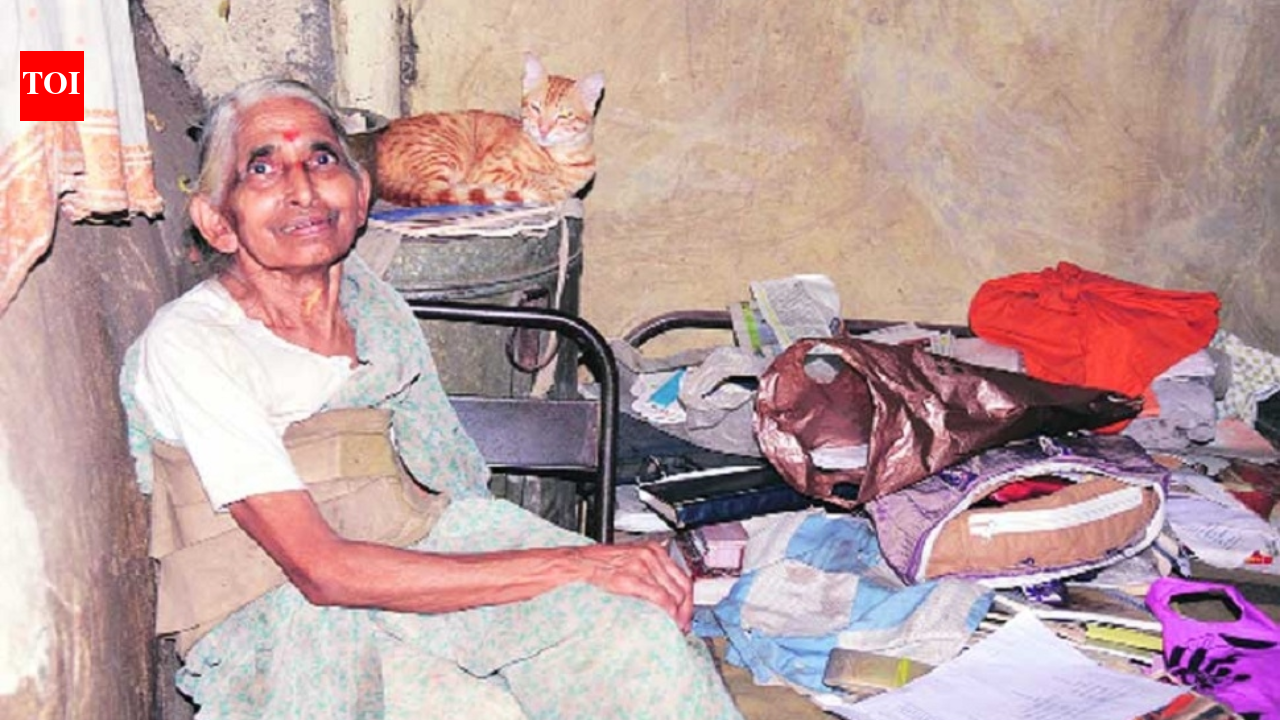
In the middle of Pune’s busy Budhwar Peth, Dr Hema Sane lived in a world that seemed to belong to another time.There was no electricity in her home. She studied and wrote by natural light, lamps and, in her later years, a solar-powered light. Trees and climbers grew around the house, while birds and animals shared the space with her.But Sane was not a recluse who happened to know about plants. She was a botanist, teacher and author who spent nearly four decades teaching at MES Abasaheb Garware College, eventually heading its Botany department. She wrote more than 30 books and continued writing even after retirement.She died in Pune on September 19, 2025, aged 85. The New Indian Express, in a September 29, 2026 profile, revisited her life through the memories of her student and colleague, Professor Nivedita Ghayal.But Sane’s unusual relationship with electricity had been documented much earlier.In 2019, The Hitavada reported that the then 79-year-old Sane had lived without electricity all her life in Budhwar Peth. Her explanation was strikingly matter-of-fact.“Food, shelter and clothing are the basic needs. Once upon a time, there was no electricity, it came much later, I can manage without it,” she told The Hitavada.She did not describe the house as entirely hers, either.“It is their property, not mine. I am only here to look after them,” she said, referring to her dog, two cats, a mongoose and the many birds around her home.
Dr Hema Sane lived without electricity at her Budhwar Peth home, saying she never felt the need for it. (Photo courtesy: ETV Bharat)
‘How do you live with electricity?’
Sane appeared to have little interest in defending her choices to people who found them strange. If anything, she turned the question around.“I never felt the need for electricity in my whole life. People often ask me how do you live without electricity and I ask them how do you live with electricity?” she told The Hitavada.There was also no desire to exchange her old home for something more conventional.“People often ask me why don’t you sell this house, you will get so much money! I always say who will look after these trees and birds? I don’t want to go out. I want to stay with them,” she said in the same report.Her bluntness extended to those who considered her lifestyle eccentric.“People call me a fool, I may be insane but it doesn’t matter because it’s my wicked way of life. I may live as I like,” she said.The remark was not simply a line for an interview. Years later, The Indian Express reported that Sane herself described her life in similar terms: “My wicked, wicked lifestyle is dear to me.” The report, published after her death in September 2025, also said that her home had never had electricity because “we had lived without electricity for generations and I decided not to change anything”.
A botanist who wanted students to look, not memorise
The more interesting part of Sane’s story, however, may have been what happened beyond her unconventional home.According to The New Indian Express, Sane joined MES Abasaheb Garware College in 1962 and remained there until her retirement in 2000. She eventually headed the Botany department. She completed her college education at Fergusson College in 1960, later earned a PhD in Botany from Pune University and, at 46, pursued another academic interest, obtaining a master’s degree in Indology. Her doctoral thesis was written at home by the light of a lamp.For her students, botany was not supposed to end with memorising Latin names.Professor Nivedita Ghayal, who heads the Botany department at MES Abasaheb Garware College, described Sane as “a woman of simple living and high thinking”.Ghayal told The New Indian Express that Sane believed people should “live closer to nature and away from artificial trappings”. She recalled the small well from which Sane drew water, the small iron-sheet room where she lived and the plants that were allowed to occupy the rest of the house.“Her house was like a mini forest,” Ghayal said.That same approach shaped her classroom.“She was kind but academically very strict,” Ghayal told The New Indian Express.During a two-month teachers’ strike over pay scales, instead of allowing the academic calendar to bring her teaching to a halt, Sane took students on field trips. She made them observe plant characteristics, understand taxonomy and ask questions rather than merely memorise answers.Ghayal recalled: “All her students, many of whom went on to become scientists and academicians, are thankful for the way she taught us to observe plants.”Sane also had an unusual trick for making difficult botanical names memorable. According to The New Indian Express, she used familiar Hindi songs and poems to help students remember Latin plant names. Her knowledge of Latin, Sanskrit, Marathi and English allowed her to break complicated scientific names down for students.“She would break down complex scientific names for us, which we continue to remember even today,” Ghayal said.
Sane’s Pune home was surrounded by trees and birds; she often said she did not want to leave because she wanted to look after them. (Photo courtesy: The New Indian Express)
More than 30 books, and curiosity beyond Botany
Sane’s interests did not stop at the plants she studied professionally.The New Indian Express reported that she authored more than 30 books covering Botany, medicinal plants, Indian flora, plant morphology and anatomy, spices, environmental subjects and traditional knowledge. Her writing also explored connections between plants and Indian cultural traditions, including Buddhism. She co-authored Manual for Field Botany, dealing with plant identification, morphology, ecosystems and Maharashtra’s vegetation.Her curiosity about history had also taken her beyond her primary discipline. The Indian Express reported that after studying ancient Indian history and culture during a summer, she went on to pursue an MPhil in Indology.“I did Indology after I began studying ancient Indian history and culture one summer as I didn’t know what to do during the holidays,” she said, according to the publication.She also brought history and culture into her environmental discussions. The Indian Express reported that she spoke about greenhouse gases alongside examples from history and mythology, and referred to Emperor Ashoka as “one of the first to declare rules for the protection of the environment”.“We only know of Gautam Buddha but there were 27 others before him and each had his wisdom tree,” she said.
‘Find your own path’
Perhaps the most revealing thing about Sane was that she did not appear interested in turning her lifestyle into a prescription for everyone else.When asked about people who considered her way of living unusual, she did not claim to have a grand environmental lesson to offer.“I don’t give any message or lesson to anyone, rather I echo the famous quote of Lord Buddha who says that you have to find your own path in life,” she said, as reported by The Hitavada.That line also explains something about the apparent contradictions in her life. She was deeply academic but lived simply. She spent decades teaching taxonomy but wanted students to experience plants rather than merely learn their names. She wrote extensively while refusing many of the conveniences that could have made writing easier.The New Indian Express noted that even in her later years, when an orthopaedic ailment affected her mobility, she continued writing and pursuing her academic interests. The publication described her story as being as much about the way she lived as about the knowledge she left behind.Ghayal put it more personally: “An amazing personality, her story was as much about the way she lived as the knowledge she left behind.”And perhaps that is why the most enduring image of Dr Hema Sane is not of a professor standing before a classroom, but of a botanist in an old Pune home, surrounded by the very things she spent her life studying.Trees. Birds. Books. And a life she had no intention of changing simply because the world around her had.
