



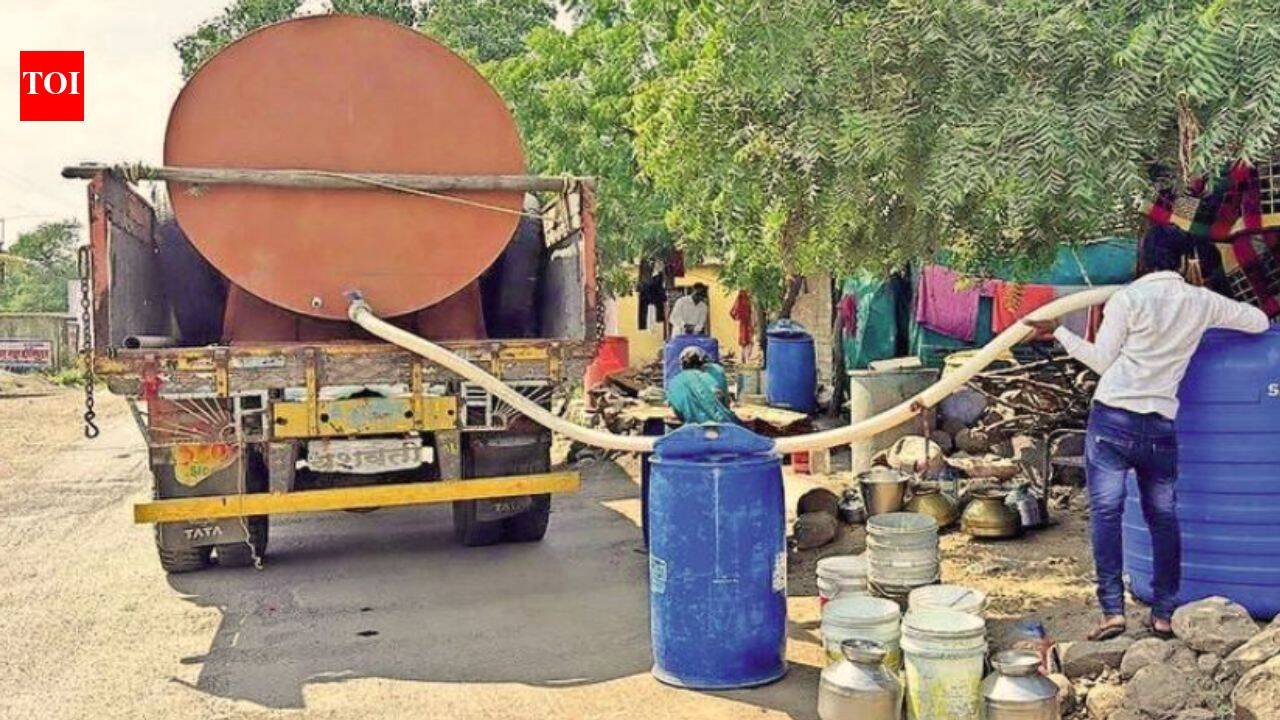
ASHTI: When the monsoon drenched parts of Maharashtra, and several areas saw waterlogging in July, villages in Marathwada were already waiting for drinking water tankers. For them, drought began well before govt declared one.In Beedsangavi village of Ashti taluka, 61-year-old Popat Berad was stunned to see a water tanker in Aug. “In my entire life, I have never seen the need for a tanker in a monsoon month. We are used to water scarcity in April. How will we survive the rest of the year?” he said.District authorities have deployed 277 water tankers as of Sept 29 and taken over 548 wells. Beed has the highest number of tankers at 127, followed by Chhatrapati Sambhajinagar with 120, Jalna with 22 and Dharashiv with eight. They ferry drinking water to 160 villages and 93 hamlets. Ashti taluka in Beed, among the worst-hit, gets 42 tankers. In Georai, tankers made 76 trips per day, while in Ashti they ferried water 84 times last week.Across Beed and Ashti, the landscape tells a story of a rain-starved region. The severity was evident as early as June when Ashti and Patoda began receiving tankers by the end of June and July, respectively. The rivers and wells along their banks are dry. The exhausted landscape is so overwhelming that so many wells clinging to riverbanks feel odd.About 75km deeper into the parched expanse from Beed, the nondescript village of Kinhi has been dependent on tankers since July. Villager Santosh Kakade said, “This year is horrible and this drought is different. During the rainy season, when videos of flooding in some cities were doing the rounds online, we were waiting with cans and utensils for a tanker every day, waiting for water. The drought was declared last week but for us it started right during the monsoon.“In nearby Beedsangavi village, Vijay Dukare said, “We have two wells in the village, but both are completely dry. We demanded a tanker in July from the administration.”Berad has lived through several droughts. He said the current situation revived memories of the devastating 1972 drought in Maharashtra. He was a child then, but remembers it vividly.“There was still some water in parts of the river, a narrow stream. But now the river is completely dry. We did not see rain at all. It felt as if there was no monsoon and we had gone directly from one summer to another. Sometimes, I feel the 1972 scarcity was less severe. It is Sept now, and we have to survive the rest of the year until the next monsoon. That is too long.”The absence of rain has been equally stark in official records. A district administration official said, “We have seen and heard of many water scarcity situations and droughts but never was there a year when people struggled for drinking water in July. It is rare.” Ashti tehsildar Vaishali Patil said there was absolutely no rain this season. “Not even a stream formed in the rivers this year. Even during the monsoon, not once did the rivers flow,” she added.She said tanker service to many villages began in April. The service briefly halted for in June, but resumed in July. “We had no choice. This is the first time that water tankers started in July,” Patil added.
