



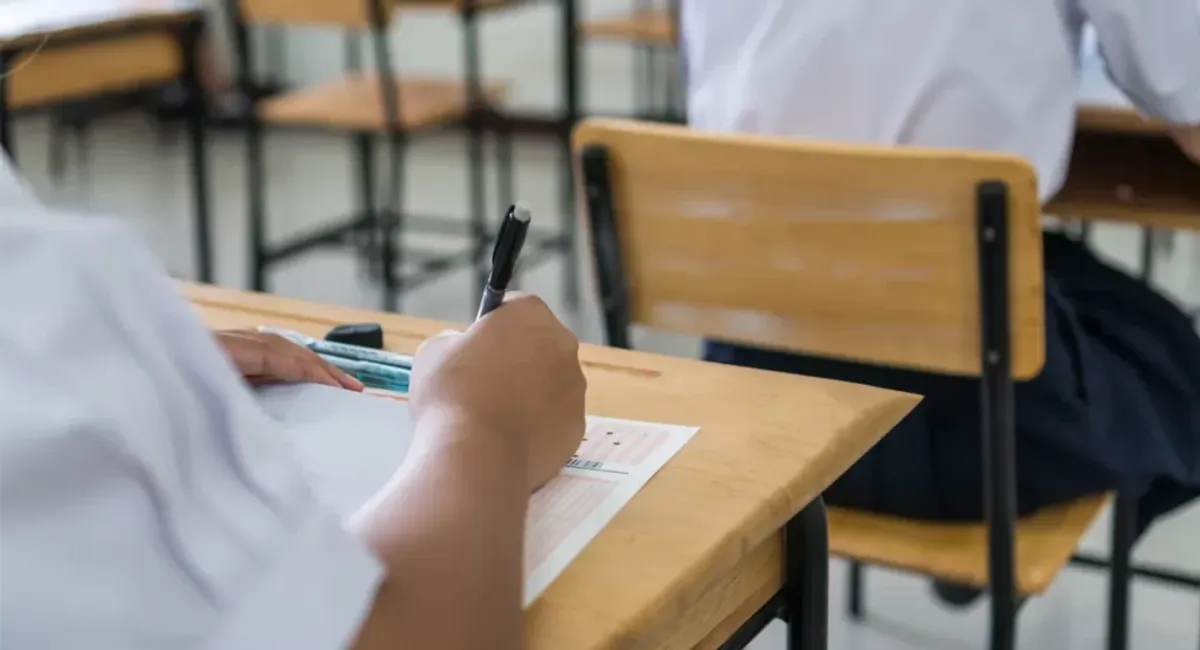
Srinagar, Sept 28: The Jammu and Kashmir School Education Department has reported a sharp improvement in board examination results and a decline in school dropout rates, with the Class 12 pass percentage rising from 75.95 per cent in 2024-25 to 86.08 per cent in 2025-26, while the Class 10 pass percentage increased from 79.94 per cent to 86.36 per cent over the same period.
The details were presented in a government reply on the department’s reformative measures.
According to the reply, the department has introduced the School/Cluster Complex system to facilitate better utilisation of manpower and other resources and promote sharing of facilities among schools.
The department also highlighted transfer drives and rationalisation of teachers, saying these measures were undertaken to ensure optimum utilisation of available teaching resources.
Teacher capacity-building has been identified as one of the major areas of intervention. The government reply states that 78,975 elementary teachers, 21,926 secondary teachers and 40,318 pre-primary/primary teachers have undergone training through programmes including JKSCERT and online training initiatives.
The department has also reported fresh recruitment initiatives for lecturers. 594 posts of 10+2 lecturers in 27 disciplines were referred to the J&K Public Service Commission under the direct recruitment quota.
The government has further said that 396 schools have been upgraded and developed as exemplary schools under the PM SHRI scheme.
Other measures mentioned include the rollout of Holistic Progress Cards, the introduction of the JK Attendance App using geo-facial recognition, and the establishment of the Vidya Samiksha Kendra (VSK) for real-time tracking of academic performance and administrative efficiency.
The department also said the JK-ePathshala DTH channel was launched in January 2026, with separate channels planned for individual classes.
According to the reply, 3,008 schools are already covered (1,420 CAL Centres and 1,588 ICT labs) equipped with internet facility. An additional 2,388 ICT Labs and 4,597 Smart Classrooms are in the process of establishment to promote digital learning.
The government has cited a decline in dropout rates as one of the measurable outcomes of the reforms.
At the primary level, the dropout rate for Classes I-V was reported at 1.1 per cent in 2025-26, compared with 1.6 per cent in 2024-25. For Classes VI-VIII, the reported dropout rate declined to 2.8 per cent in 2025-26, from 3.20 per cent in 2024-25.
The government has additionally said that J&K’s score under the Performance Grading Index (PGI) 2.0 increased from 500.2 to 547.0, with the performance category moving from Akanshi-2 to Akanshi-1.
The department also said that Vocational/Skill Education has been introduced or sanctioned in 2,460 High and Higher Secondary Schools. A total of 4,481 Vocational Labs have been established for practical education. The remaining 70 schools shall be projected in the coming PAB under Samagra Shiksha to saturate all 2,530 Government High and Higher Secondary schools in terms of vocational/skill education. Skill Education is being taught from Class 9th to 12th, and at present around 1.54 lakh students are getting vocational education.
“At present, 15 sector-specific trades covering 19 job roles are being offered in Government High and Secondary schools aligned with the National Skills Qualifications Framework (NSQF) to ensure standardised, competency-based training,” the department said.
Capacity-building programmes and training workshops are regularly conducted for teachers and Heads of Institutions to ensure effective implementation and quality delivery of vocational education.
On the issue of remuneration for cook-cum-helpers in government schools, the department said the cooks-cum-helpers are being paid an honorarium of Rs 1,000 per month under the PM POSHAN scheme—Rs 900 from the Ministry of Education, Government of India, and Rs 100 by the UT government for a period of 10 months in a calendar year.
“The proposal for enhancement of honorarium to Cook-cum-Helpers has been taken up with the Ministry of Education, Government of India. About regularisation of their services, it is a policy matter and pertains to the Government of India,” the department said.
