



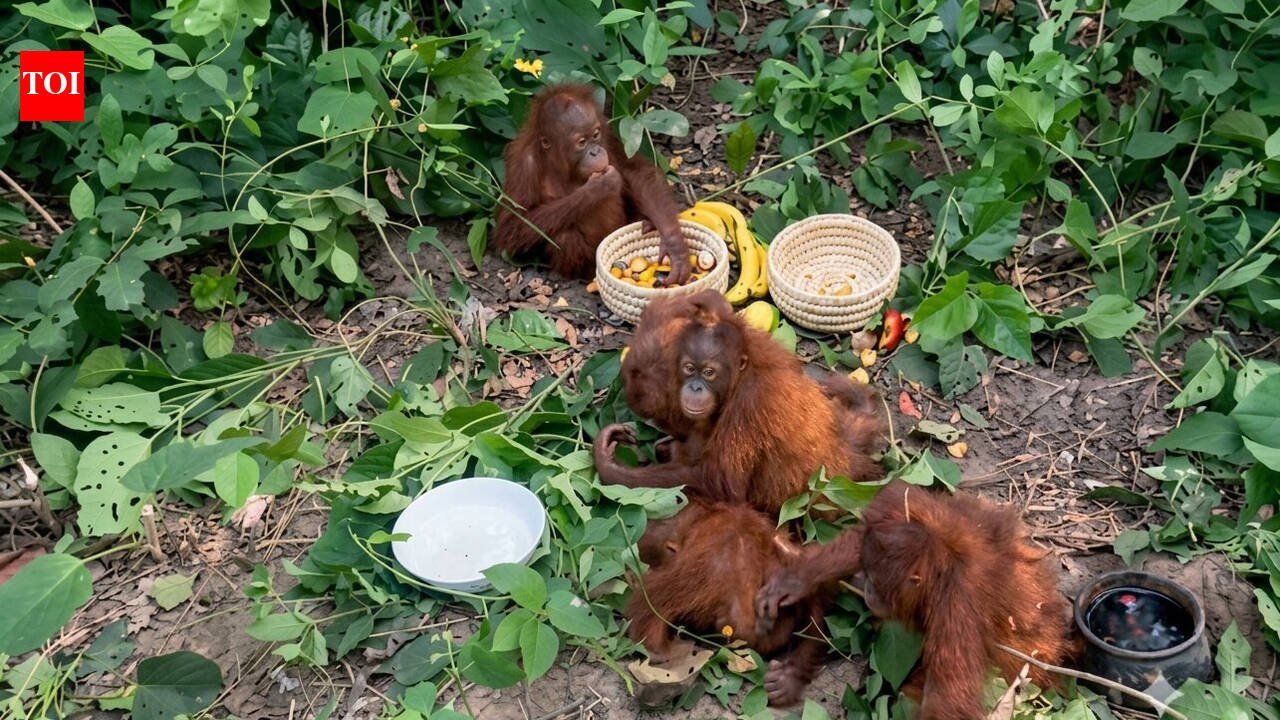
Bhubaneswar: Seven days of marathon inter-state investigation into the mysterious appearance of five infant orangutans in Odisha’s Balasore district has failed to produce a single suspect, prompting wildlife experts to suggest that authorities may be grappling with a far more complicated problem than merely tracking down traffickers.Multiple agencies, including the special task force (STF) of Odisha Crime Branch and the Wildlife Crime Control Bureau (WCCB), have been working relentlessly to crack what is suspected to be an international wildlife trafficking network. Teams from both agencies have visited Bichitrapur and other locations linked to the case, combing through evidence and questioning potential witnesses.According to officials, the STF has scanned more than 100 CCTV footage clips and interrogated around a hundred people in Balasore and neighbouring Digha in West Bengal. Investigators are also analysing mobile tower dump data and other technical evidence in an attempt to trace the route through which the critically endangered primates reached Odisha. “Our probe is underway but we don’t have a suspect till now. The mobile tower dump and other technical data have to be analysed and collated to zoom in on suspects,” an STF officer associated with the investigation said.However, as the probe stretches on without a breakthrough, wildlife conservationists are increasingly sceptical about what the investigation can ultimately achieve. Some believe the focus may have shifted from identifying traffickers to buying time while authorities grapple with the thorny issue of the animals’ future.“It is easier said than done. Repatriation is not going to be easy and by now the government and forest department must have realised this. If the sudden appearance of the orangutans is considered a prized catch, the probe is not going to benefit much,” said environmentalist JK Panigrahi.Experts point out that returning the infants to their native habitat may be virtually impossible. Orangutan infants remain dependent on their mothers for up to eight years, raising fears that the mothers may have been killed before the young animals were separated from them.“In this case, it will be difficult to find their mothers even if the parent habitat is established through DNA profiling or molecular sampling. Releasing them into the wild without their mothers would be cruel. The government needs to be sensible,” wildlife conservationist Prakash Jena said.
