



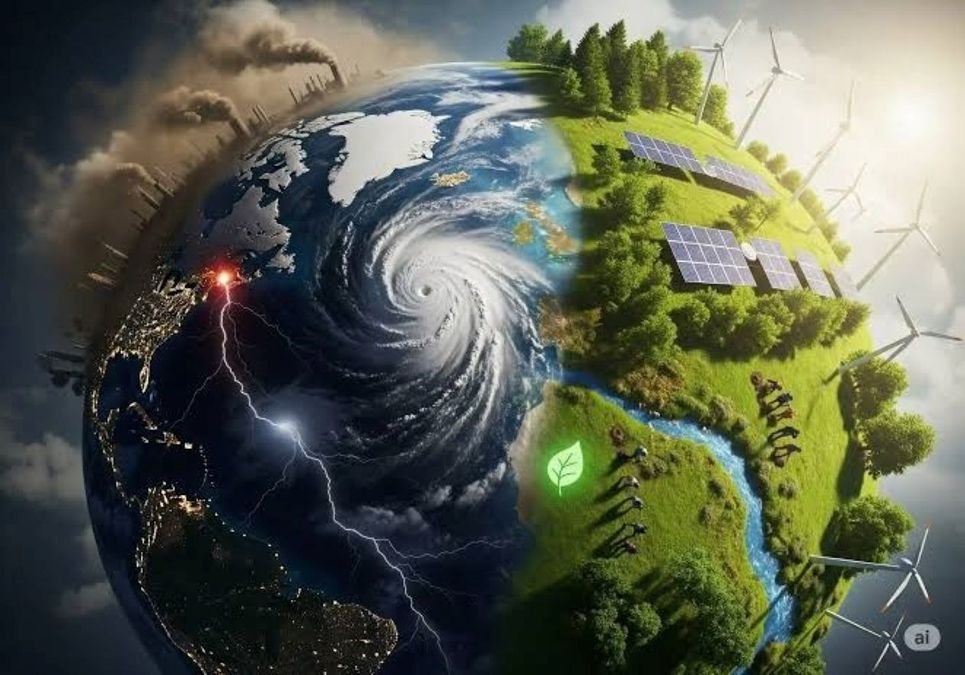
Sustainable development has too often been reduced to a slogan repeated at international summits and inserted into policy documents. Its real meaning is far more demanding. It requires societies to pursue economic growth without exhausting the natural systems that make life possible. For India and the wider Global South, this balance is not an abstract policy concern. It is directly linked to public health, food security, livelihoods and social justice. The accelerating damage to ecosystems shows the cost of treating nature as an unlimited resource. Rivers are polluted, forests are disappearing, groundwater is being depleted and cities are struggling under the pressure of unplanned expansion. Climate change has intensified heatwaves, irregular rainfall, floods and droughts. These disasters do not affect all people equally. Poor households, farmers, labourers, coastal communities and those dependent on forests bear the heaviest burden, despite contributing the least to environmental destruction. This is why ecology must remain at the heart of development planning. Roads, industries, housing and energy projects are necessary, but their benefits cannot justify the permanent destruction of forests, wetlands, watersheds and agricultural land. Environmental clearances must not become procedural formalities designed merely to remove obstacles before construction begins. They must be transparent, scientifically credible and based on the long-term carrying capacity of each region. The challenge is particularly serious in ecologically fragile areas such as the Himalayas. The region’s forests, glaciers, rivers and wetlands support millions of people far beyond its immediate boundaries. Yet reckless construction, poorly planned tourism, quarrying, deforestation and weak waste management are placing enormous pressure on this fragile system. Development that ignores the limits of mountain ecology eventually creates economic losses, displacement and disasters. The recent pattern of floods, landslides and land subsidence should be treated not as isolated events but as warnings from an overstretched landscape. A sustainable approach must also recognise that conservation and development are not opposing ideas. Renewable energy, climate-resilient agriculture, public transport, water harvesting, recycling, green buildings and responsible tourism can generate employment while reducing ecological stress. Small farmers and local communities should be treated as partners in conservation, not as encroachers on their own traditional landscapes. Their knowledge and participation are essential for protecting forests, pastures, wetlands and biodiversity. The transition to clean energy is equally important, but it must be managed fairly. Green technologies require minerals, land and infrastructure. If their extraction creates new forms of displacement and pollution, the language of sustainability will lose credibility. A just transition must therefore include local consent, fair compensation, ecological restoration and social protection for workers and communities affected by economic change. Governments must strengthen institutions responsible for environmental protection and make polluters accountable. Citizens, too, have a role in reducing waste, conserving water and supporting responsible consumption. But individual action cannot substitute for sound public policy. The larger responsibility lies with governments and industries that shape the scale and direction of development. The true measure of progress is not how quickly economies expand, but whether prosperity reaches people without destroying the foundations of their future. Ecology is not an obstacle to development. It is the condition that makes meaningful and lasting development possible.
