



Leh, Sep 13: The Ladakh Administration has stepped up efforts to restore the rapidly shrinking Tso Kar Lake in Changthang, with Lieutenant Governor Vinai Kumar Saxena taking the lead in an ambitious water-revival initiative aimed at bringing untapped glacier water to the iconic high-altitude lake.
The initiative, which draws inspiration from Prime Minister Narendra Modi’s vision of balancing development with environmental conservation, seeks to channel around 320 million litres of glacier water every day into Tso Kar.
The administration is diverting water from the Rupsho Kharnak glacier stream, located at an altitude of around 18,045 feet, towards Tso Kar, which lies nearly 11.5 kilometres away at about 15,000 feet. The stream currently carries substantial quantities of meltwater into the Sindhu River without being utilised.
The project comes against the backdrop of a sharp decline in Tso Kar’s water spread. The lake, which once covered nearly 11,000 acres, has now reduced to around 3,200 acres, representing a shrinkage of almost 70 percent over the past decade.
The retreat of the lake has raised concerns not only about water availability but also about the fragile ecosystem dependent on it. Tso Kar has historically served as an important habitat for migratory birds, including the black-necked crane. Local residents have also linked the shrinking lake to the loss of grazing grounds used by Pashmina goat herders.
Under the current plan, the administration intends to utilise the natural gradient between the glacier stream and Tso Kar rather than undertaking extensive concrete construction. Water is being moved through an earthen channel towards a series of three natural depressions located along the route.
The three depressions cover approximately 270 acres, 24 acres and 10 acres, respectively, and together can hold around 1,230 million litres of water. Check dams with RCC pipes will regulate the flow between the depressions before water is eventually released into Tso Kar.
The first stage of the project is already showing results. Work on the earthen channel began on September 2, while water started reaching the first depression on September 9. Around 20 cusecs of water is currently being diverted, and nearly 20 percent of the first depression was filled within four days.
The cascading arrangement is expected to provide an additional ecological benefit by allowing sediments to settle in the three intermediate water bodies before the water enters Tso Kar. The new freshwater wetlands could also provide additional habitat for migratory birds and potentially emerge as new tourism attractions along the Leh-Manali Highway.
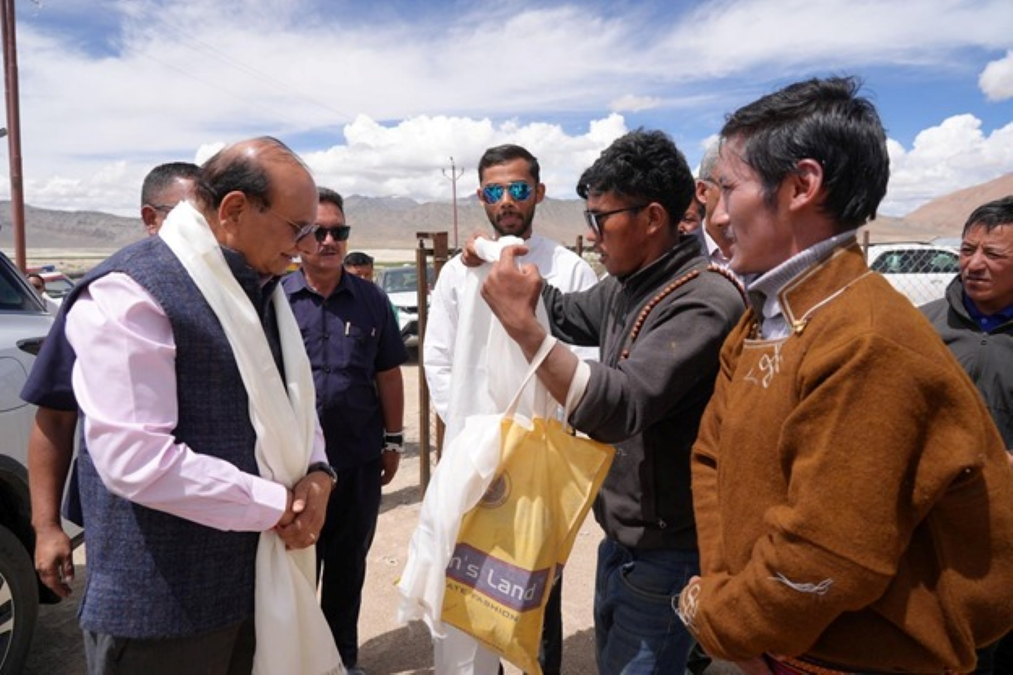
The initiative was conceived following LG Saxena’s visit to Tso Kar on August 10, when local residents and the village head apprised him of the lake’s dramatic decline and its impact on the surrounding ecology and livelihoods.
A survey subsequently conducted by the Public Health Engineering Department proposed an 11-kilometre RCC channel. However, considering the sensitivity of the area, the administration opted for a simpler earthen-channel approach to minimise permanent construction and ecological disturbance.
