



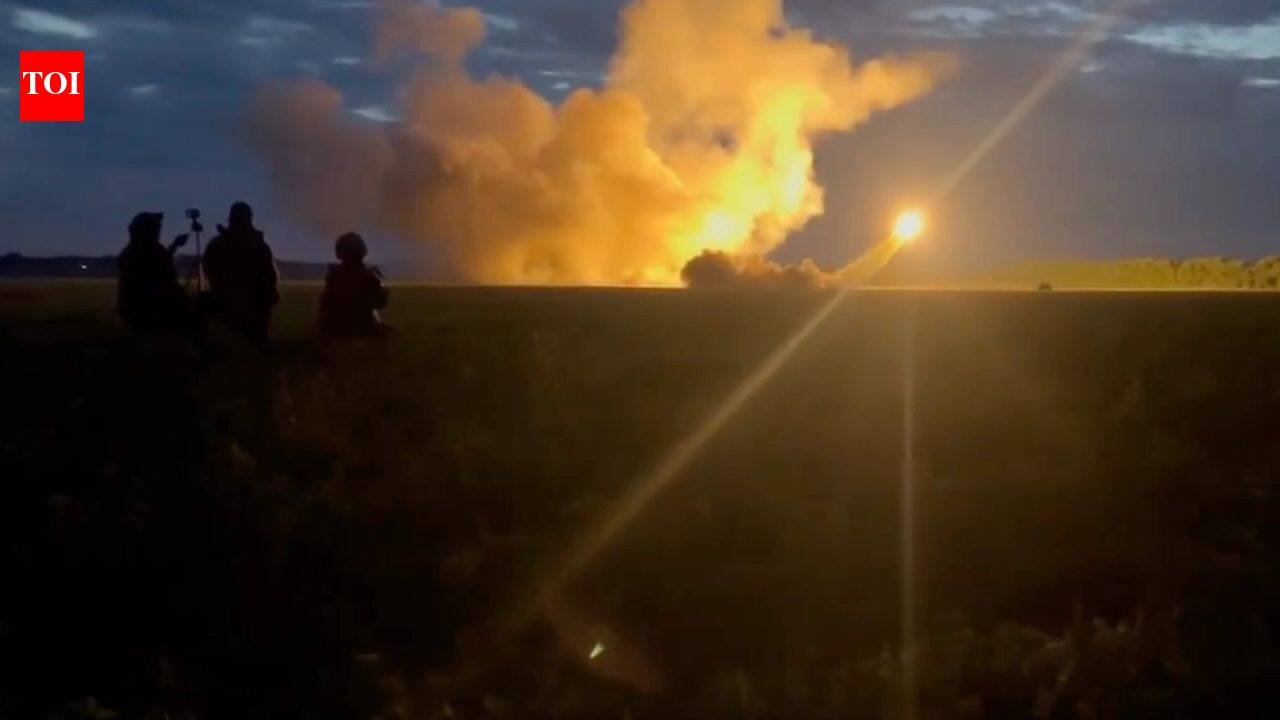
Ukraine is moving closer to deploying its own ballistic missiles as Kyiv seeks to narrow its long-range strike gap with Russia and reduce its dependence on Western-supplied weapons.According to Kyiv Independent, Ukrainian defence company Fire Point’s FP-7 ballistic missile is nearing operational deployment, while its longer-range FP-9 is undergoing development and testing. According to the report, the FP-7 has a range of up to 200 km, while the FP-9 is designed to reach around 850 km.The programme comes as Russia continues to use ballistic missiles against Ukraine, putting pressure on Kyiv’s limited air-defence interceptor stocks.The Kyiv Independent reported that Ukrainian analysts see domestic ballistic missiles as a way to target Russian missile launchers, air-defence systems and other military infrastructure before they can be used against Ukrainian targets.Ukraine’s ballistic missile programmeUkraine still trails Russia significantly in ballistic missile production. The Kyiv Independent reported that Russia produces about 120 ballistic missiles a month, while Ukraine has little to no serial domestic production of such weapons.Ukrainian defence company Fire Point is developing the FP-7 and FP-9 ballistic missiles, with the FP-7 closest to deployment. Fire Point CEO Iryna Terekh said the FP-7 had completed two stages of testing and could be ready for deployment within weeks.The FP-7 has a reported range of about 200 km and can carry a 150-kg warhead. The larger FP-9 is designed to travel about 855 km and carry an 800-kg warhead. According to the Kyiv Independent, the FP-7 is intended for targets closer to the battlefield, while the FP-9 is being developed for deeper strikes against military infrastructure inside Russia.Fire Point co-founder Denys Shtilerman told the Kyiv Independent that producing only two or three ballistic missiles a month would have little impact on the war. The company is therefore working to expand production capacity, while Ukraine is also seeking to secure the supply chains needed for missile components and solid rocket fuel.Why ballistic missiles matterBallistic missiles have become one of Russia’s most difficult weapons for Ukraine to counter. The Kyiv Independent reported that Russia can produce around 120 ballistic missiles a month, while Ukraine faces a shortage of the Patriot interceptors needed to defend against them.President Volodymyr Zelenskyy put Russia’s current production figure even higher, at 140 ballistic missiles a month, and said Ukraine would need roughly 280 interceptors to intercept them all at a two-to-one ratio.The 200-km FP-7, carrying a warhead of up to 150 kg, could give Kyiv a weapon to strike Russian missile launchers and other military targets instead of relying only on air-defence systems to intercept missiles after launch.The FP-7 and FP-9 could give Ukraine a more independent long-range strike capability and force Russia to devote greater resources to protecting its missile launchers and military infrastructure.
