



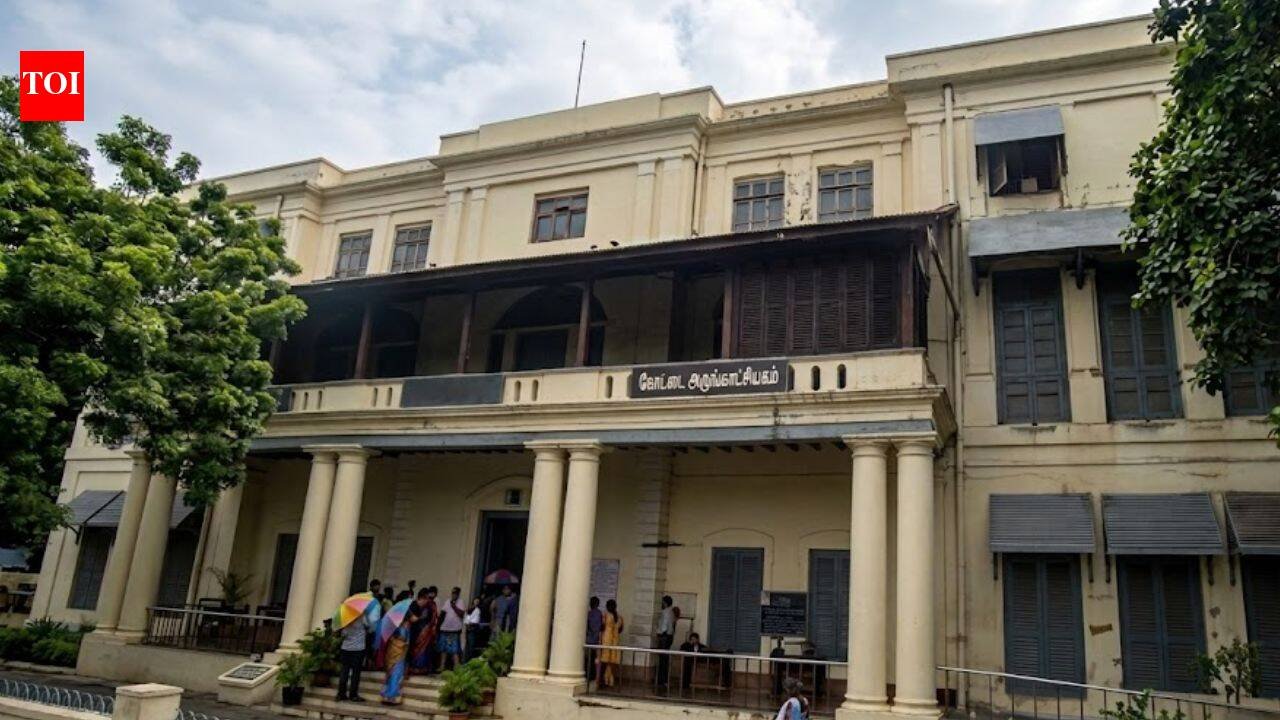
In 1639, Damarla Venkatapathy Nayak, an influential Nayak under the Vijayanagara rulers, granted the English a piece of land between the Cooum river and the Egmore river for trading purposes. The English established Fort St George on this land. Construction of the fort was completed in 1644. What began as a trading settlement gradually became the centre around which a larger town developed. The fort was not initially built as the centre of a major city. Its main purpose was business. But its location and growing importance to the English transformed the settlement around it.
Two settlements became one
The area around Fort St George developed alongside an older settlement known as Madraspatnam, which lay to the north. As new houses and settlements came up in the area between the two, the two settlements gradually became one town. Fort St George remained the official centre of the English settlement, while the name Madras Patnam was used for the combined town. The settlement around the fort was also associated with the name Chennapatanam, in memory of Chennappa Nayak, the father of Venkatapathy Nayak. This gradual expansion laid the foundation for what would eventually become Chennai.
The fort became more than a trading post
Fort St George grew in importance as the English expanded their presence in the region. In 1646, Golkonda forces under General Mir Jumla captured Madras and brought the city and surrounding areas under their control. After the fall of Golkonda in 1687, the region came under the Mughal Empire. The English later received permissions that allowed their activities in Chennai to continue. By the late 17th century, the settlement was expanding through trade and the acquisition of surrounding areas. During the tenure of Governor Elihu Yale from 1687 to 1692, an important civic development took place: a mayor and corporation were established for Chennai. In the following decades, several surrounding areas were added to the English company’s holdings.
A fort at the heart of modern Chennai
Fort St George also became the centre of political and administrative power in the region. The fort withstood several assaults during the 18th century and was briefly captured by the French between 1746 and 1749 before being restored to British control under the Treaty of Aix-la-Chapelle. Over time, its role changed from a trading post to a major administrative centre. The fort later became closely associated with the government of Madras and eventually with the administration of Tamil Nadu. Today, the Fort St George complex remains an important historic site in Chennai.It houses government offices and has a museum containing objects and relics from the colonial period. The fort is maintained as a protected monument. The city that grew around it has changed dramatically over nearly four centuries. But the basic story remains: a piece of land granted for English trade in 1639 led to the construction of Fort St George, and the settlement that developed around the fort eventually grew into modern Chennai.
