



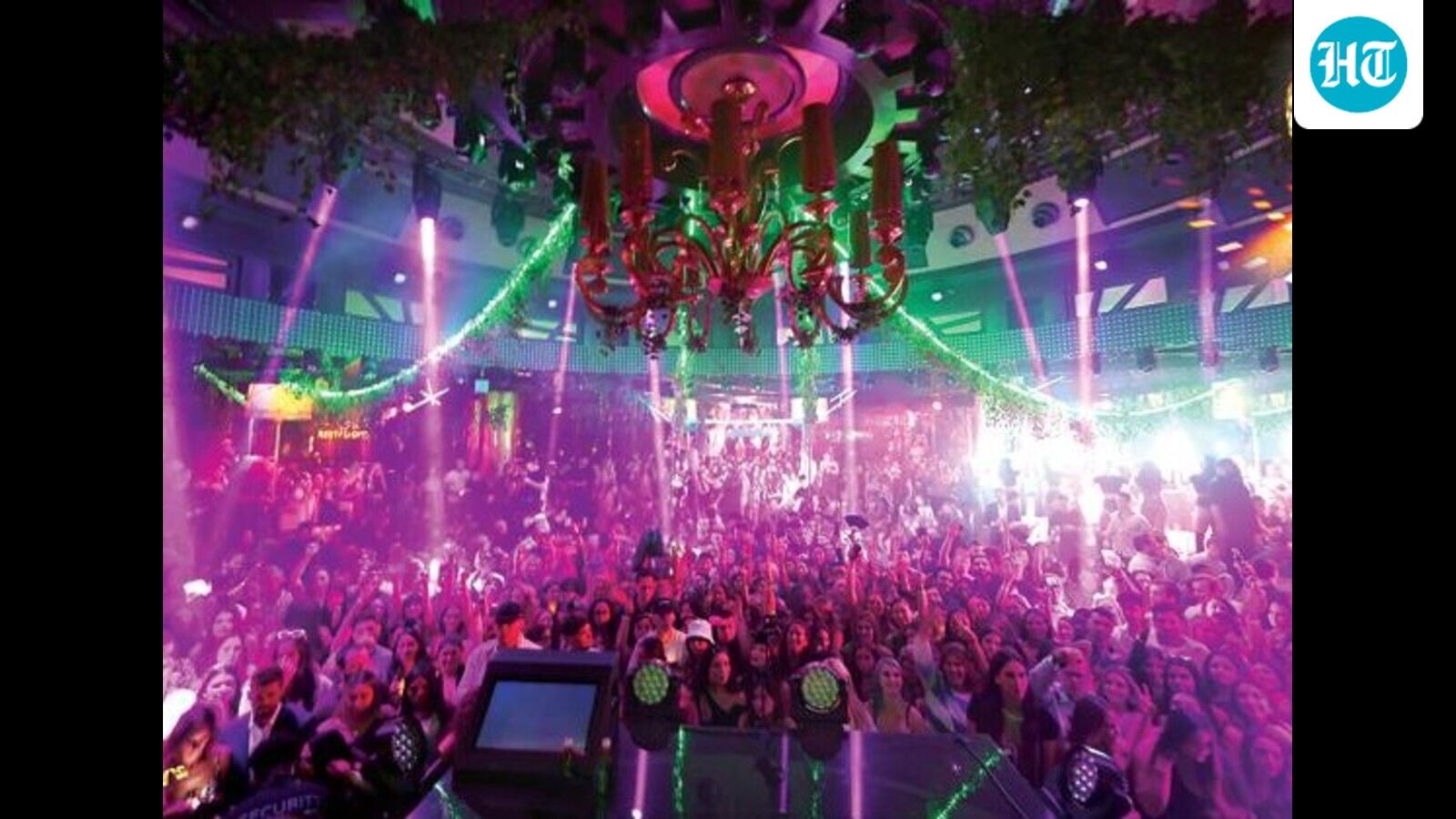
Are we facing a “nightlife apocalypse” or will there be a rebound?
“I have hopes in Generation Alpha. When they come of age it’s likely that they will reject phone culture. They may associate it with old people, having grown up watching their parents mindlessly scrolling. We could be in for an incredible nightlife renaissance when they come of age,” says Imogen Willetts, author of Up All Night: A History of Going Out (2026).
Amid Gen Z’s sober parties and coffee raves, this is certainly the quietest the nights have been in a while. Take a look.
* Yoshiwara, Japan; 1617: One did not simply walk into Yoshiwara.
You had to save up, sometimes for months, in order to afford a good time here. It could cost the equivalent of thousands of dollars today, to attend the lavish banquets, watch acrobats and kabuki singers perform, meet elite courtesans, be tended to at a teahouse, and rebound with sake.
Heavily guarded, walled and surrounded by a moat, on the outskirts of Japan’s city of Edo, one could expect to run shoulders with wealthy merchants, plebians, and disguised samurai here. Anyone who could afford its luxuries was welcome.
* London; 1730s: Entry to the city’s pleasure gardens cost about a shilling, which meant a small trader or vendor could afford a good time, but it was unaffordable to most who fell below that class.
These spaces, set up by entrepreneurs on plots leased from the landed gentry, were designed as a temporary escape from unsanitary, overcrowded London.
Patrons typically arrived in the evening to drink and dance at masquerade balls; watch fireworks, acrobats and balladeers.
* Paris; late-1800s: The dramatic nightlife that spilled into the city from the hilltop district of Montmartre was a direct reaction to mainstream Parisian society’s embrace of capitalism and the industrial era.
The rebellious partying by the artists and writers who fled here would coalesce as the Bohemian movement. New kinds of art and fashion emerged from it.
The rustic slouch hat that evolved into the beret, for instance, became a symbol of intellectualism at this point. The term “chic” has been traced to this period. It is said to have been inspired by a Monsieur Chicard, the performance persona of a rather flamboyant leather merchant.
Cabaret performances were a nightly affair in cafes such as Grande Pinte and Le Chat Noir, where patrons also swapped the kind of dark poetry that features guillotines.
* New Orleans; late-1800s: An economic downturn and racial segregation saw Black, Creole, Caribbean and European traditions come together to birth jazz around the turn of the century. Innovators such as Buddy Bolden abandoned concert etiquette and drew crowds with their guttural notes. Nightlife and charity were completely intertwined, writes Willetts.
At dance halls, parties would pause at midnight for patrons to share bowls of gumbo with rice or bread. Backrooms would sometimes double as sleeping quarters. People opened up their homes for “fish fries”, where a music performance and a snack could be had for a small entry charge that helped the host family (and the performers) pay their rent.
Many musicians had day jobs as labourers.
In his memoir, The Autobiography of Pops Foster, New Orleans Jazzman (1971), the bassist wrote: “You might play a dance from eight that night till four o’clock the next morning. You’d go home then, hang up your tuxedo, put on your overalls, and leave about 5:00am and catch the streetcar to the stables… pick up your mule team… and start out for the docks.”
This period would forever alter how the world understood sound and music.
* New York; early 1900s: Dance halls and jazz clubs served as meeting grounds for immigrants, Black musicians and working-class New Yorkers. Late-night drag balls in Harlem opened new worlds to Blacks and queer people. (Read: Strike a pose: What is voguing, and why is it catching on in India?)
Then alcohol was banned in 1920, and Prohibition-era speakeasies grew into clandestine centres of drinking, music and social rebellion. The poor quality of illegal alcohol saw a boom in craft cocktails, and from there came a focus on mixology that lives on.
Jazz, meanwhile, was born in New Orleans, but it is in cities such as Chicago and New York that it met the rest of the world.
Disco was born in New York, in the 1960s; hip hop in the ’70s; ballroom culture in the 1980s.(Read: Disco’s revenge: Bhanuj Kappal writes on how the genre has come roaring back)
The city’s nightclubs were also the site of the Stonewall protests against anti-gay police raids in 1969. As patrons, first at the Stonewall Inn and then at other establishments, stood their ground rather than scattering, a movement was born.
It is no exaggeration to say that New York City’s nightlife changed the world. (Read: Rhythm, rap, revolution: Celebrating 50 years of hip-hop)
* Berlin; 1900s: Few cities have had their nightlife so radically shaped by war.
In the aftermath of World War 1, avant-garde cabarets, bars and dance halls became popular escapes from the defeat, hyperinflation and political instability. By the mid-1920s, “superclubs” such as Moka Efti offered experiences ranging from an “Egyptian salon” to an Orient Express-themed room.
World War 2 split the city. Then the Wall fell in 1989, and the joy of liberation pulsed through Cold War-era bunkers, as techno — a music genre born a few years earlier in Detroit’s abandoned factories, as young Black artists left unemployed blended industrial machine noises with soulful, human grooves — became the defining sound of Germany’s capital.
* Ibiza; 1980s: The Spanish island served as a safe retreat for artists, writers and thinkers during the dictatorship of General Franco. After he died in 1975, it remained a hippie haven. As Spain transitioned to a stable democracy, the nightlife industry here boomed. By the 1980s, superclubs and international DJs had arrived. It remains party central, for this with a bucket list of this sort.
* Macau; 2002: In 1999, Portugal returned this former colony to China. By 2002, the Las Vegas business model had been deployed here. Brands from around the world, many from Las Vegas, built mega-resorts. Macau remains the only place in China where casino gambling is legal.
