



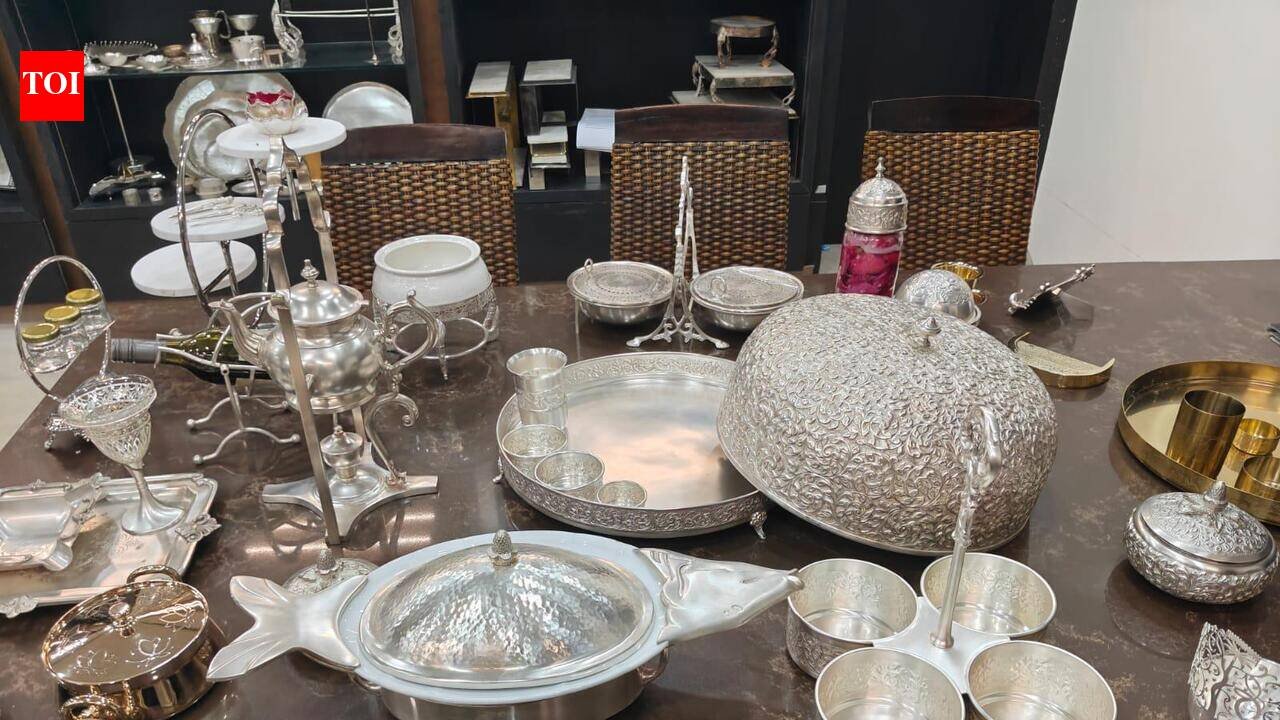
Jaipur: At the BRICS gathering in New Delhi, the world’s power brokers are dining off a little bit of Jaipur heritage.More than 700 exclusive silver-plated pieces crafted by 66-year-old metalware pioneer Arun Pabuwal are setting the stage for high-table geopolitical diplomacy over dining.The assignment is the latest in a long line of prestigious commissions for Pabuwal, who heads a family business with roots in traditional metalware.At the G20 summit, his workshop supplied nearly 15,000 pieces of silverware for the visiting dignitaries. He has previously crafted custom collections for former US president Barack Obama during his visits in 2010 and 2015, and bespoke gold- and silver-finished pieces for Donald Trump and his family in 2020.“The high-stakes setting of entertaining world leaders is familiar territory for us,” says Pabuwal, whose family entered basic metalware manufacturing in 1960.His portfolio extends well beyond political summits, encompassing collections associated with designer Giorgio Armani, overseas royal households, luxury cruise liners, private aircraft, the luxury train Palace on Wheels and major sporting honours, including the Reliance World Cup, Hero Cup and international tennis trophies.For the BRICS assignment, about 300 craftsmen at his workshop worked for six months, taking the pieces from sketches and prototypes to finished tableware.“Beyond design and aesthetics, each plate and bowl was crafted with precise weight, balance and stackability, with a strong focus on functionality,” Pabuwal says.With the BRICS guest list spanning diverse cultures and culinary traditions, the design language was tailored to the menu itself.“We adapted traditional forms for Indian courses, specific cultural aesthetics for Chinese cuisine, and sleek, restrained silhouettes for continental dishes across full sets ranging from welcome-drink chalices to dessert cutlery,” he says.Working primarily with brass and copper as base metals and finishing them in silver, Pabuwal’s artisans combine intricate hand-carving with CNC technology and artificial intelligence at the design stage.Yet, Pabuwal insists that technology only goes so far. The final object, he says, still depends on the craftsman’s eye and hand.“Our expertise is not rigidly tied to local aesthetics. We follow a pan-universe philosophy that moves fluidly between Indian, European and contemporary styles,” he says.Founded as a traditional handicraft workshop in 1960, the business has evolved over six decades, while retaining the painstaking craftsmanship that remains at the heart of its work.
