



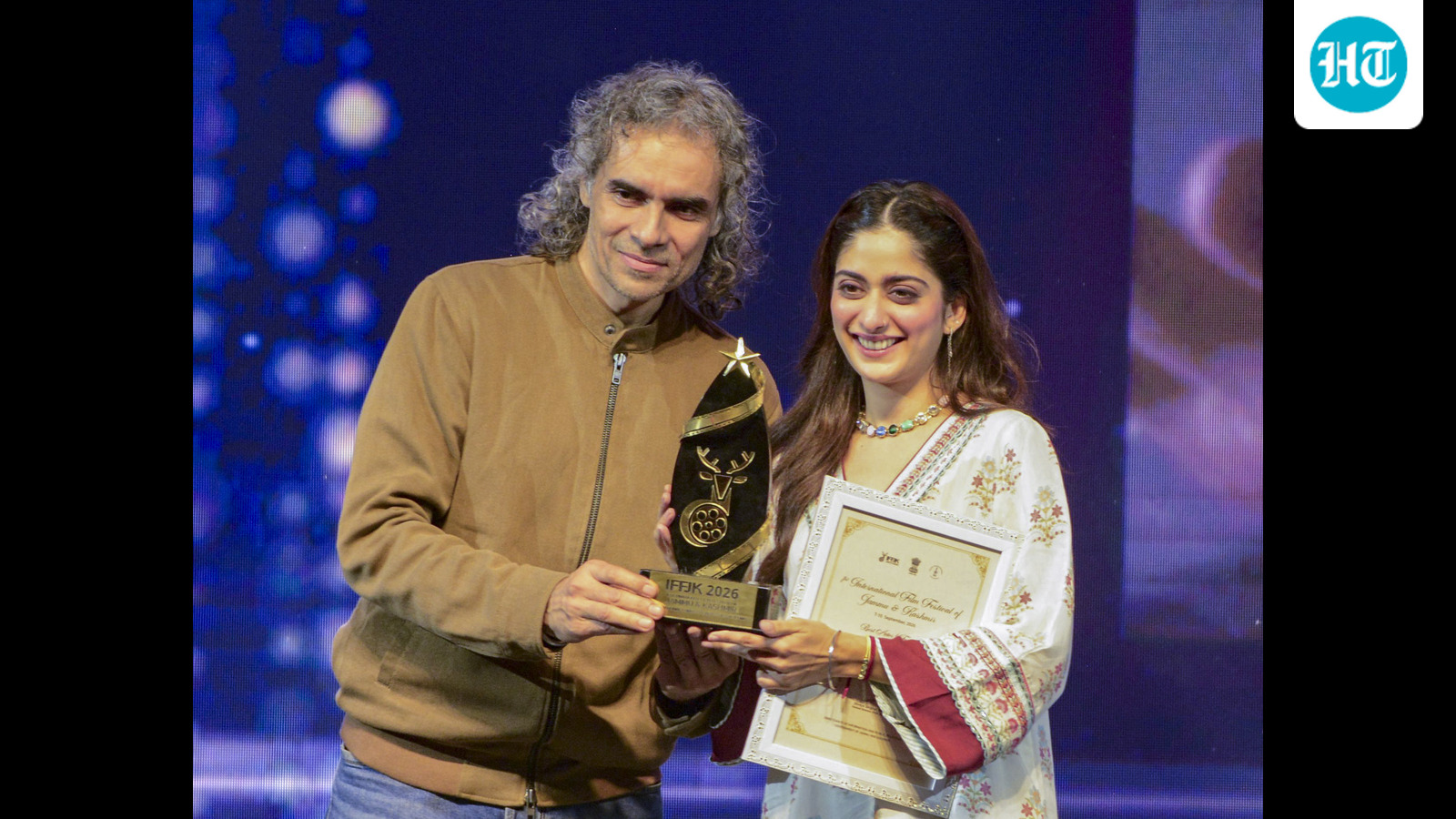
The International Film Festival of Jammu and Kashmir concluded on Thursday evening, with Iranian film ‘Whisper My Name’ winning the best film award. Kashmir documentary ‘Naqsh-e-Daur’ by Baba Tasaduq Hussain won the best cinematography award, while ‘Tasrufdaar (Djinns of Kashmir)’ by Kapil Mattoo won the best film (J&K select) award.
Chief minister Omar Abdullah said J&K had far more to offer to cinema than its landscapes and urged the filmmakers to focus on its people, villages and cities.
“For decades Kashmir travelled to the audiences through the cinema screen. This week, in a sense, the screen came back to Kashmir. I hope that the floating cinema remains one of the defining memories of the first film festival of J&K. But nostalgia cannot define our future. Our ambition must go beyond being a beautiful filming location. J&K must increasingly become a place from where stories emerge, talent is discovered, and films are conceived and created. One theme that has come through strongly in J&K has far more to offer cinema than landscapes,” Abdullah said at the closing ceremony of the four-day festival.
“Our stories live in our cities, towns and villages, in our languages, literature, music, crafts, history and everyday lives. Our landscapes may bring filmmakers here, but our stories are people and our professional filmmaking environment can bring them back,” he said.
“We must therefore build a two-way relationship welcoming filmmakers from India and the world while creating opportunities for talent from J&K to find audiences and collaborators beyond these borders. At the heart of this must be investment in our young people. Their participation in the festival has been encouraging,” he said.
As many as 135 films from around 40 countries were screened during the festival, with 64 from India. Five films competed for the J&K Select awards.
‘Whisper My Name’, directed by Rasoul Sadr Ameli from Iran, was adjudged the best film, while the best actor (male) award went to Amin Hayayee for the film.
The best actor (female) award went to Taniya Maniktala for ‘Arifa’, while the best director award went to Husnora Rozmatova for ‘The Song Sustoxin’. The best debut film award also went to ‘The Song Sustoxin’.
The best cinematography award went to Baba Tasaduq Hussain for ‘Naqsh-e-Daur’, a documentary on Kashmir’s traditional Naqashi art. Best sound design went to Victor Brasie for ‘Dead Dog’, a Lebanese film directed by Sarah Francis. Best editing award went to the Belgian film ‘Tetes Brulees’, directed by Maja Ajmia Zellama.
Omar said that the film festival had evolved from an idea into a purpose. “Tonight, as the first edition of the festival comes to a close, we can say that the idea has found both an audience and a purpose. Over these last four years, the festival has brought film-makers and audiences together, connected established professionals with young aspirants and created a space where the where cinema from Jammu and Kashmir could engage with India and the world,” he said.
“Films from over 30 countries reflect the festival’s scale, but its deeper value lies in the connections it has created. A young writer meeting a director, an aspiring filmmaker learning from a professional or two people meeting here who may one day make a film together,” he said.
He also recalled the floating cinema over Dal Lake. “When I spoke at the beginning of the festival, I talked about J&K’s long relationship with cinema. I spoke about films and the filmmakers who made Kashmir part of the visual memory of generations of Indians. Over the last few evenings, something special has happened. Those films and others from that era have returned to Dal Lake— Junglee, Arzoo, Kashmir ki Kali, and now Kabhi Kabhi have been screened against the very landscape that helped make them memorable,” he said.
