



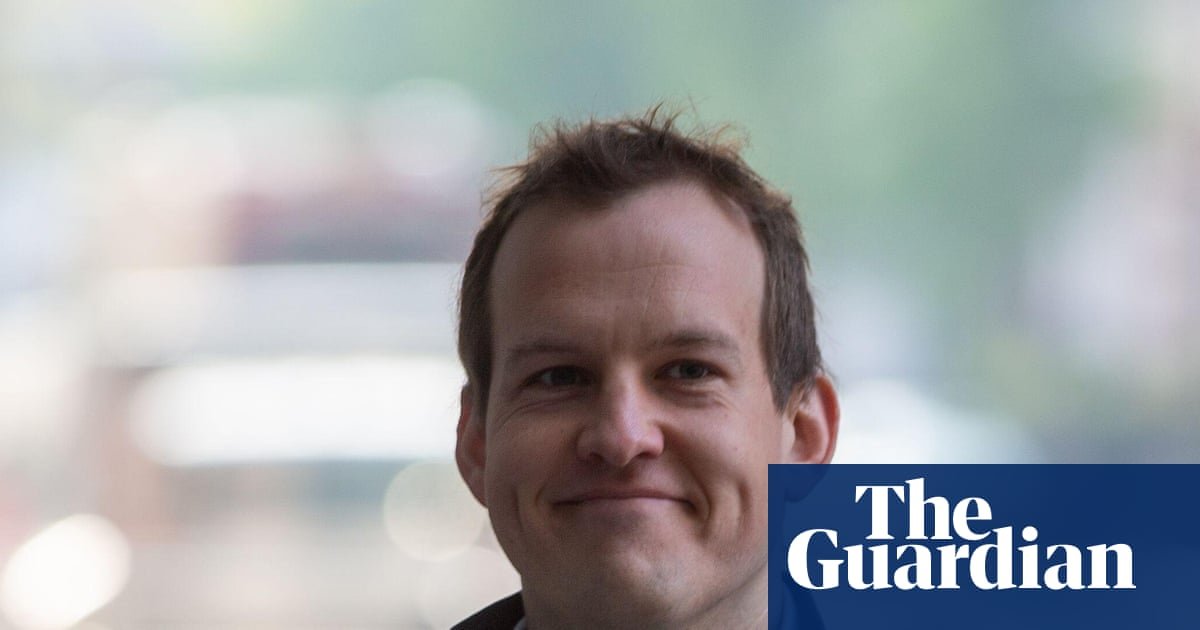
The chair of the UK government’s “moonshot” science and technology research unit has been forced to stand down after taking a job with the San Francisco AI firm Anthropic, after warnings from senior MPs that the move created a “clear conflict of interest”.
Matt Clifford announced last week that he was taking a full-time job working for the company behind the Claude chatbot, “leading its engagement” with governments outside the US – including the UK. But he retained his leadership at the UK’s Advanced Research and Invention Agency (Aria), which funds frontier science and tech projects.
The move sparked concern, with Chi Onwurah, the Labour chair of the Commons science, innovation and technology committee, calling it a “clear conflict of interest” and outlining her disquiet in a letter to the AI minister, Kanishka Narayan.
At the time Clifford’s new employer said he would recuse himself from any Anthropic-related business at Aria in an arrangement that had been agreed with the government.
Clifford announced on Monday: “I have decided to step down to ensure my new role at Anthropic doesn’t become a distraction from Aria’s incredible work.” He said he would stay in place until 6 November “with appropriate safeguards against potential conflicts in place”.
Onwurah welcomed the move but said questions remained, including “how this situation arose, what conflict of interest assessments were undertaken and what safeguards are in place to protect confidence in Aria’s governance.”
Beeban Kidron, a crossbench peer and prominent critic of government AI policy, welcomed Clifford’s resignation. “If we are to rebuild trust in the government, we need to see a clear line between tech interests and those of citizens and the nation,” she said.
Clifford’s full-time Anthropic role highlighted a revolving door between the government and AI companies. The former prime minister Rishi Sunak has taken jobs with Anthropic and Microsoft, and the former chancellor George Osborne works for OpenAI. They followed Nick Clegg, who held a senior role with Meta until 2025.
Tom Brake, the chief executive of Unlock Democracy, a not-for-profit campaign group, had said taking extensive knowledge about a policy as sensitive as AI to a private sector company shortly after leaving government could weaken the government’s hand when pushing for a precautionary approach towards AI development.
On Monday the risks of the race to ever more powerful AIs were again highlighted by the AI pioneer Geoffrey Hinton, who gave a statement supporting a private member’s bill being introduced on Tuesday in the UK parliament to prohibit the creation of artificial superintelligence, warning: “Losing control over AI smarter than ourselves … could even lead to human extinction.”
after newsletter promotion
Clifford was appointed Keir Starmer’s AI adviser in January 2025 but stepped down for personal reasons after six months in the role.
The 40-year-old made his career in the private sector as the co-founder of the venture capital outfit Entrepreneurs First, becoming a pivotal figure in the UK tech scene. As well taking the chair of Aria in 2022, he became a key adviser to Sunak and played a prominent role in organising the 2023 AI safety summit in the UK. He also helped create the organisation that later became the world-leading AI Security Institute.
